How a DIY Cabin Project Turned into a Book About Building & Community

How a DIY Cabin Project Turned into a Book About Building & Community

Author Photographer
  • Courtesy Jeff Waldman

The designer and author of Elevated Spaces Substack condensed 10 years of life lessons and cabin building tips into new coffee table book "The Land"

Published: 08-12-2026

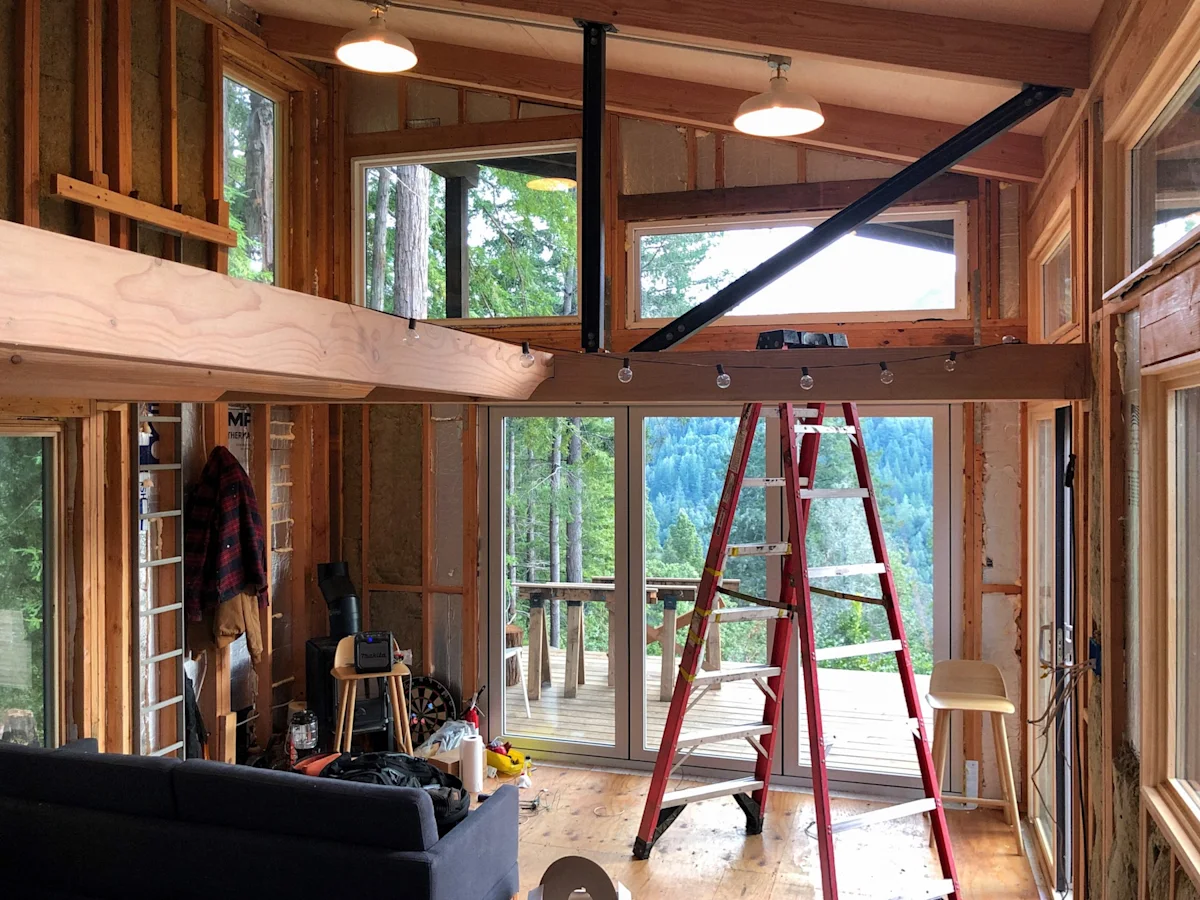
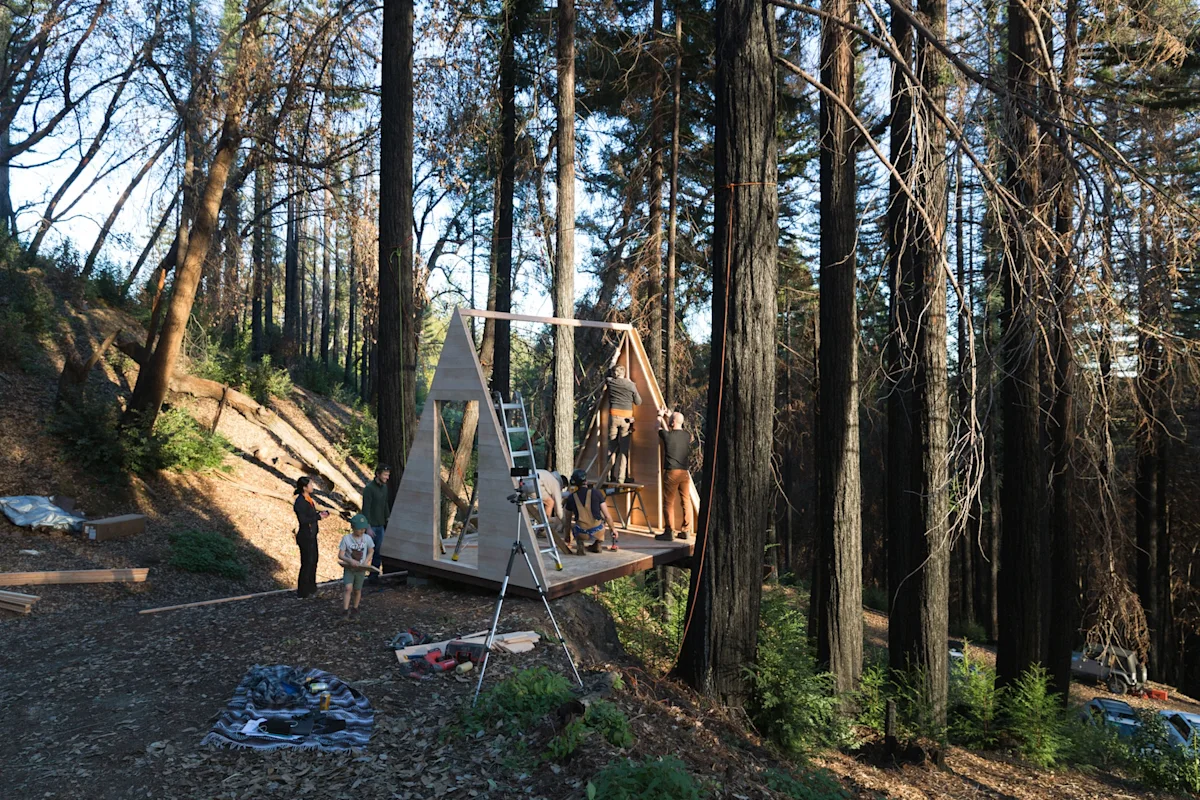
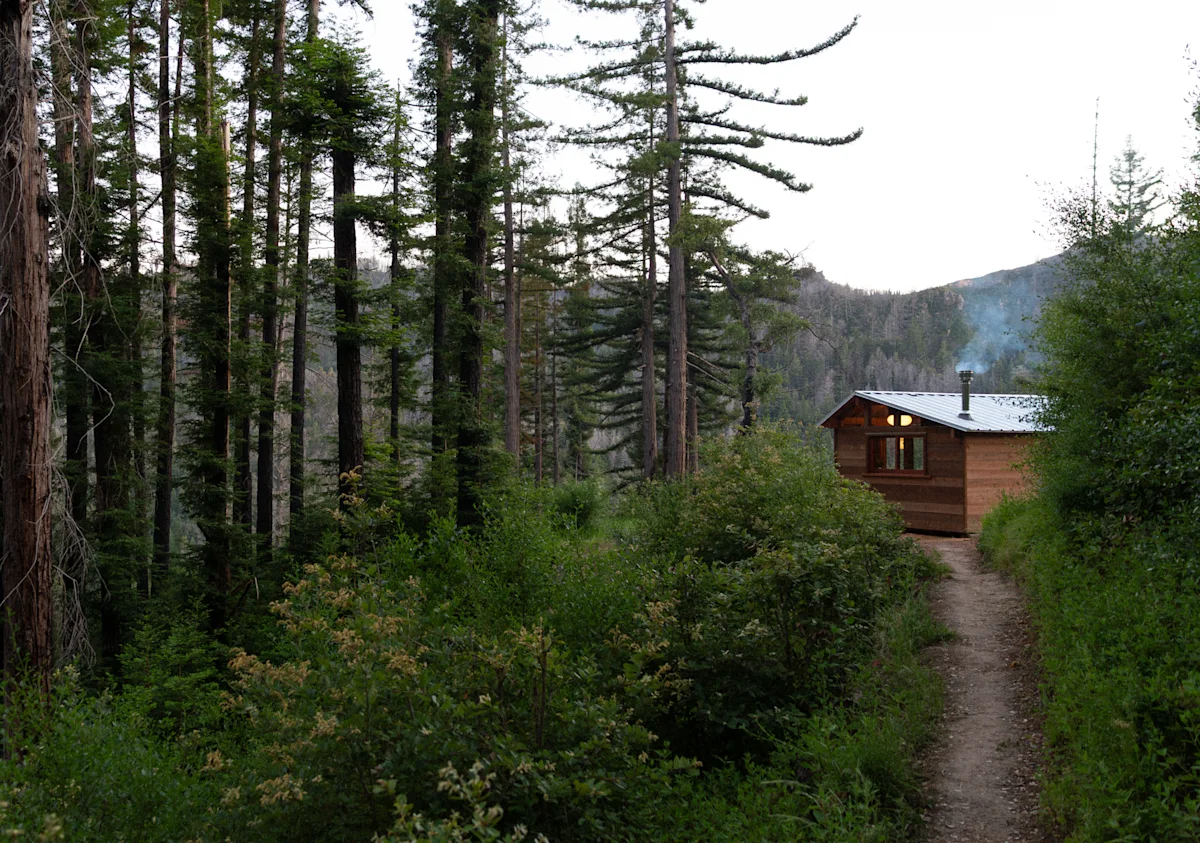
In 2016, Jeff Waldman and Molly Fiffer bought a 10-acre plot of land in the Santa Cruz Mountains and set about building a 280 square-foot solar-powered cabin on it. They enlisted friends, threw build parties, made swings, brought along the kids, and one year later, they had a treehouse with a wood-fired hot tub, a cabin, and a modern outhouse on the side of the hill. Then in 2020, the California wildfires consumed the hillside, turning it all into ash. Undaunted, Waldman, Fiffer, and their community of roving DIYers got back to work.

Waldman and Fiffer documented the process of construction, loss, and reconstruction in Elevated Spaces, a Substack newsletter with over 22,000 subscribers. Bi-weekly missives cover everything from project planning to deciphering which building tools to use. Now, they've compiled the entire story in a new coffee table book called The Land.

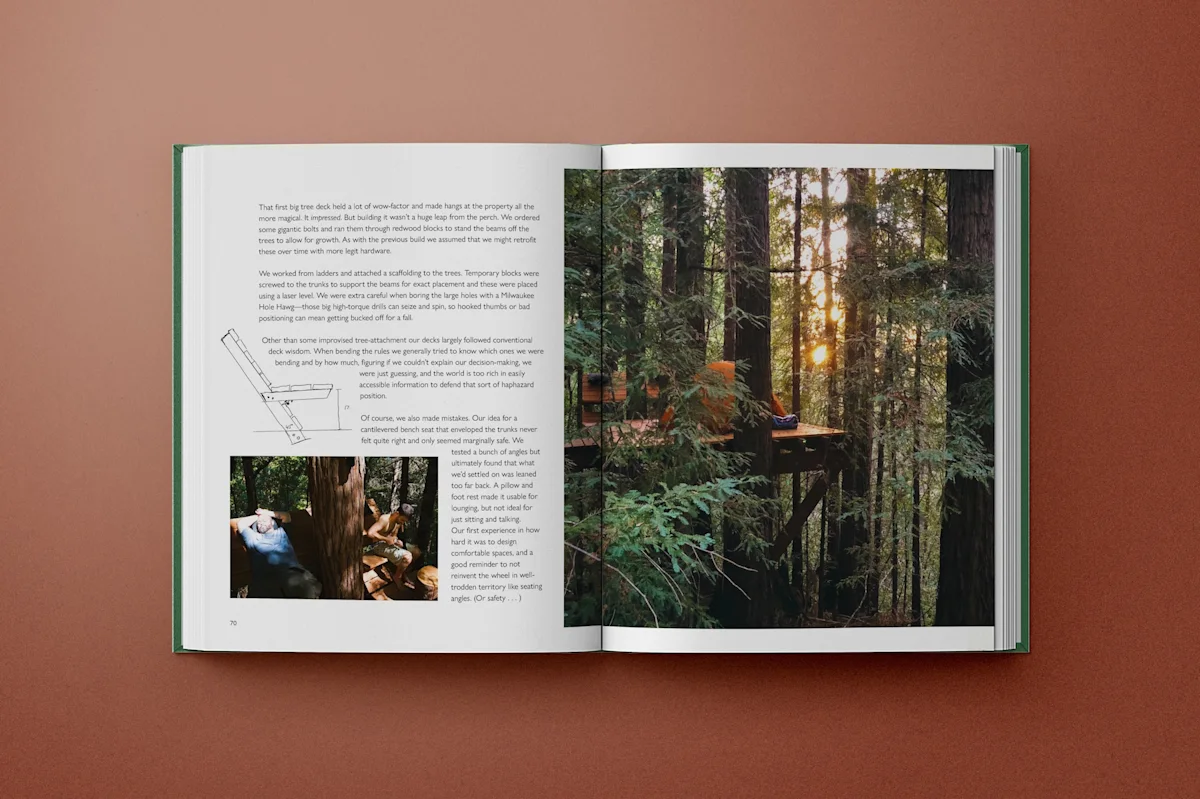
With more than 200 pages containing an equal number of photographs, sketches, and illustrations, the book is an honest recounting of the experience from start to finish, detailing many of the practicalities that any builder, new or seasoned, would be curious to learn for their own build—like selecting plans and how to convince your friends to help.

As is his tendency, Waldman uses the hands-on experience of building and stewarding land to connect the dots between larger themes like finding the grit necessary to tackle big projects, and smaller subjects like choosing tools. The book is permeated by the earnest desire of a lifelong learner, and it excavates the enduring cool appeal of a picture-perfect cabin in the woods. But it also reveals that filling it with friends is really the point of it all.

In a recent conversation with Waldman, we got down to brass tacks to talk cabin building, book development, and meaning-making, all centered around a special piece of land in the redwoods.
the-land-q-and-a-cabin

After two cabin builds, with a heartbreaking wildfire in between them, where did you find the motivation to compile all of your learnings into a book?

First, a few years ago I started a bi-weekly newsletter on Substack. I was looking to share projects and longer-form thoughts on community building, personal growth, adventure, skill building, and where all those interests intersected. That writing practice has been immensely rewarding, and Molly and I have fallen into an enjoyable rhythm of me writing and her editing (sometimes quite heavily).

Second, the story of such an impactful decade was scattered across YouTube, Instagram, about 10,000 photos, and others' books and articles, and Molly and I always kinda wished we could point to a single record of it. Post-wildfire, there was a required reckoning with what the land now was and where its arc was heading, and that promoted a growing desire to package it all up and even hold that chronicle in our hands. Maybe post-fire we were both looking for a happier bookend—I think I was.

Last August, I was solo backpacking in the Sierras and dictated an outline and vision for the book into my phone that really felt like something. We solicited help from many talented and experienced friends, and that really elevated the project. If this book existed at all without their assistance, it would certainly be markedly worse.

"Honestly, most of what we've done is intimidating from afar but not so much once you give it a shot. Doing any of it well, of course, takes time."

the-land-q-and-a-internal-shot

Your book centers on building, so how did you decide on the title, The Land?

From day one, Molly and I viewed the property as a canvas. We were seeking a space to share with friends and a rural plot to try our hand at construction and to tinker on projects. Because our property has been a ten-year-long project of exploring the space, loss and rebuilding, and this open-ended evolution with our growing alongside it—and given our one-with-the-landscape approach and ever-present canvas perspective—there was never really another title for the book on the table.

The Land is not just about us, or our projects, or the community-building and deeply communal effort; it's the whole of that journey and the experience those 10 acres of dirt made possible. If you read the book, it makes perfect sense. And if you lived it, the name is entirely obvious. But from the outside, we get that it's a curious title and probably one of the many reasons publishers aren't knocking on our door.

the-land-q-and-a-cabin-build

What advice would you give to a would-be cabin builder to help put the scope of the endeavor into terms?

There's a cost to building anything, but those costs are all relative, and in some ways, it's a matter of priorities and how money is allocated. Our first cabin was less than $40k. Our second was $17k. Our little A-frame was $2,500. To put that in perspective, that's roughly the cost of the best-in-class Kia Carnival minivan, a well-used Kia Sorento, and a replacement catalytic converter for your Kia, respectively.

That said, we sourced reclaimed wood and milled tons of our own. Our first cabin used mostly salvaged windows and doors, which saved a lot of money. We bought used sinks and fixtures, and shopped around for land that was ultimately just about the most affordable we could find. So there are ways to trim costs, but it all requires some amount of money that will be attainable for one person and not another.

There's no sense getting bogged down by the impossibility of a Kia Sorento-level-cabin. Grab some free lumber from Facebook Marketplace and go build a woodshed first and see where you go from there. Those early wins that inform and inspire the larger ones can be quite cheap.

the-land-q-and-a-a-frame-build

Was there anything you were surprised to learn was more difficult than expected (or that you'd never want to do again)?

Land maintenance is simply never-ending. Trimming growth, graveling roads, tidying up drainage and water bars, processing fallen trees, felling problem ones. And that doesn't even get into the maintenance of what you built, or the tools used to build it. It's all a full-time job and one that benefits from full-time living. So it's not that we'd never rent a chipper for a weekend again, but we'd certainly pick and choose when to hire out for a task versus when to take it on ourselves.

Something we were surprised to learn was easier than we were expecting was earthmoving. It took us nine years to finally ask a guy with some equipment if he could level out our main firepit area so we could mill about and put up tents and all the things that come with level ground. It took him less than an afternoon and cost almost nothing. One of the downsides to a small-scale DIY and scrappy approach is a lack of awareness as to the possibilities just beyond it. That trivial bit of sculpting was eye-opening.

"Our first cabin was less than $40k. Our second was $17k. Our little A-frame was $2,500. That's roughly the cost of the best-in-class Kia Carnival minivan, a well-used Kia Sorento, and a replacement catalytic converter for your Kia, respectively."

the-land-q-and-a-tools

What were some go-to tools, and some unorthodox essentials you couldn't do without?

In-tree construction added whimsy and excitement that was easier to do than digging foundations and moving earth. Using our laser level off a hillside to establish a flat plane through a grove of trees was very satisfying.

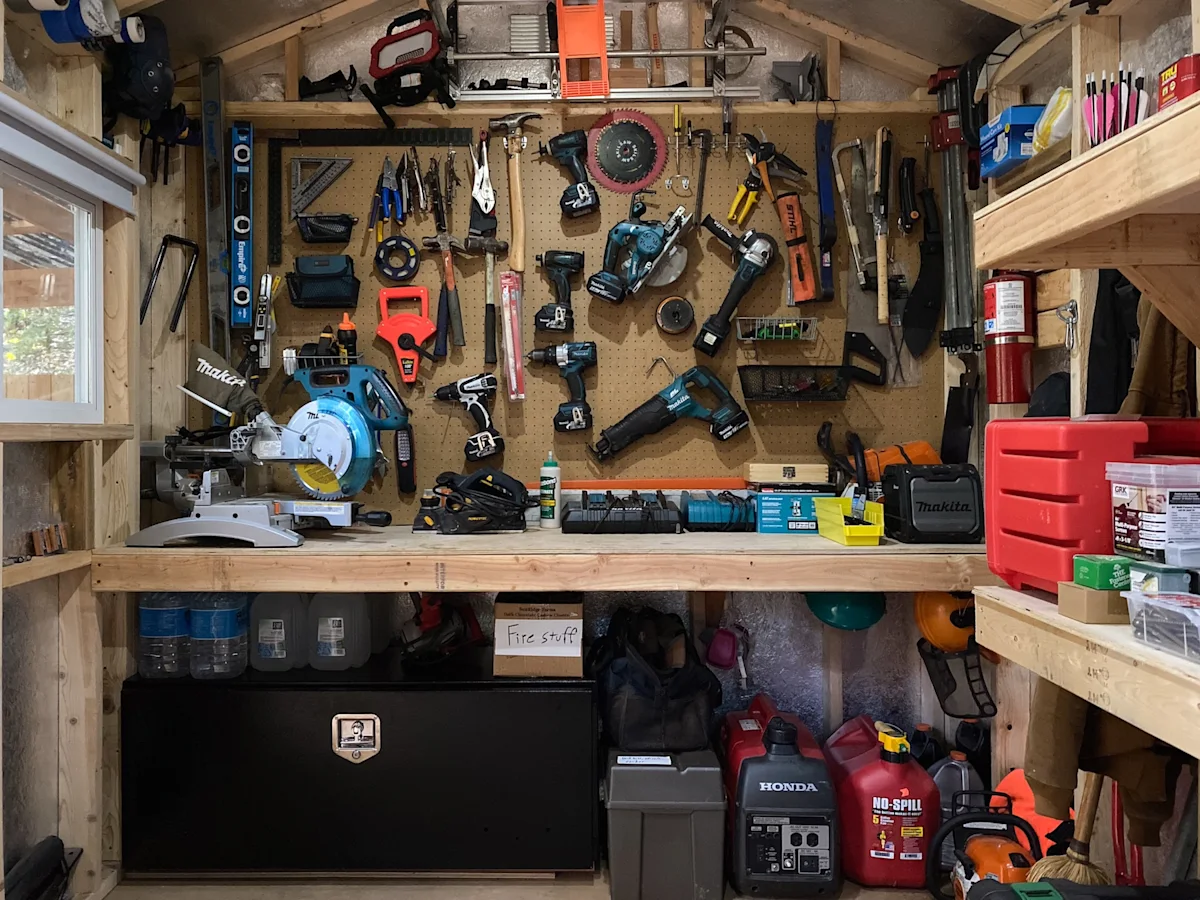
As for unconventional tools, there was a lot of tree-climbing gear. We were stoked to build in the trees, so we played with harnesses, ascenders, and rigging equipment. We also frequently would set a line high in a tree we had to fell and rig it on pulleys to my truck's winch to coax it in the right direction. And it worked because we never squished anyone.

We used solar-powered lights with lighting films called gels to create warmer tones and good vibes. We also kept a stash of wool blankets, hammocks, books on local plants, wildlife, and ample snacks. There was a concerted effort made to have everything that would solve issues around comfort, building, recreation, or medical emergencies (like squished friends).

the-land-q-and-a-internal-shot-sketches

How did turning sketches into 3D models via SketchUp change your builds?

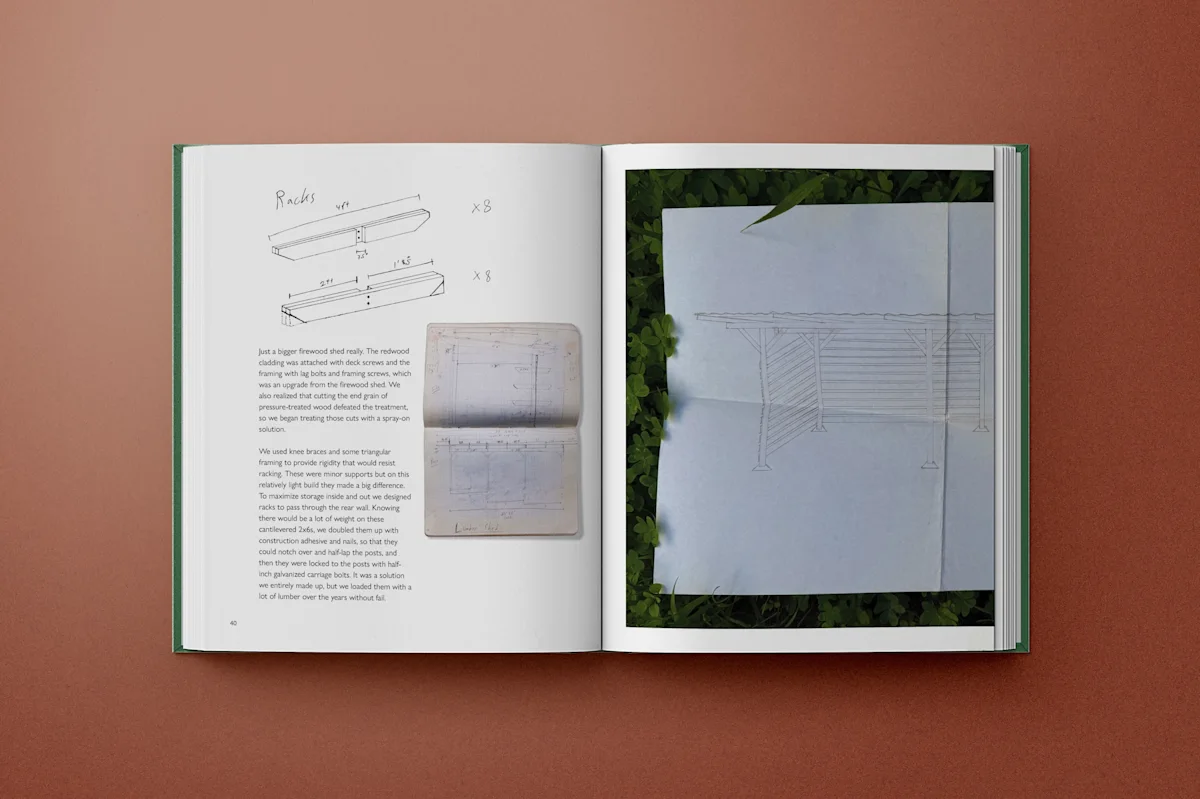
It was transformative! Previously we were designing with pen and paper, and I'm a lousy artist. And because we didn't know exactly what we were doing—both in the design and building sense—it was immensely helpful to be iterative and to be able to practice building so many versions digitally before doing it for real. Ironing out all the issues and seeing how a build would come together over many hours of building and rebuilding the model down to the smallest detail made us seem like much more competent builders. When we showed up for a weekend of work with friends, it was nearly like we had done it before, because we sort of had.

the-land-q-and-a-molly-lumber

How the heck do you learn to mill your own lumber?

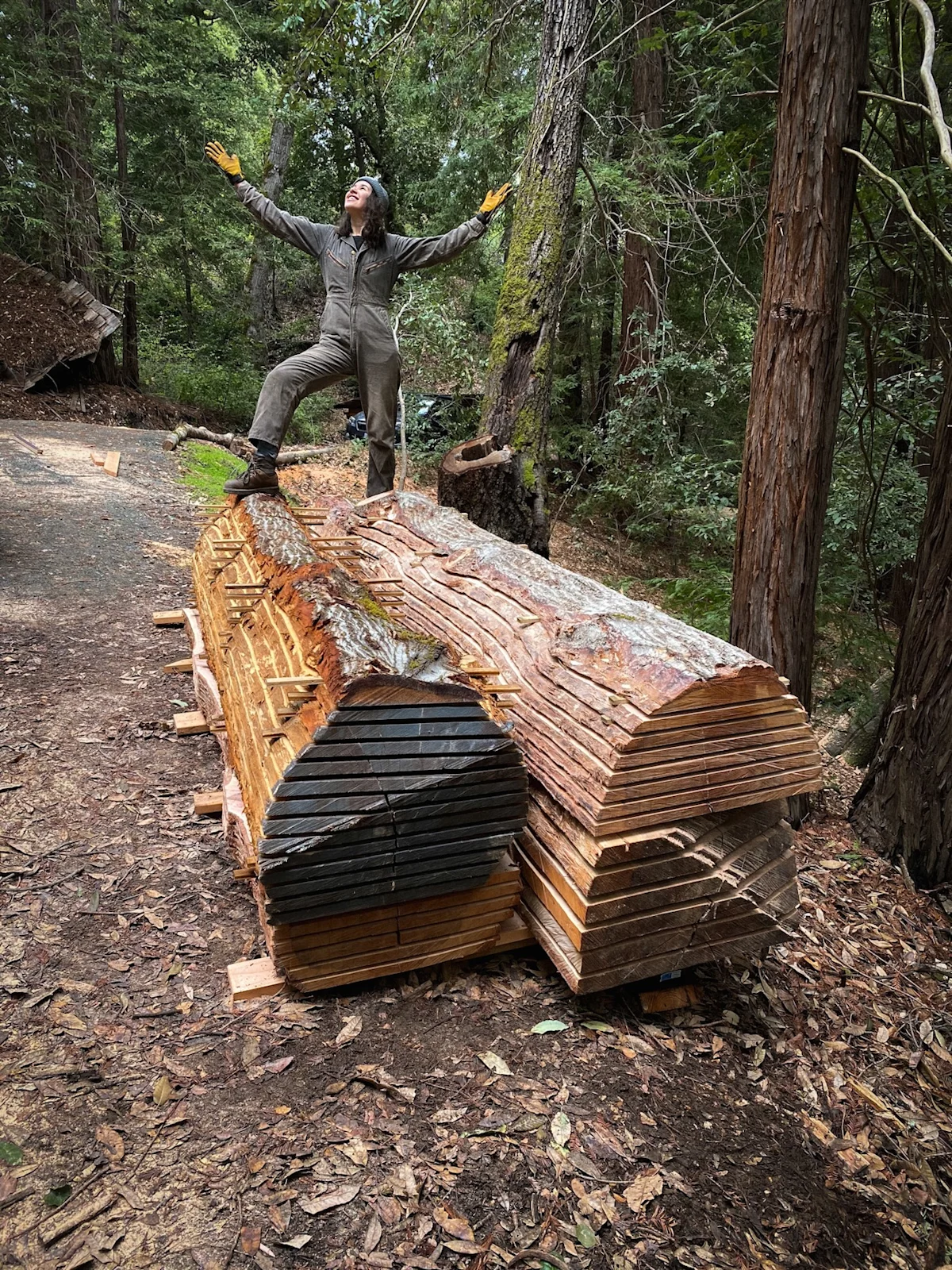
We didn't have space for a proper mill, so we used a chainsaw mill with a big ass chainsaw. And like most everything else, it wasn't so bad once we took it one step (or board) at a time. Honestly, most of what we've done is intimidating from afar but not so much once you give it a shot. Doing any of it well, of course, takes time.

Who were some of the friends who came to your Dirtversary parties to pitch in on the project?

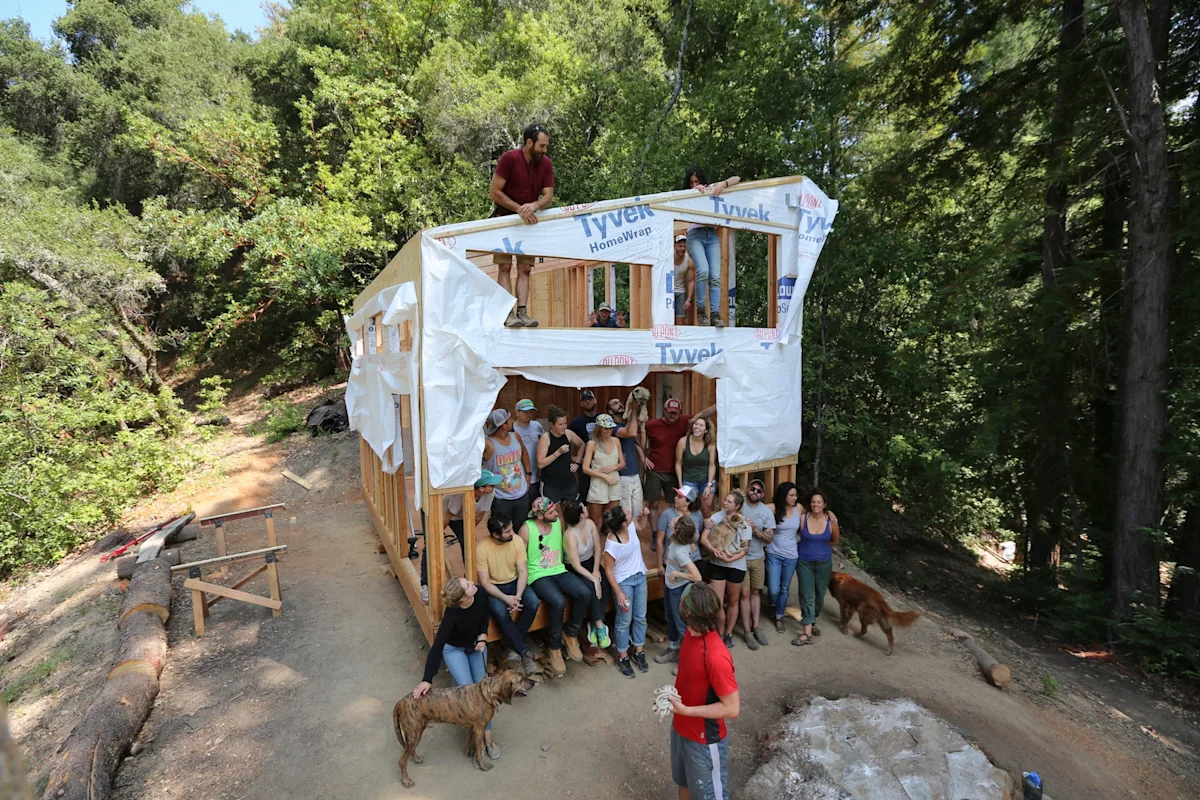
Mostly friends from around San Francisco, though there's been some folks who have made it a point to regularly fly or drive out over the years. Many were from the same social circles, but there were a number of friends who knew each other only from these summer-camp-like gatherings. We also met a lot of people through the property over the years; friends would bring friends who shared similar interests and the network grew. That first weekend we probably invited a half dozen folks out—by Dirtversary Four the invite went out to sixty.

One of the more frequent comments I've seen on our videos or posts about our projects is, "how do you get all this free labor and these people to come help you?" Those commenters underestimate how much of a draw novelty experiences can be. People want to get outside and be around other interesting people doing interesting things. Especially when there's snacks. Ours were cheeses. So many cheeses. We would crush a wheel of brie.

the-land-q-and-a-build-group-shot

How important was it to make clear that these projects were not sexy and were never easy, yet the experience remained totally worth it?

There's a chapter in the book that talks about the labor of dealing with fallen trees and landslides and other fallout of nature. Honestly, the whole book could’ve been dedicated to those messes and the maintenance required. So we hammer that point, and the point of how much we benefited from the power of naivete.

If you’re pushing the bounds of your comfort and experience, there’s a mental and emotional difficulty to projects big and small. We tried to make clear that the hardship exists, but it's also manageable with the right approach. The book (and my newsletter) is big on pushing a "just start" mantra and putting one foot in front of the other. Learn by doing and build upon previous victories to push the bar a little further. Inevitably, that process comes with some strain, but the victories that had seemed impossibly daunting from afar make it very worth it.

GET THE BOOK

Inspired to DIY? Here's a step-by-step guide to building your own hot tub..