Q&A: Atlantic Coastal Supplies' Shawn Lowry Talks Apparel for Atlantic Life

Q&A: Atlantic Coastal Supplies' Shawn Lowry Talks Apparel for Atlantic Life

Author Photographer
  • Courtesy Atlantic Coastal Supplies

The British brand founder on rooting ACS in nostalgia, maritime history, and colorful essentials that feel at home on both sides of the Atlantic

Published: 08-11-2026

Updated: 08-12-2026

Field Mag may receive a minor commission from purchases made via affiliate links.

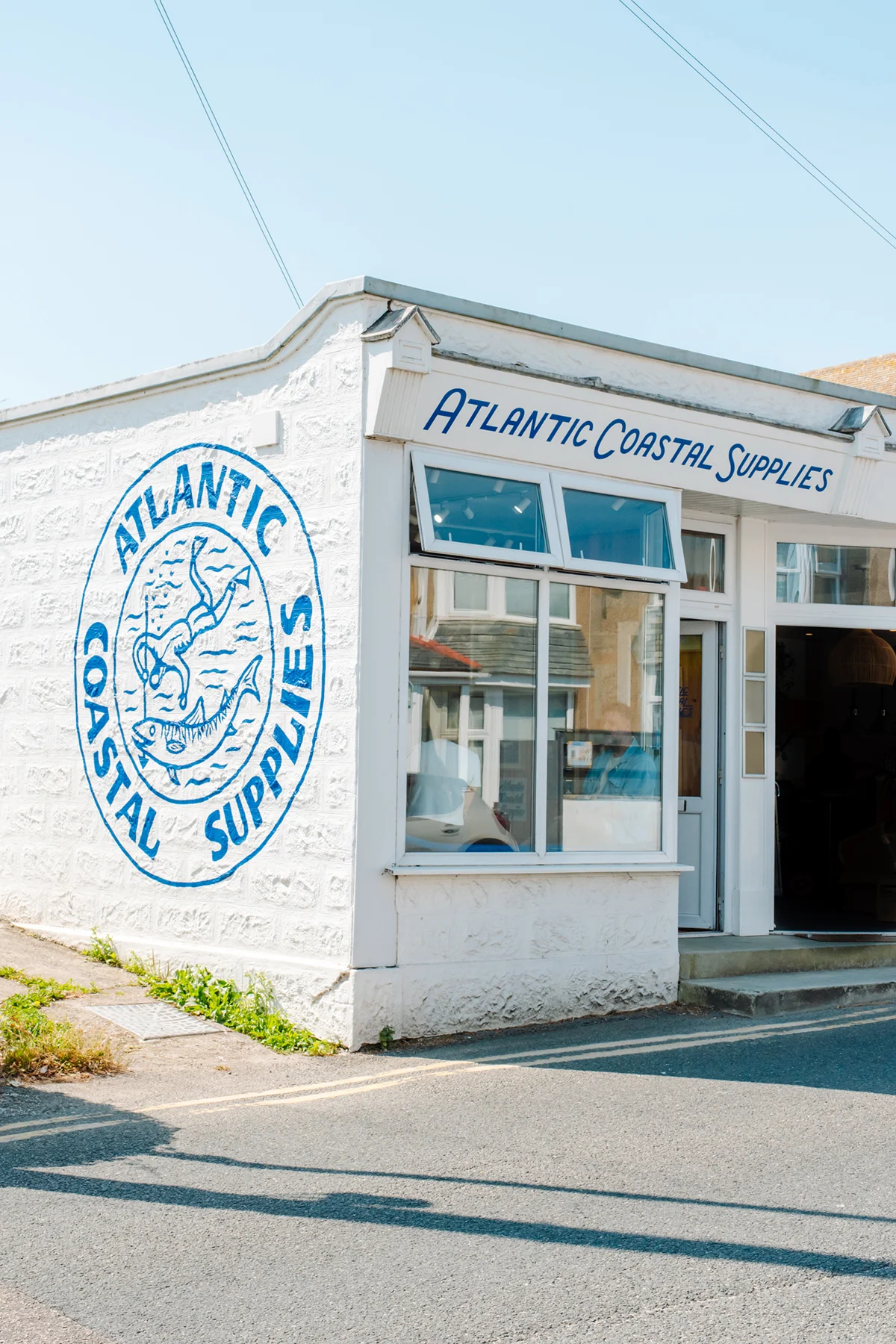
Approximately 4,450 miles separate Florida's Gulf Coast from Cornwall, the county at the southwest extent of England. Yet Atlantic Coastal Supplies founder Shawn Lowry grew up between the two, and they're where he calls home today. Launched in 2023, his company pays homage to the optimism of a Floridian beach town met with British artisanship. The brand has since become an eclectic maritime collection of color-blocked nylon gear, heavyweight American-made staples, and salvaged sailcloth accessories, all influenced by the Atlantic. As Lowry tells us, "People say, 'Well, it's in the UK, but it kind of feels American.'"

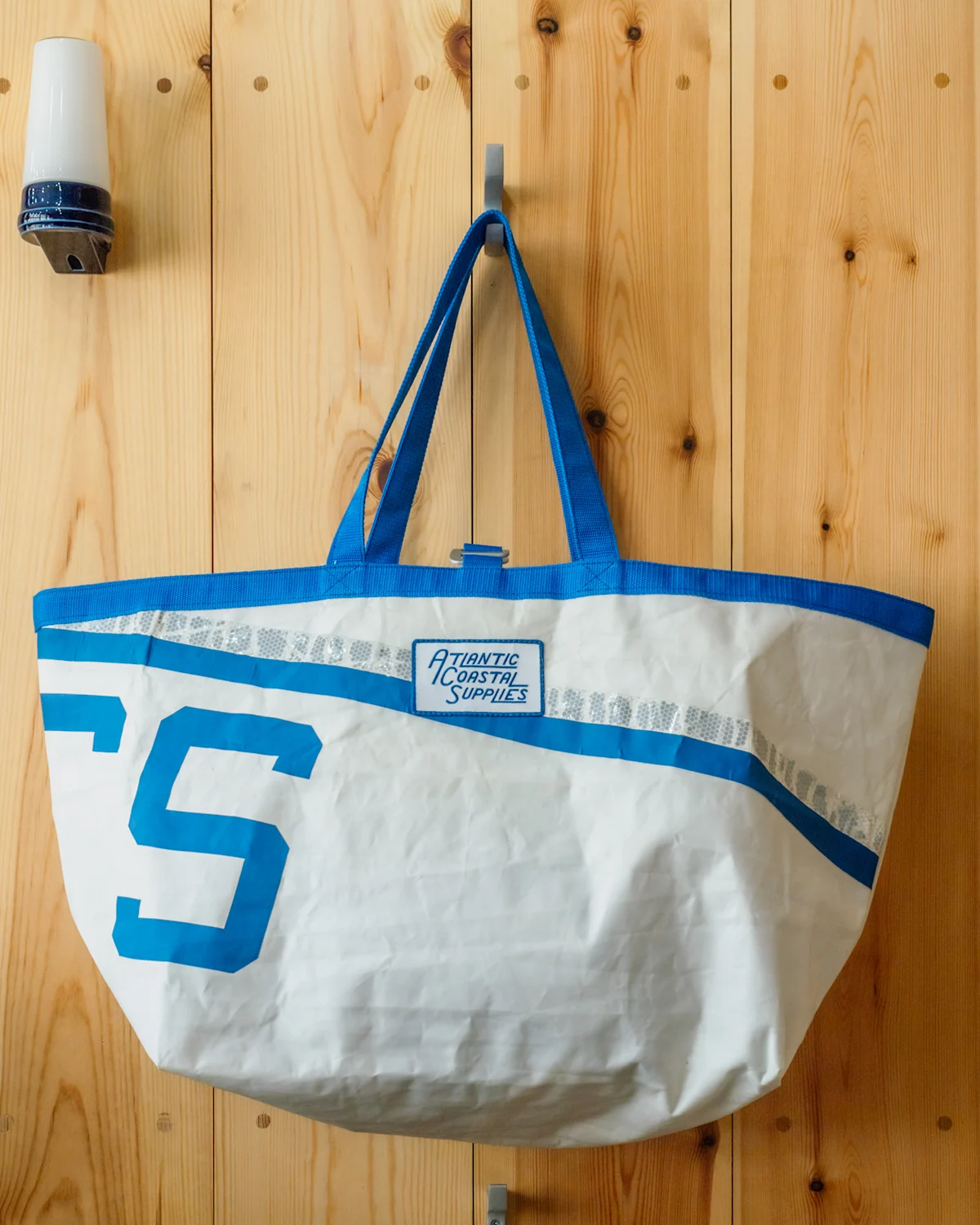
It certainly does. When I asked Lowry where the name came from, his answer was straightforward: "We make supplies for life on the Atlantic Coast. That's it." The mindset has been bait for some of menswear's most influential style tastemakers and lured a collaboration with a legacy mall brand. People have gravitated toward Atlantic Coastal Supplies' camo mackerel hats, beach totes crafted from salvaged Dacron sails, and heavyweight Made-in-USA thermals. Nearly everything comes in bold primary colors, a deliberate choice. A chambray shirt paired with a red beanie nods to French naval officer and oceanographer Jacques Cousteau, while yellow appears throughout the collection as a subtle reference to Yellow Submarine. "Because so much of this brand is about an idea or a memory," Lowry says, "I just want things to feel right."

For a brand still in its early years, Atlantic Coastal Supplies has a clear sense of identity, and Lowry has no plans to slow its evolution. I spoke with him via Zoom about how his time at Double RL as a concept designer shaped his approach to brand world-building, his favorite 13th- and 14th-century pubs, his 20-volume collection of undersea encyclopedias, and more.
atlantic-coastal-supplies-q-and-a-shawn-lowry

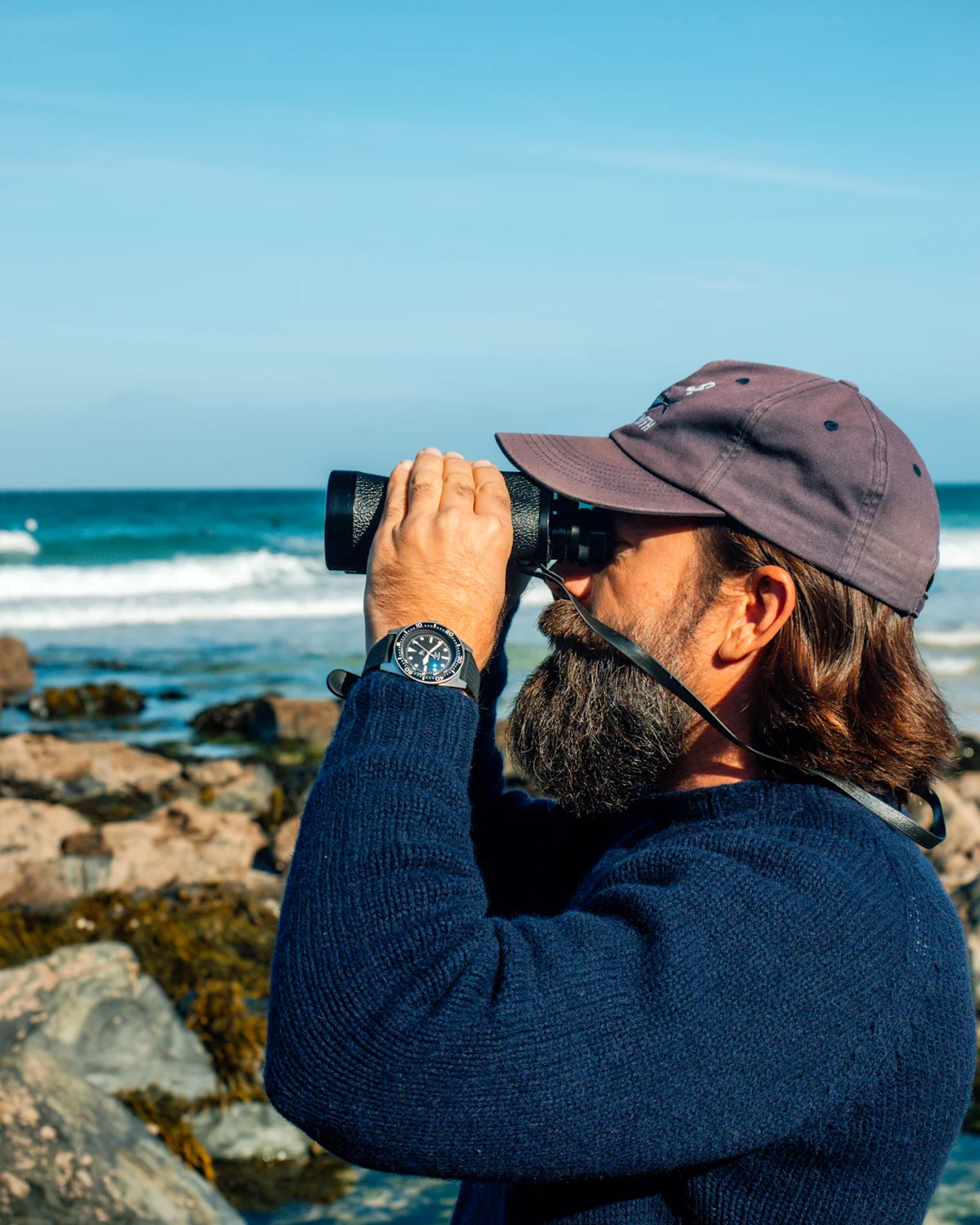
Shawn Lowry

What does Atlantic Coastal Supplies mean, and how did the name come about?

There's a thread that runs through the whole thing, and it's really about simplicity—stripping things back and recognizing when enough is enough. I just want to make functional products that help people enjoy life by the coast, and I think the name came out of that. It's literally just that. There's nothing complicated about it. It's very straightforward.

You grew up in Florida and eventually made your way to England. How has that move shaped both your life and the brand?

I grew up in a little beach town on the Gulf, and most of it had been built in the '60s. It felt really optimistic, but there was also this sense of accessibility. Everybody kind of had this little life by the ocean. There were all these small bungalows with terrazzo floors and jalousie windows. They were built for Florida's natural airflow before air conditioning became standard, and they were affordable.

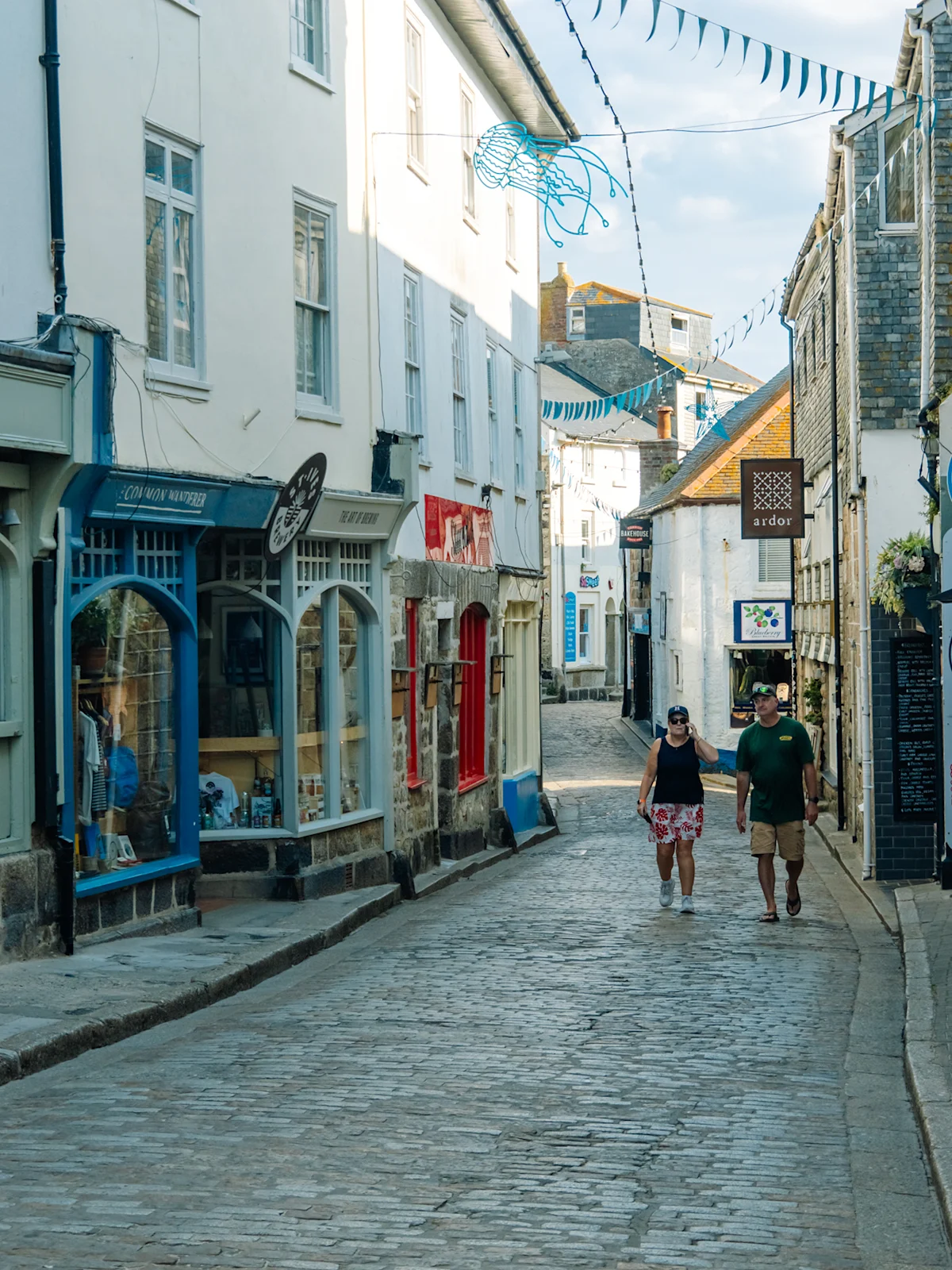
It wasn't expensive to live there if you could string some work together. And I think there's a tension between that and where we are now. Here [in the UK], there are prehistoric ruins a mile away. There's all this history and landscape, and this huge tradition of art and craft. I think both of those influences are present in the brand. There's this mid-century optimism that meets something more handmade and rooted in history. It sort of spans the Atlantic. You end up with things like shooting colorful, color-blocked nylon products in a sail loft that's 400 years old.

Before starting ACS, you were the concept designer for Double RL. What did that role teach you about building a world around a brand rather than just making products?

First, the product has to be really good. But I also think that today the world is so visual. It helps create a place where you and the customer can agree on something, right? You can connect over shared interests or an idea about how you want to live your life.

Ralph was kind of the same way. And I think working that way during the design process is also a really useful filter. You can quickly say, "Well, that guy wouldn't have owned this," or "That guy wouldn't have worn that." That kind of world-building is valuable both internally and externally. It's easy to think, "This is what the shop looks like," or "This is what the photo shoot feels like."

The brand-building really helps me on the back end of the design process, giving me a way to edit and filter. And then, I think you can convey the idea so much more easily because people just look at it and go, "Oh, I get it." You don't have to explain as much.
atlantic-coastal-supplies-q-and-a-blue-tote

atlantic-coastal-supplies-q-and-a-pint

What are some nonnegotiables other than a dive mask and snorkel?

I just kind of have a big tote bag, some swim fins, and a nice pocket knife. That's kind of all I need. I don't want to take too much stuff. I've got a couple of great boat knives that I really like. I have one from Boye that I absolutely love. It's made from dendritic cobalt, so it doesn't rust. You can leave it in salt water, and nothing happens. I also carry a couple of Spyderco Salt knives, which I really enjoy for the same reason—they just don't rust.

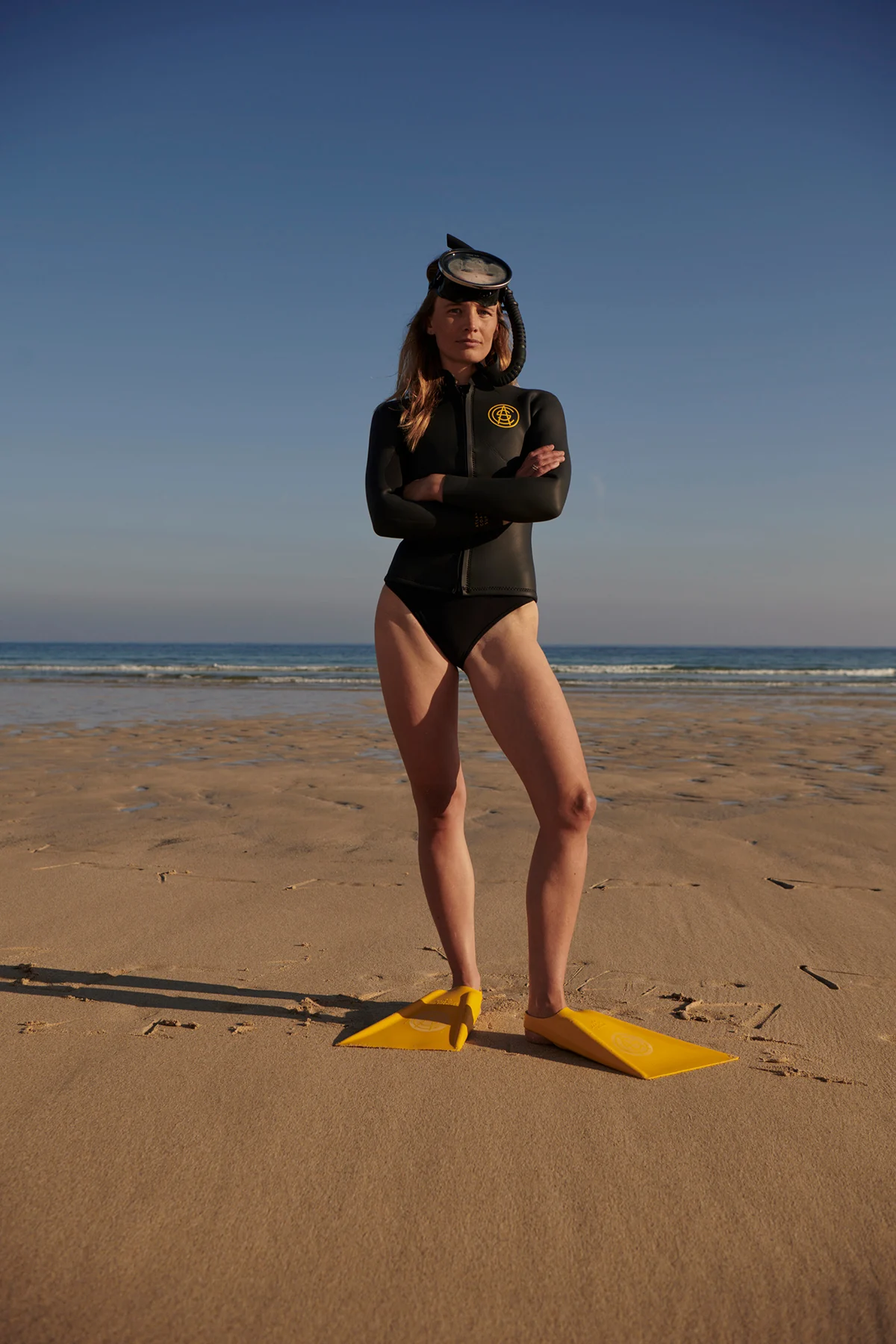
If we're heading to the beach, it's so nice to have a little wetsuit. The water is always cold here, but this time of year, a good wetsuit jacket buys you a ton of extra time in the water without having to put on and take off a full wetsuit. And then, a pair of swim fins. I don't know if you've ever swum with them, but with a nice little pair of fins, you can just jet around.

Who inspired you more when thinking about the brand, Jacques Cousteau or Bill Murray's Steve Zissou?

As a kid, I was obsessed with being a marine biologist, so I watched everything I could. My grandmother had this set—I don't remember exactly what it was called, maybe The Undersea World or something. It was about 20 volumes from Cousteau, kind of like a kid's undersea encyclopedia. I loved it.

We also watched all those old films for years. Even then, I think what drew me in was Cousteau's elegant simplicity. If you look at photos of him, he always looks amazing. He's got this real rugged, understated style. He's almost always wearing a chambray shirt and a little beanie. Sometimes he's dressed a little more formally, but he's still out on a boat. He's got aviators on and some cool little field coat or something. He just always looks rad.

And then there's all the equipment: the helicopter was wild, they had a hot air balloon, and they had a submarine. As a kid, you're just like, whoa.

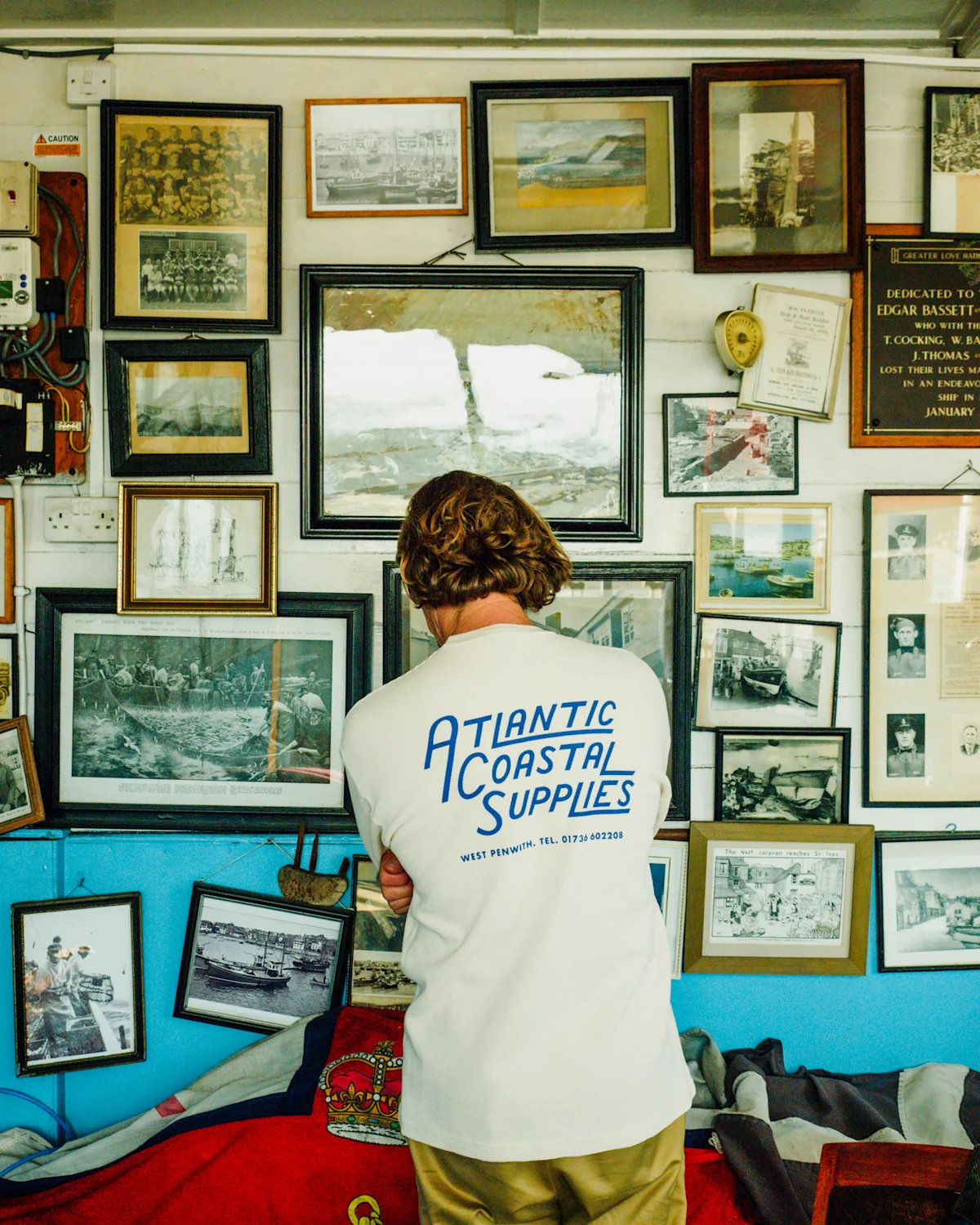
atlantic-coastal-supplies-q-and-a-picture-wall

Are there certain films, books, photographers, or brands you find yourself returning to again and again for inspiration?

I've always loved Irving Penn's Small Trades series, which you'll probably see reflected in some of the stuff we shoot. It's the same idea as a lot of our products: really functional, big space, and a clean backdrop. There's an old portrait of a diver in a full iron diving suit. Then there's another of a guy who sells baguettes. There's just something about it. I love these old ideas of simplicity and the basics.

That's why, when you look at our stuff, if a hat has a mackerel on it, it's because it's the easiest fish to catch around here. It's not a joke. Sure, there are tuna here too, but the idea isn't tuna. Do you know what I mean? The other hat has a boat on it, and it's the kind of boat that, if you had a decent job, you could actually buy. You can find a nice used one for five or six grand. It's not out of the realm of possibility.

ACS hats have developed a cult following among menswear enthusiasts, surfers, and outdoors people. What do you think makes them resonate with such different audiences?

Hats used to come like that—kind of crisp, with a flat bill. And you were supposed to leave it flat. No one would have dreamed of bending it, right? That's why I sometimes try to make videos where I'm like, "No, you've just got to bend it."

Now, I think a lot of people buying them are obviously younger, and, whatever—do whatever you want. Leave it flat if you want. But I do think there's some nostalgia there because, you know, it used to be that every time you put the hat on, you'd give the brim another little roll and throw it on. Maybe you wanted a little peak, maybe you wanted it tighter, or maybe you left it a little looser. I think that's just part of wearing a hat.

Some of this product, it just feels like it used to. A lot of the newer "dad hats" have a really aggressively pre-curved brim, right? To me, it seems like they've recut the pattern to accommodate that really curved brim. So you never get any of that interesting shape up here. You never get the wrinkles, the little extra bits, or the little folds.

You should get to do what you want. You can shape the hat exactly how you want it, instead of getting one that comes out of the box already locked into a particular shape. I think that's what it is.

atlantic-coastal-supplies-q-and-a-beach

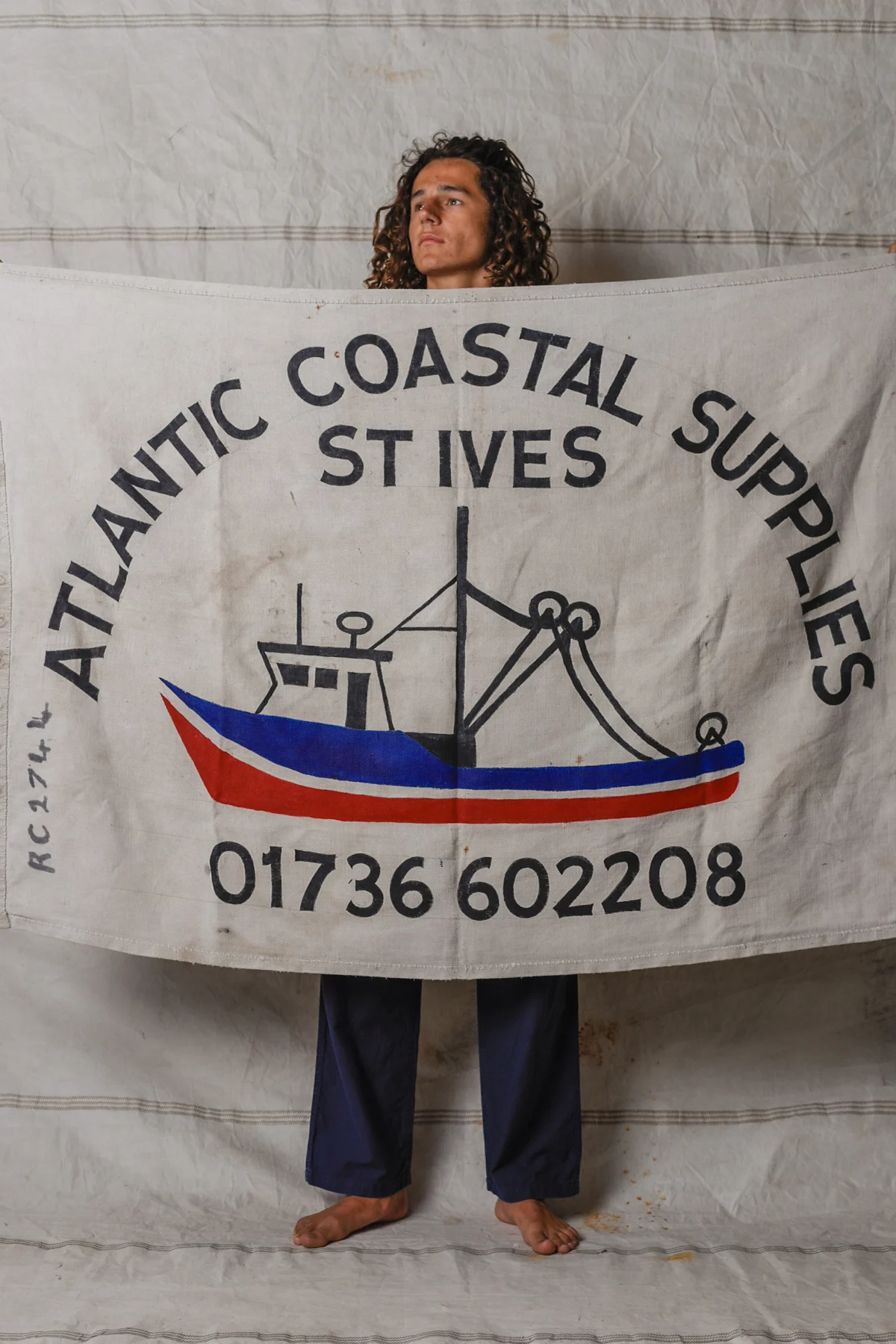
atlantic-coastal-supplies-q-and-a-flag

From made-in-USA thermals and hoodies to Scottish-spun lambswool, ACS puts a lot of emphasis on well-made staples. Why are those foundational pieces so important to the brand?

I just want to be able to build a long-lasting, timeless wardrobe. For me, a lot of it is just that things feel right, like they feel how you remember them feeling. A lot of that is tactile. Take some of the Scottish stuff, for example; they leave some lanolin in the wool, right? It's a little oily, and you can smell it. It smells like sheep. It's not washed to death, you know? Even a lot of the stuff out of America has that dryness and that weight.

You struggle to find jersey that's that thick, dry, and dense outside of Japan. Even down to T-shirts—it's probably the same for you—all my favorite T-shirts are those 18-singles, mid-to-heavyweight commodity tees that were made in the '70s or '80s. They've got some cool, weird logo printed on them. I think that's what it's about: the feel.

The sweaters are heavy, the jersey is dry, and the hats come a certain way, and you've got to fix them. It's all those little things. It's tactile, it's nostalgic. You pick something up and think, Oh yeah, that's right.

Dive watches seem to occupy a similar space. Functional, timeless, and full of character. Do you have a few favorites?

Our Snorkler watch, which took us over a year to make, is a daily driver for me. It's stainless steel with a Japanese NH35 automatic movement, and is waterproof to 200 meters (666 feet).

There are definitely some I really love. If you ever look at the old Heuer Mareographs, the one that was sold in America through Abercrombie was called the Seafarer—it's beautiful. That's one of my all-time favorite watches, mainly because it's one of the only mechanical watches, I think, that has a tide complication. I've looked around, and I've never really heard of anything else quite like it.

What are the other ones? Oh, the Blancpain Fifty Fathoms 3H. I think that one came after it was used by the German special forces, when they developed rebreathers. With a rebreather, you reuse the oxygen while you're underwater, so you don't have bubbles rising to the surface and giving away your position.

There's this dive watch case called the Super Compressor. If you go on eBay and search for Super Compressors, you'll find all kinds of them. A lot of inexpensive brands used the case, but companies like Longines made them too. The cool thing is that the rotating bezel sits underneath the crystal instead of outside it. They have two crowns: one controls the internal bezel, and the other sets the time. It's all tucked under that domed crystal. They're just sick. Depending on the brand and model, they can cost anywhere from a couple of thousand dollars to fifty grand.

You're an avid surfer and spearfisher. On a perfect day, what time are you getting up, and what does that morning look like?

We've got a couple of kids, so we get up early, make some coffee with the Moccamaster, and brew a big pot of filter coffee. My son's into surfing now, so if the waves are decent, we'll head out with him in the morning. There's a high-pressure system above us, so it's glassy with not much wind, and the surf is pretty mellow.

After that, it's fun to head over to the South Coast. Sometimes we'll hop on a buddy's boat. It feels a lot like parts of Maine, especially if you've ever been up around the islands. We'll spend the day fishing, swimming, and just hanging out. There are a couple of beaches over there that you can only reach by anchoring offshore and swimming in. If we get lucky and find some mackerel or scallops on the seabed, we'll fire up a little portable grill and cook everything right there on the pebbly beach at Greeve. Then we'll have a little dinner, relax, and just hang out.

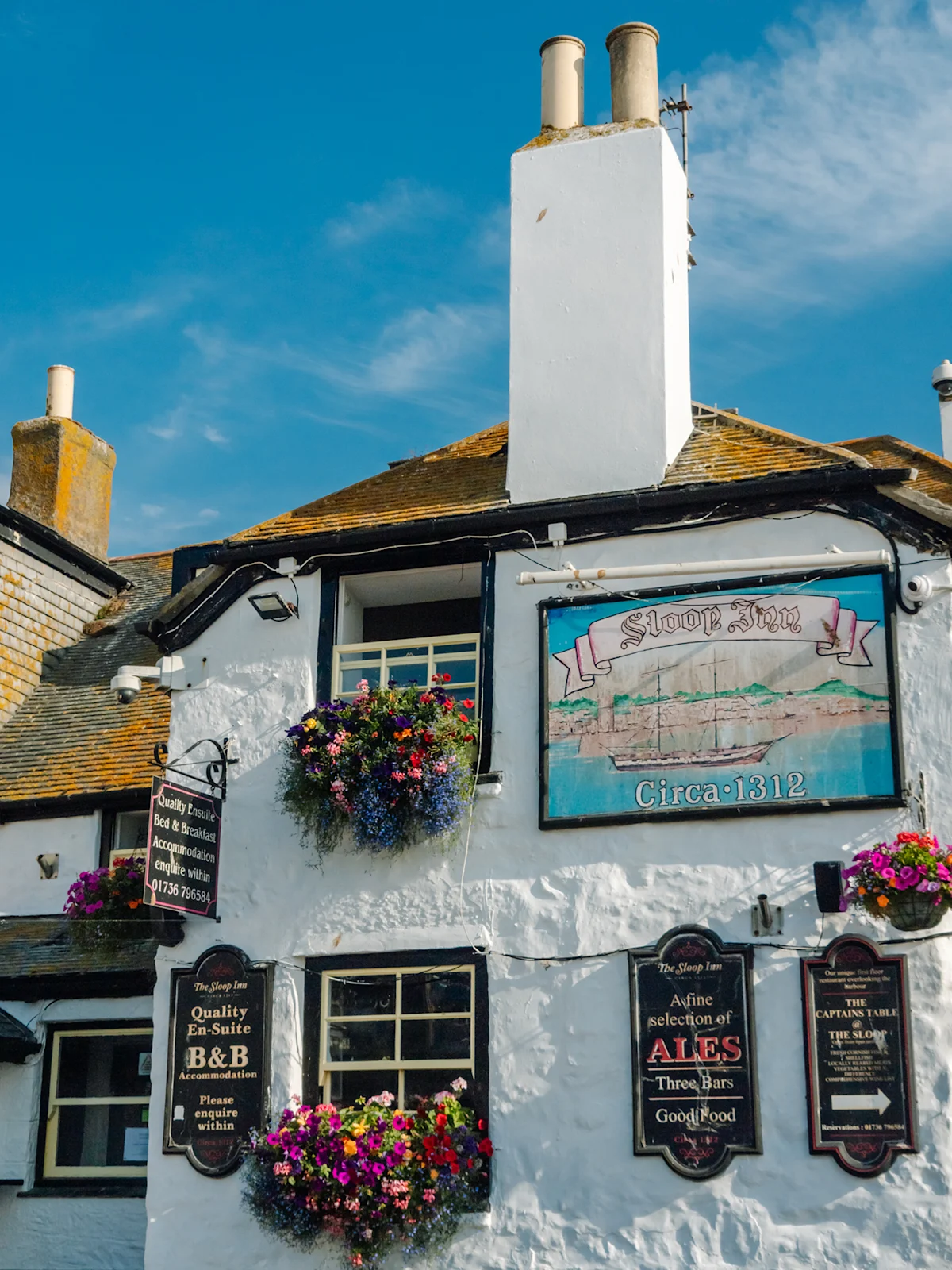
atlantic-coastal-supplies-q-and-a-sloop

What are your favorite pubs in the UK?

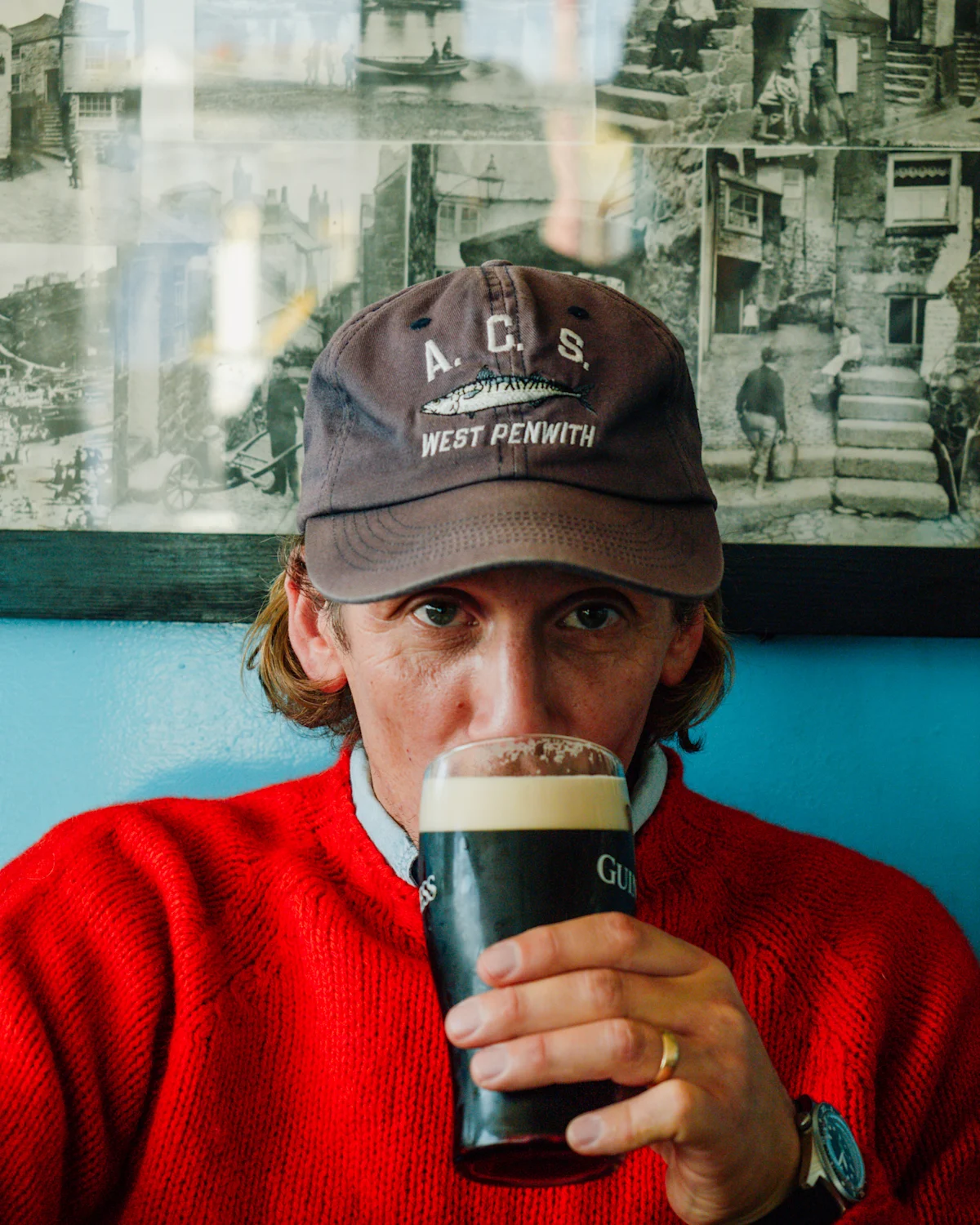
The Sloop Inn in St. Ives is great. They pour a nice Guinness there. And then there's The Tinners Arms. The Sloop sits right on the slipway where all the fishing boats used to leave from. It's just always been there. I think it's from the 14th century—something like 1312. The Tinners Arms usually has a nice fire going, and it's right on the wild edge of the coast in Zennor. There's almost nothing there. I think only about 20 people live in the village.

You can start in St. Ives and walk from the Sloop to The Tinners Arms. It's about four or five miles along a really rugged stretch of coastline that's basically empty. Once you get out of town, there's just nothing. The whole area is protected now. It's designated as an Area of Outstanding Natural Beauty, which is like a national or state park, so you really can't develop it.

Speaking of the water, "aquatic-wear" seems to be having a broader moment in fashion right now.

I think people probably have a little more time than they did pre-COVID. They've got a little more flexibility, and I think they're looking for a simpler, more meaningful life. I also think people don't want as many boundaries between themselves and nature. You see it in Europe during the summer. If you're in Copenhagen, for example, people want to jump in the river and then walk to dinner. Or they're out on a bike ride, stop somewhere to swim, and then keep going. I think people have a little more time, and they're thinking, I can wear these sandals into the river, and they still look good when I stop for a glass of wine on the way home.

To me, there are two versions of the same idea. One is people interacting with nature in the city. The other is people who have a little more free time and are connecting with nature in a more traditional way. But I think it's really the same mindset and often the same people.

I remember seeing Aaron Levine post an ACS hat on Instagram a few years ago, and it felt like a lot of people discovered the brand through that. Did you notice a real snowball effect after that?

Oh yeah, for sure. Aaron's a great dude. I've known him for a while. He actually came over here randomly once. He was shooting with a friend of mine for that first lookbook he did when he launched his own brand. He shot it in the same studio where some of our photos were taken. It's this beautiful old sail loft that's now an art nonprofit with studios right on the beach. Everybody came by the shop afterward, and it was really nice of him to give us that support. It just went crazy after that. When you get a little co-sign from him, it really means something.

atlantic-coastal-supplies-q-and-a-st-ives-street

atlantic-coastal-supplies-q-and-a-storefront

You were just in Paris showing Spring/Summer ‘27. Are you excited to introduce any new SKUs from the collection?

I did a bunch of new products just north of Kobe with an old friend in Japan who's doing a lot of production work now. We made a few pairs of trousers for spring/summer in this really nice Japanese reverse sateen. I keep finding these vintage versions; it's almost like an old hospital jacket or something.

That's kind of what the brand is, right? It's like this little hospital jacket from, I don't know, the '20s, mixed with this film with Kevin Klein where he's in the south of France wearing this sacky kind of '80s/'90s suit. It's a little bit of both ideas.

So it's just great, hard-wearing stuff that you could wear to a wedding on the beach, then throw in the bottom of your bag without worrying about it. I'm really excited about that. We also did some great new shirts out of Portugal.

We just want to go places and work with people we really love. I love going surfing in Portugal, and now we're spending more time in Japan. It's kind of just about building the brand around the places and people we love.

Who's got the best fish and chips in Cornwall?

Becks Fish & Chips.

ACL isn't the only UK outdoor brand inspired by the landscape; check out our feature on Cornwall's influence on Finisterre.