

Kyle Siegel is the first to admit that the products he's making with Raide, an insurgent technical outdoor company founded in 2023, are not for everyone. But as the founder and sole designer behind Raide’s no-bounce run belts, apparel, and ski packs, Siegel doesn’t think this is a bad thing. In fact, the former SpaceX engineer views the product development approach taken by many brands, one that targets maximum consumer appeal, as completely backwards.
Siegel defines Raide’s target audience as “objective-focused”—whether that objective is a time, a summit, or a new distance—and Raide’s guiding credo as creating the best products for human-powered movement in the mountains, full stop. He believes deeply that Raide’s purpose is to push the limits of what’s possible in sport. The way to get there is via a design process guided by an unwavering commitment to seeking solutions, not price parameters.
Like many other gear brands, this process usually starts with an early prototype and a Raide athlete who can put it through the wringer. Sometimes the prototype itself becomes the end product. This was the case ahead of ski mountaineering’s debut at the 2026 Winter Olympics, when Siegel worked to design a bespoke pack for Anna Gibson, a champion trail runner and skimo athlete. Other times, feedback from elites directly influences how a prototype evolves into the final design that gets produced. Case in point: in early April, Olympic marathoner and Raide athlete Des Linden “tested” a pre-production iteration of Raide’s forthcoming 15-liter fastpack during the 2026 Marathon des Sables, a grueling seven-day ultramarathon through the Moroccan Sahara.

Des Linden at Marathon des Sables | Photo by Andy Cochrane
A Background in Engineering
Despite his uncompromising approach to design, Siegel’s path to founding Raide counterintuitively emerges from a lack of professional experience in either of the company's principal activities: skiing and running. Siegel grew up in Chicago and studied engineering at Harvey Mudd College in Southern California. He’s been obsessed with skiing since college, but admits that running is a more recent passion. “There was a long time in my life, until probably 2019, where I didn't think I'd ever run over a mile, for probably the rest of my life," he told Field Mag in a recent interview. "I was just like, running is not something I need to do.”
Following graduation in 2014, Siegel spent almost a decade toggling between working in tech and the outdoors. He spent two seasons tallying over 150 days on skis while living in Vail and working as a ski instructor, and moving back to San Francisco in between to work as a dynamics engineer at SpaceX (Siegel also interned with the aerospace giant during college). He spent a year working as a software engineer at Snapchat, another year as a product manager at The North Face, and then two more in a similar role at the Norwegian luggage brand Db. Along the way, Siegel eventually warmed to running—primarily as good cross-training for the big days of backcountry skiing that he craved. All the while, a hard-coded engineer’s mindset made him critically aware of the shortcomings of the gear he used.
“I didn't come at these sports naturally,” said Siegel. “I've always been a little bit of a princess about them [...] like, I can't handle the gear making this any harder than it already is.”
Despite his reluctant start to running, Siegel has since embraced the discipline; he routinely logs an average of 40 miles per week outside of ski season, and has completed several ultra-distance objectives, including the Tamalpa Headlands 50K. During trips to Raide's manufacturing factory in Vietnam, which he visits multiple times per year, he tests samples on the hotel treadmill.
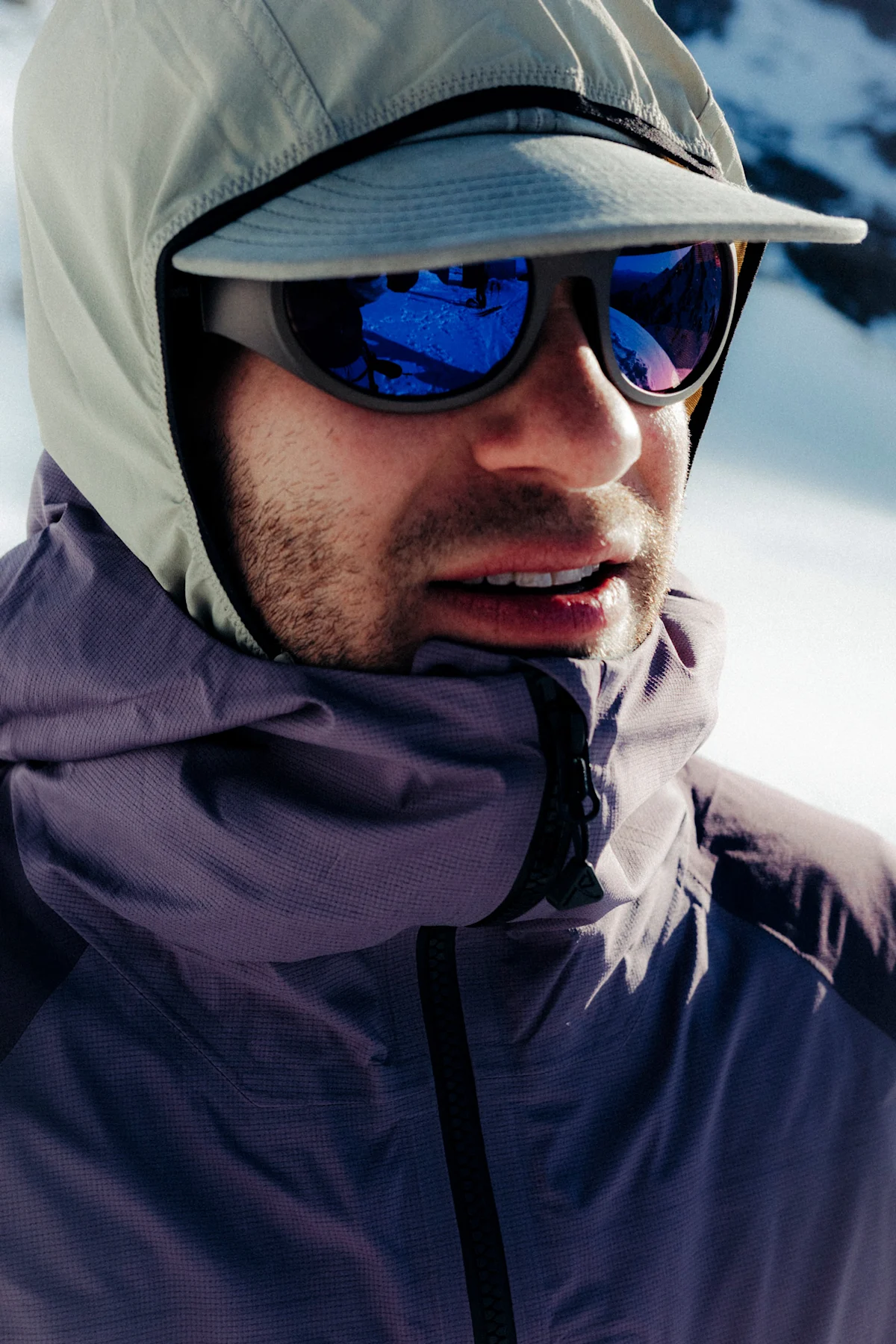
Kyle Siegel | Courtesy Raide
Building a Design-First Outdoor Brand
In May 2022, Siegel tumbled over the tipping point that set him on the path to founding Raide during a ski trip to Mount Rainier. “That's when I reached peak frustration with the gear that I had, where I was like, I have to do something about it.” Over the subsequent 18 months, a frustration-fueled motivation to take sewing lessons and make a single suitable backpack for himself shifted by degrees to thinking he might commission a US-based maker to sew a few dozen packs. That evolved into an order with a factory in Vietnam, and a full commitment to turning his design ideas into a real company. The Raide LF 40L ski pack was the brand’s first product—it immediately made waves in the off-piste world for its smart compartmentalization, avy gear access, low weight, and Dyneema construction. A 30-liter follow-up won multiple awards.
Three years on from Raide's launch, Siegel says his approach to product design is unchanged. He starts by identifying a problem with a product, or one that athletes report experiencing with the existing equipment, and iterates on the design until that problem is solved. The tactic might sound obvious, but Siegel said he's observed—and experienced firsthand while working on product teams—that this is rarely how the outdoor industry functions.


