Sole Searching: How Brooks Retooled Its Iconic Cascadia Trail Runner

Sole Searching: How Brooks Retooled Its Iconic Cascadia Trail Runner

Author
  • Tanner Bowden
Photographer
  • Courtesy Brooks

A beloved best-seller since '04, the Cascadia 20 introduces an overhaul with material updates like Vibram Megagrip for all-mountain running

Published: 08-05-2026

Field Mag may receive a minor commission from purchases made via affiliate links.

Presented by

This article is the latest in an ongoing series of deep dives into past, present, and future icons called Sole Searching, made in partnership with Vibram. Earlier features outline how Saucony updated its most rugged trail running shoe and how Arc'teryx is creating a new category with the Vertex Alpine.


When Brooks released the Cascadia in 2004, trail running shoes skewed burly, more light hiker than rugged runner, or they were nimble without offering much protection. The Cascadia blazed a path down the middle—flexible, stable, supportive, grippy—and has stayed the course in the decades since. When runners get curious about running on trails, many pick up a pair of dependable Cascadias.

Today's runners expect more from their trail shoes than ever though, so when the Brooks footwear team began reworking the marquee shoe to create the shoes twentieth iteration—the Cascadia 20—they knew it needed to be more of an overhaul than a simple update. But how do you rebuild a shoe that's been beloved for so long without spoiling the formula?

To find their answer, the team looked toward trail running's cutting edge without losing sight of the past. They came up with a low-profile, all-mountain shoe with balanced cushioning, lightweight protection, and a six-millimeter drop.

To get a better look under the hood of the new Brooks Cascadia 20, we touched base with key team members at both Brooks and Vibram who were involved in the process and below, we go deep on the new shoe's design, exclusive renderings and all.
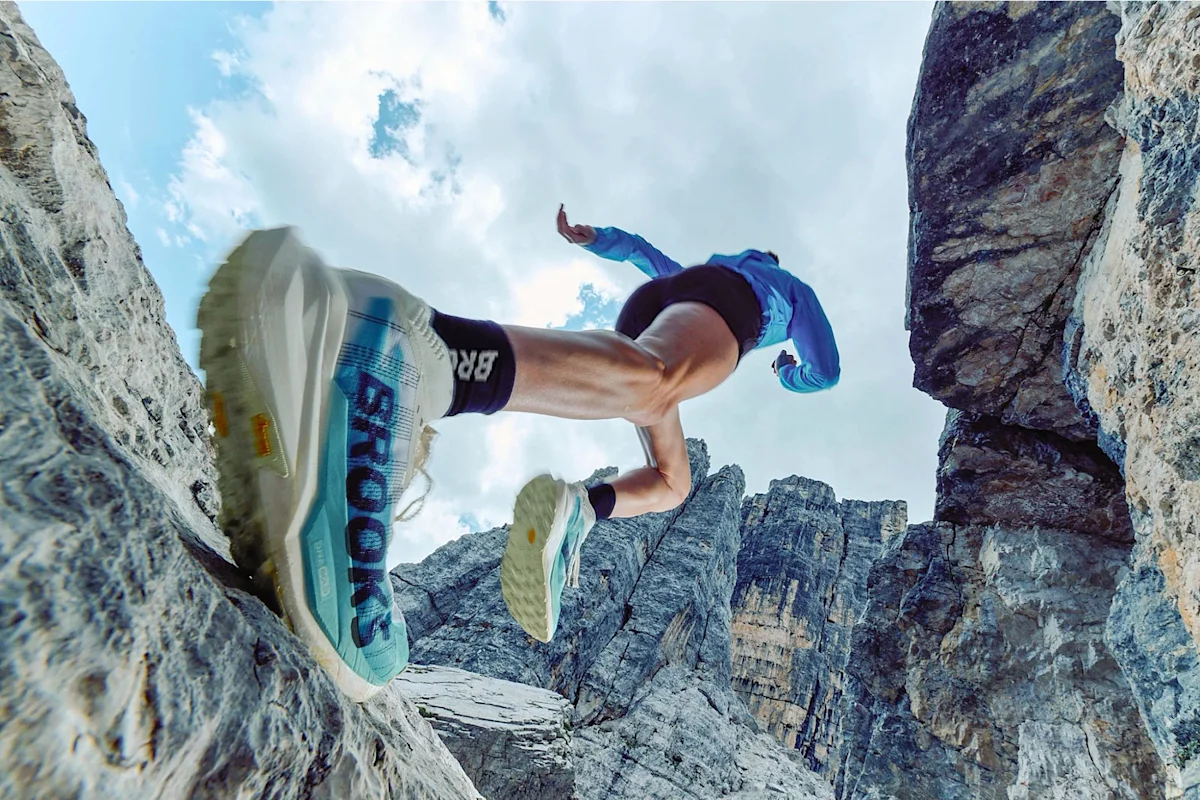

brooks-cascadia-elite-sole-searching-feature-rocks

Brooks Cascadia Elite

Top-Down Advances for a Bottom-Up Rebuild

Knowing that the Cascadia had a strong fanbase, the team at Brooks started by looking at consumer feedback, keying into what traits runners prioritize to make targeted updates in those areas. From Europe to North America, the number one note was the same: traction.

In a stroke of good fortune, Brooks had recently established a partnership with Vibram for another shoe called the Cascadia Elite, a new, pinnacle model that athletes have been racing in for over a year that saw a wide release earlier in spring 2026. That shoe is designed for the sport's top performers and features bleeding edge tech, including Vibram's Megagrip Elite outsole. "All of our development was really laser-focused on the athlete," Chad Mullavey, footwear product line manager at Brooks told us. But developing that more advanced shoe helped inform improvements that could be brought to the everyday runner, including traction.

"The Cascadia Elite played a key role in informing the general lug geometry, Traction Lug design, and lug placement on the Cascadia 20," says Jordan Carey, national sales director at Vibram. "Performance testing and athlete feedback from the Cascadia Elite helped validate the perimeter lug shape and design as well as the central forefoot lug shape that was ultimately carried into the Cascade 20."

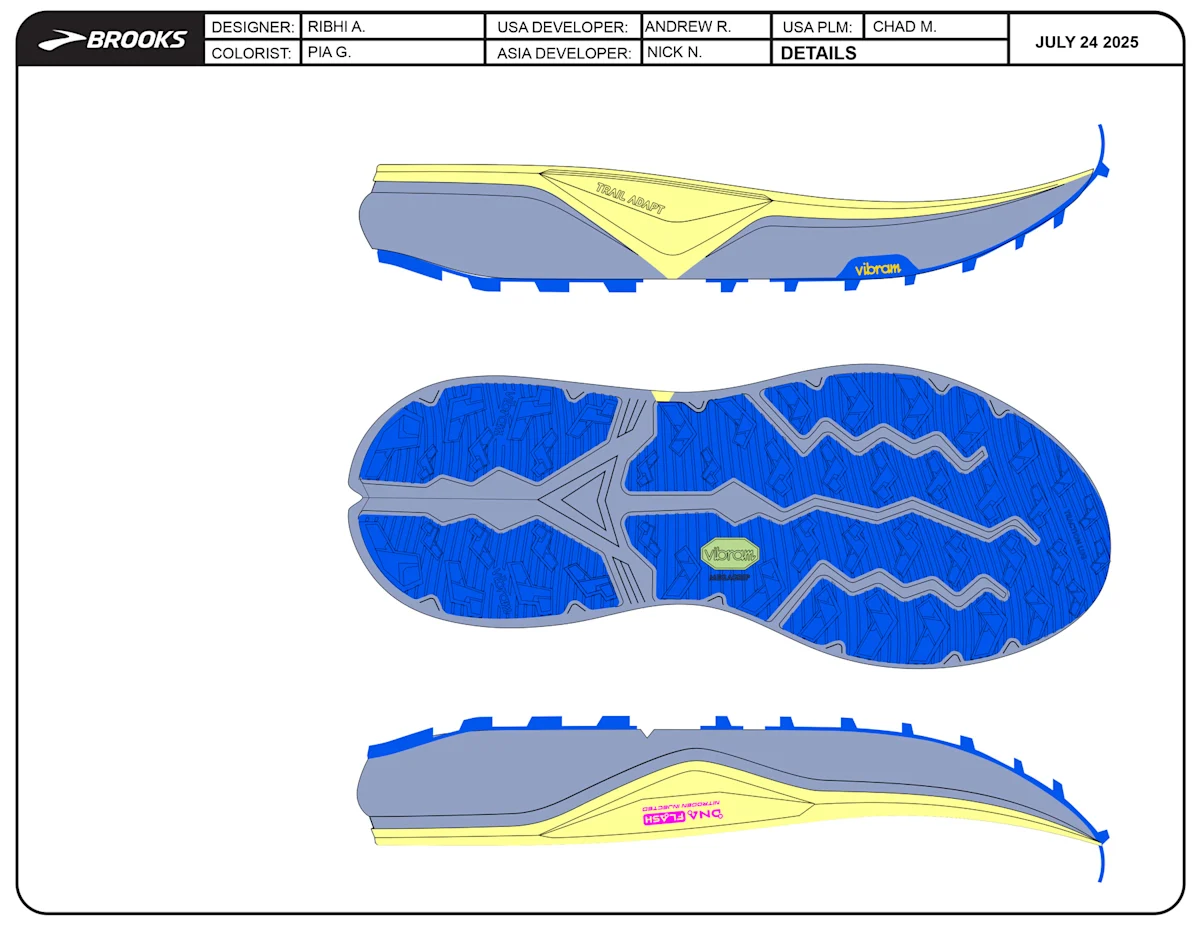
The Cascadia 20 on the other hand trusts Vibram's widely celebrated Megagrip outsole. Lugs are four millimeters, and each one features small, micro features on its sides—a Vibram tech called Traction Lug—to help the shoe bite into the ground. "Knowing that the Cascadia 20 will be used in all types of terrain, this technology is key to keeping performance consistent mile after mile," Carey says.

brooks-cascadia-20-sole-searching-feature-outsole

Brooks Cascadia 20 outsole

More Comfort, Better Trail Connection

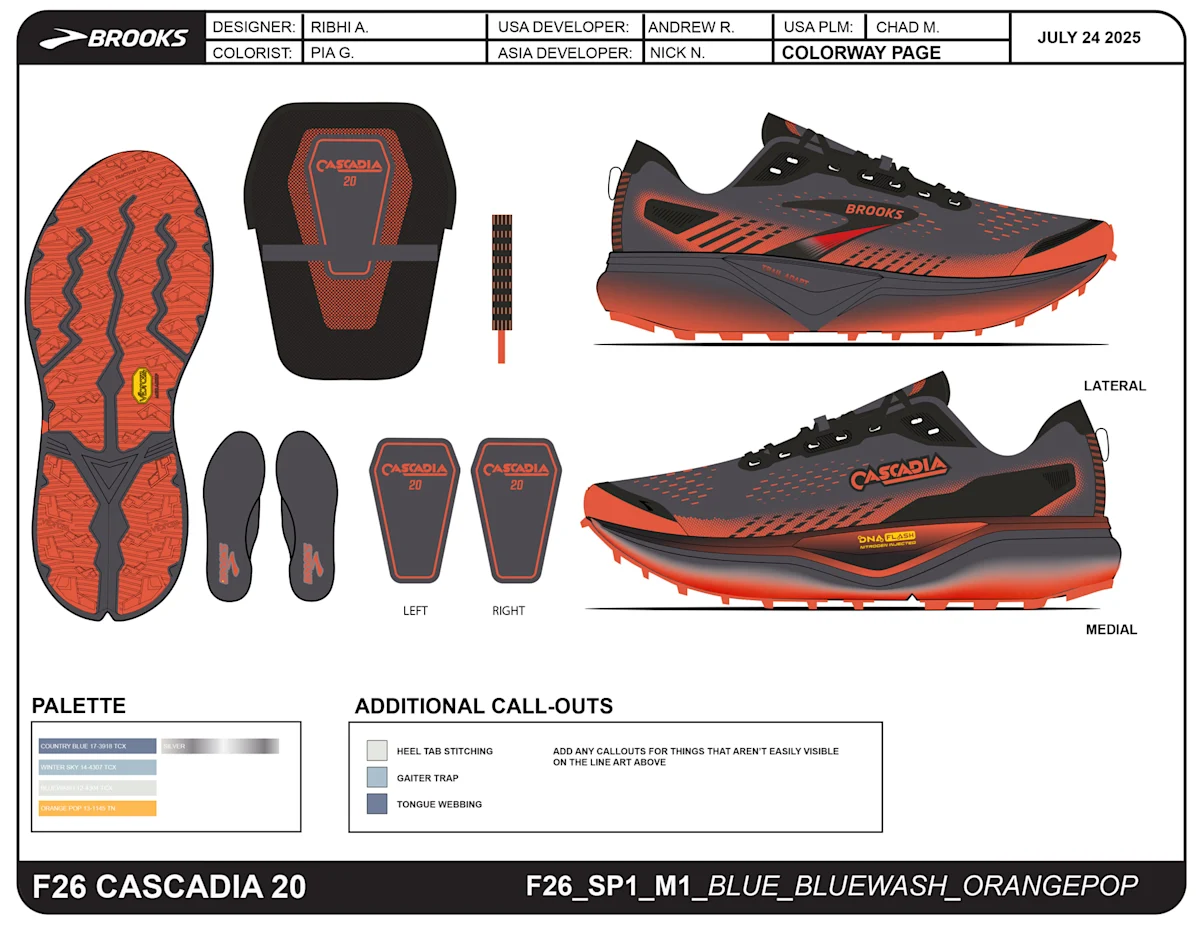
After accounting for traction, the Brooks team's second goal was to address comfort and weight. Runner feedback indicated many felt recent Cascadia versions had become too stiff and firm underfoot, so the designers gave the Cascadia 20 a brand-new midsole. With a swap to the company's proprietary nitrogen-infused DNA Flash v2 foam, the shoe is now both softer and more responsive, and even though it's four millimeters thicker, there's minimal weight gain. In a men's 9, the shoe weighs just 10.8 ounces.

"We really wanted to provide more protection underfoot, enhance the cushioning, have rugged materials but only really where we needed them in the upper, and allow this runner to go further," Mullavey told us.

The third box to check, Mullavey tells us, was to make sure the Cascadia would allow runners to "stay in tune with the trail." Trailfeel might be a heady runner term, but Brooks grounds it in TrailAdapt, a feature referring to a specific outsole geometry. "The heel is decoupled, allowing it to articulate on descents. The midsole has a little bit more torsional flexibility," Mullavey explains. Articulating finger-like rubber pods under the forefoot adapt to different types of terrain.

brooks-cascadia-20-render

Design rendering for the Cascadia 20

brooks-cascadia-20-render-outsole

Design rendering for the Cascadia 20 outsole

Running on Legacy

With the new Megagrip outsole, foam upgrade, and extra protection, the Cascadia 20 represents a jump in the evolution of the line. Previous leaps came with the Cascadia 19, the first version to use supercritical foam, and with the Cascadia 16, which was the first to depart from the pivot post system—designed to let the shoe adjust to changes in terrain—that had been used since the very first model.

"Spring '26 was almost a rebirthing of what the Cascadia can mean," Mullavey says, "with the super-focused Cascadia Elite for the athlete and then, while not totally foreign or totally new, a modern interpretation of what the Cascadia can be with the Cascadia 20."

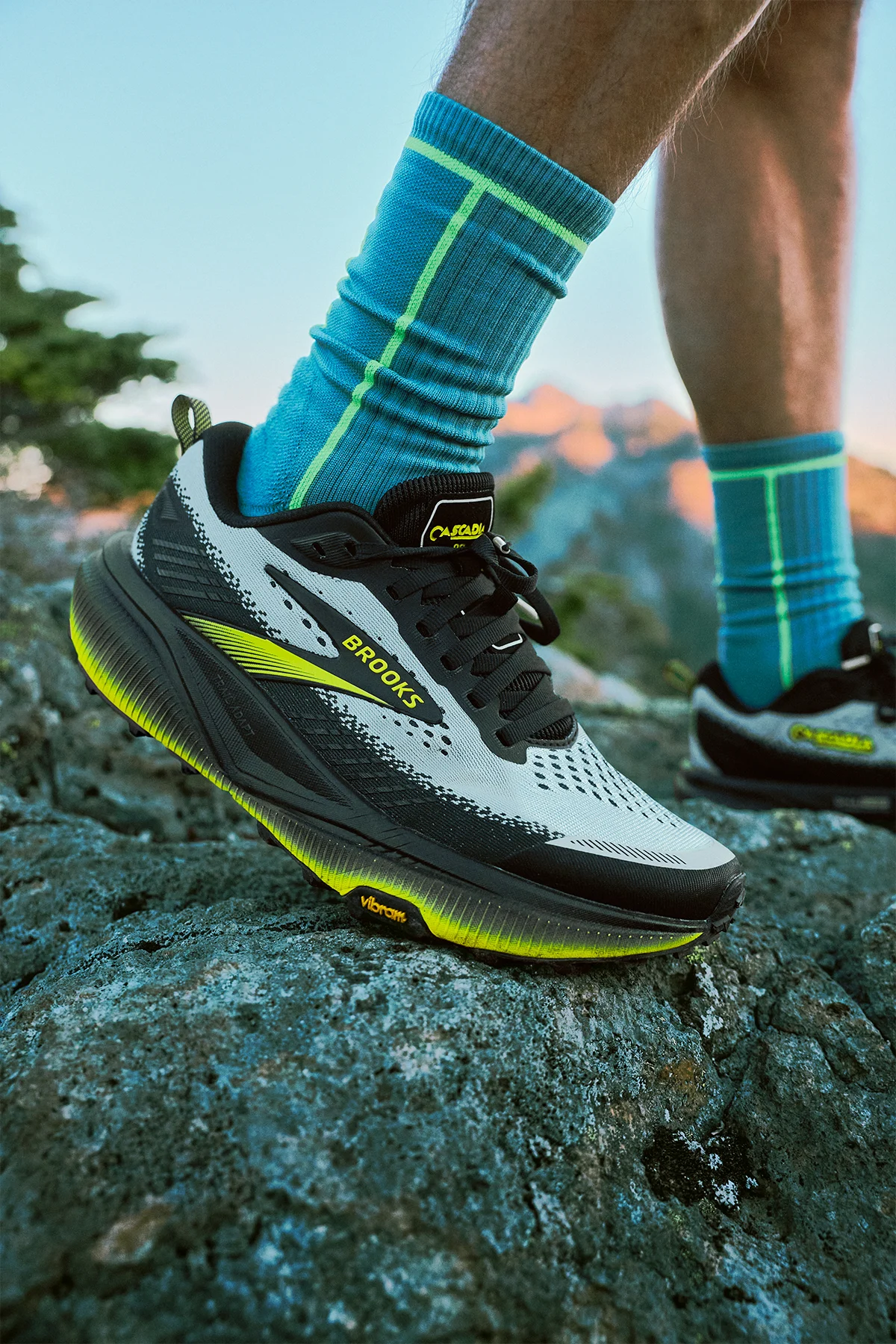
brooks-cascadia-20-sole-searching-feature-vertical

Brooks Cascadia 20

The two shoes also constitute a quiver, with the Elite for racing and the Cascadia 20 for general, all-mountain use. The Elite has already tallied up more than 35 podium appearances according to Mullavey, including Chris Meyers' 2025 second place finish at Western States. For history-minded trail runners, this too, is familiar ground for the Cascadia. Legendary ultrarunner Scott Jurek wore a prototype of the first shoe to win Western States in 2004 when he set a course record of 15:36:27 that held till 2012. He returned in 2005 for a repeat win in a production model.

Material advances and rising interest in the sport have provided companies with more resources with which to build trail running shoes that are more capable than ever. The Cascadia is back in that conversation with the new Elite model and the updates supplied to the original, which should secure its place in the dirt as a trusted and versatile go-to for trail runners around the globe, seasoned and new alike.

And for anyone who avoids elevation gain at all costs, Brooks also re-released the Cascadia 1 as a throwback lifestyle shoe for everyday wear.

LEARN MORE

Ready to take these bad boys for a spin? How about these women-focused trail running events, or taking on Europe's GR20 trek.