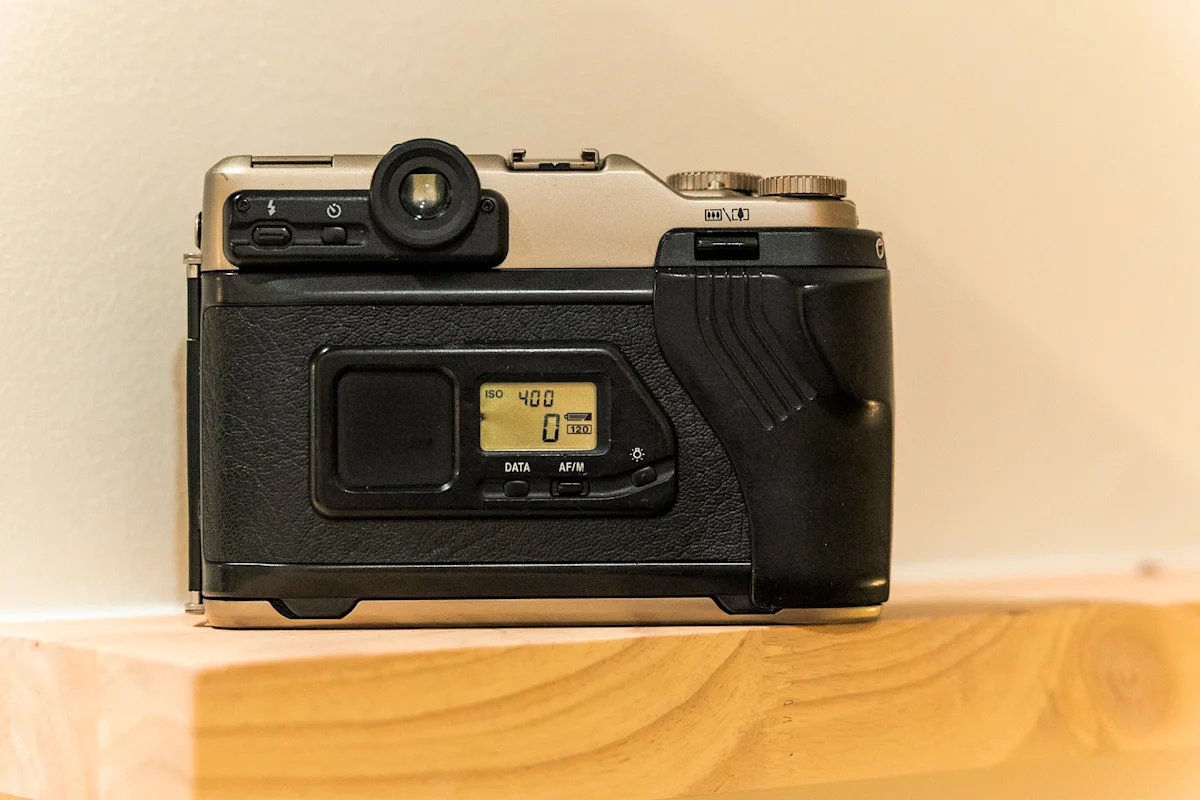
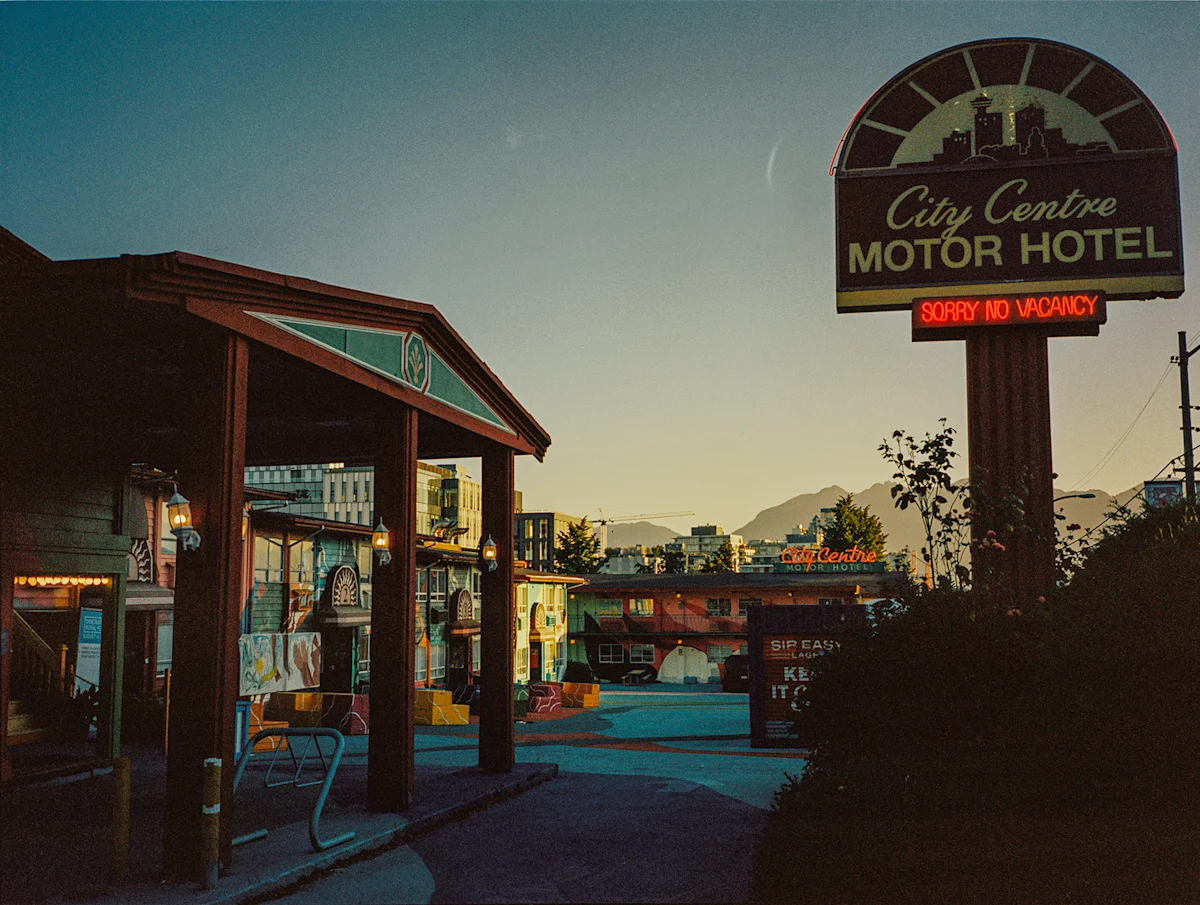
The Fujifilm GA645Zi is an enigma. It's a medium format camera that looks like a 35mm camera that ate too much at the buffet, with an image aspect ratio that straddles both formats. It's the Suzuki Jimny of the camera world. Released in 1998 as the final and most fully-featured model in Fuji's GA645 series, the GA645Zi is a 6x4.5 medium format autofocus point-and-shoot with a built-in zoom lens, pop-up flash, motorized film advance, and enough automation that you could hand it to a stranger for a family photo without too much worry.
By 1998 standards, the GA645Zi's user-friendly nature was a bit of a novelty—medium format cameras weren't exactly known for being easy or practical to use. By today's standards, it's still a novelty, because nothing quite like it has been made since. The camera is a favorite film camera among the Field Mag fam—I've been shooting mine for a few years now and I know its features inside and out.
Below, I'll break down all the pros, cons, and quirks of the Fujifilm GA645. And explain why I've considered (and reconsidered) selling it, but why I ultimately always keep it in rotation.
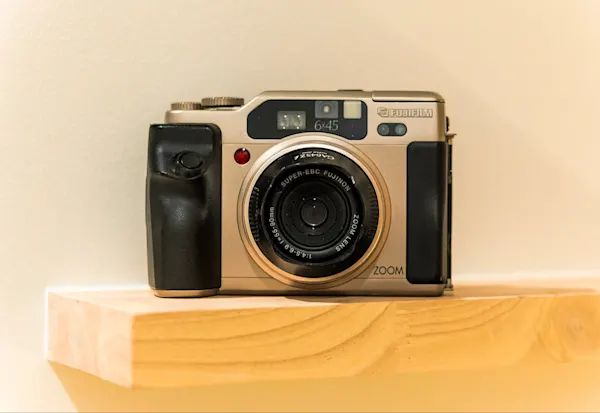
- Format 120/220 roll film, 6×4.5 (56×41.5mm)
- Lens Super-EBC Fujinon 55–90mm f/4.5–6.9 (stepped zoom: 55/65/75/90mm)
- Shutter 2 seconds – 1/700 + Bulb, electronic inter-lens leaf shutter
- Autofocus Hybrid active/passive IR, 1m to infinity
- Metering Center-weighted TTF (through the finder)
- ISO 25–1600
- Shooting Modes Program (P), Aperture Priority (A), Slow Sync (AS), Manual (M)
Pros:
- Travel-sized
- Aperture priority and portrait mode
- Sharp-as-a-knife lens
- Viewfinder tells you everything
Cons:
- Autofocus lets you down often
- Slow lens
- Stepped zoom takes getting used to
- Size
- Needs to be loaded carefully
- Portrait mode can be tricky
Fujifilm GA645 Series: A Brief History
Fuji's GA645 line arrived in 1995 and did something pretty unusual for the time period: it took the ergonomic logic of a 35mm point-and-shoot and scaled it up to shoot 120 film. The original GA645 and the wide-angle GA645W both featured fixed prime lenses—a 60mm f/4 and 45mm f/4, respectively—and had basic automation. The second generation, the GA645i and GA645Wi, arrived in 1997 with a few improvements. Then in 1998, Fuji released the GA645Zi, the zoom model which closed out the series, and the model this article focuses on.
The "Z" in the name stands for zoom. Where the earlier cameras offered single fixed focal lengths, the Zi brought a 55–90mm zoom lens (equivalent to roughly 34–56mm in 35mm terms). It's not a continuous zoom, but a stepped one, snapping to four fixed focal lengths: 55, 65, 75, and 90mm.
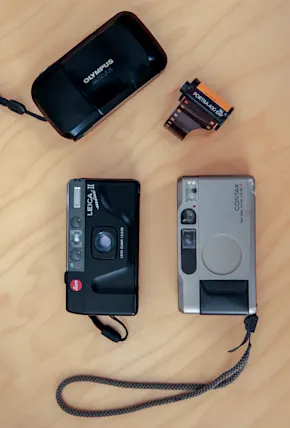
The update also added a viewfinder diopter adjustment, a lens cap sensor, improved ergonomics, and a quieter autofocus motor. The black version came out a year after the standard champagne/titanium colorway and is considerably harder to find. I really like the champagne color that I have, and I have to say it looks pretty nice on the shelf alongside an Mju ii and an old Contax G1.
As with most of history’s greatest film cameras, none of these cameras are being produced anymore, but used copies circulate regularly on sites like eBay and KEH. Prices have risen steadily as medium format film has gone increasingly mainstream, but the GA645Zi remains much more accessible than, say, a Mamiya 7ii or a Plaubel Makina 67.