Stormnet Is the Weather App to Download Before Your Next Outdoor Adventure

Author Photographer
  • Courtesy of Stormnet

Stormnet Is the Weather App to Download Before Your Next Outdoor Adventure

Predict high-risk weather both in near-real-time and up to 14 days out. Plus it just beat the National Weather Service in a major forecasting test


Published: 10-20-2026

About the author

Evie Carrick
Evie Carrick
Evie Carrick is a freelance writer based in Colorado’s San Juan Mountains who covers skiing, trail running, hiking, adventure travel, and family travel.

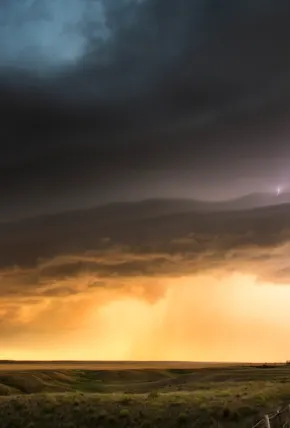
Plans for outdoor adventures from day hikes to backcountry ski trips make or break on the same bedrock: the weather. Yet somehow it remains one of the hardest variables to predict. A clear morning can give way to gale-force winds and lightning by the afternoon. Know what a sucker hole is? Unfortunately we do too. Weather apps can help, but few of them forecast for specific coordinates or update in real time. Not ideal when you've booked your campsites nine months in advance.

That changed with the March 2026 launch of StormNet, an AI-based severe weather forecasting model that predicts lightning, hail, damaging winds, and tornadoes with an average accuracy of 98.8 percent. StormNet’s near-real-time severe weather forecasts update every two minutes and can be pinpointed to an exact location on the map. The app is free, and it might transform how people prepare for the outdoors and assess risk before and during their adventures.

Stormnet-App-Screenshot-02

Stormnet App User Interface

How StormNet Works

Here's what this might look like at a glance. You can pick a point on the StormNet map—say the top of a peak you plan to climb—and see a near-real-time forecast for that exact point. You’ll know that a storm is expected to roll in at 1 PM and how far away the lightning is expected to hit. You’ll also know if severe winds are expected and when. You decide to go for it, and you check the app as you hike, watching the storm roll in (or out) so that when it comes time to make the call on whether to push for the summit, your decision is informed.

“A lot of our users spend a lot of time outside, whether that's hiking or fishing or running, and they’ll use the point forecast to look at lightning probabilities where they’re planning on going,” Andrew Brady, the Atlanta-based meteorologist who founded StormNet, tells Field Mag. “You can drag around the little crosshairs and see the probability of lightning for each day going out to 14 days, and you can go into one day and see exactly what hours are going to have the highest probability of lightning.”

Lightning may be the most helpful data for hikers, bikers, and runners, but wind (at speeds greater than 58 mph), hail, and tornadoes can also factor into an outdoor adventure. Not to mention affecting travel to and from a destination.

Stormnet-App-Screenshot-Hero

Stormnet App User Interface

StormNet's Proven Predictive Power

The tech Brady created was so good that OpenSnow, a snow forecast tool skiers and snowboarders use to chase powder, acquired StormNet in 2024. OpenSnow has since used that tech to improve its existing tools and to launch StormNet as a standalone app and website.

Two months after its launch, StormNet went head-to-head with models from the National Center for Atmospheric Research (NCAR), the University of Oklahoma, and Google DeepMind at the 2026 NOAA Hazardous Weather Testbed Spring Forecasting Experiment. StormNet surpassed the other models by a significant margin in each test, performing so well that the National Weather Service asked to use StormNet data for the remainder of the year.

StormNet works by ingesting 125 million weather data points, including Super-Res radar, satellites, ground-based sensors, and weather forecast models. It then finds complex patterns that lead to lightning, hail, damaging winds, and tornadoes.

“It’s not only learning from meteorology, but it's also learning from the topography, so it can learn which mountains and which areas will most likely be affected by lightning on a specific day or a specific hour,” says Brady, adding that StormNet’s March 2026 claim that it was “the first system of its kind in the world” still stands today.

For the first time, adventurers across the continental U.S. can access forecasts for a specific point, ranging from near-real-time conditions to 14 days out. By giving people a clearer picture of what lies ahead, StormNet could change not only how we plan our adventures, but how we assess risk and make decisions in the field in order to stay safe when the weather turns.


StormNet is free for personal use, miraculously with zero ads. You can use the phone app on iPhone or Android, or use it online.

Next, read up on The North Face and their reimagining of the iconic Nuptse jacket.