Visiting Lantern Camp, Maine's First Landscape Hotel & Modern Cabin Retreat

Visiting Lantern Camp, Maine's First Landscape Hotel & Modern Cabin Retreat

Author Photographer
  • Courtesy Lantern Camp

What it's like to visit Lantern Camp, the new boutique property swapping room service for starry skies and seclusion nearby Acadia National Park

Published: 10-28-2026

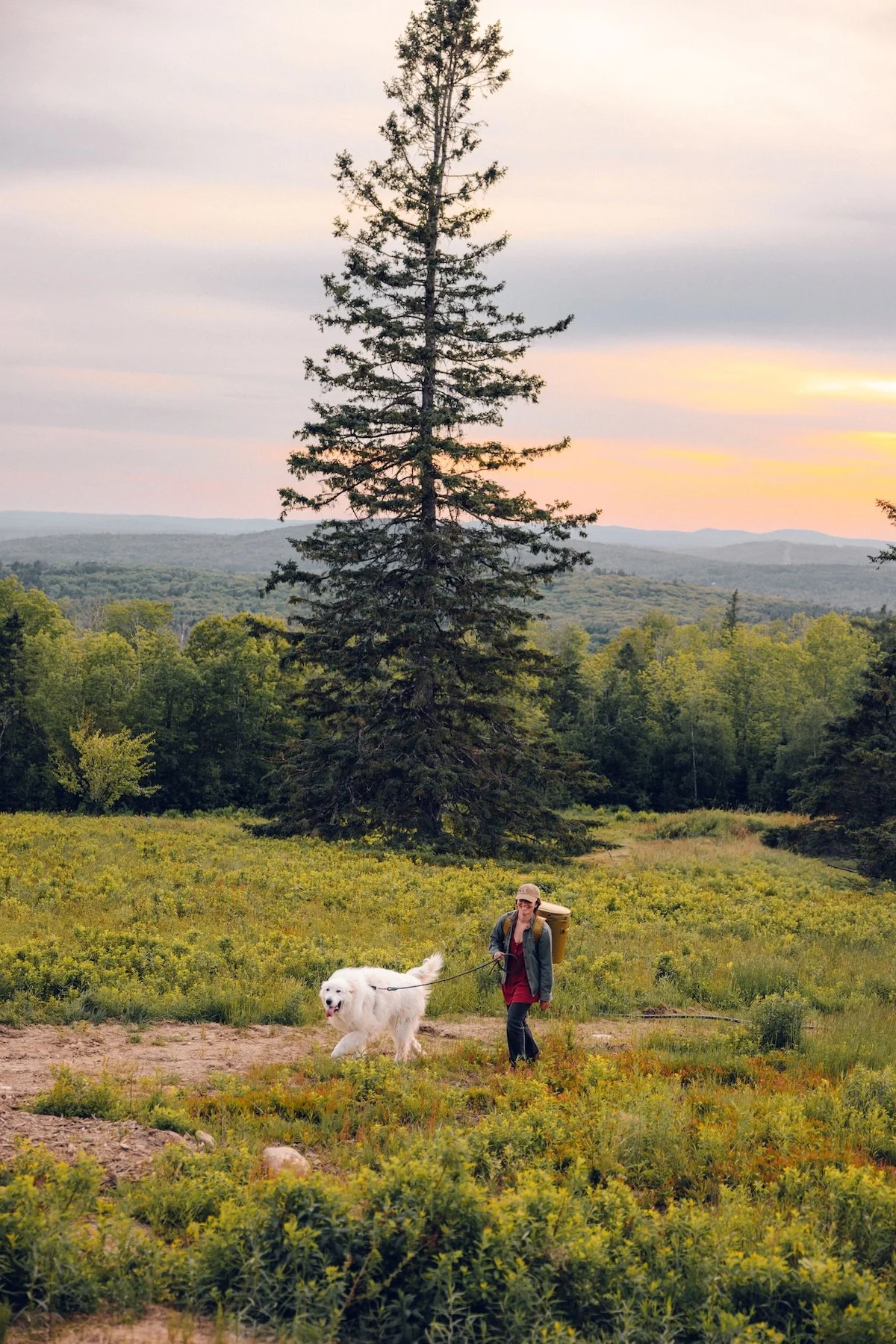
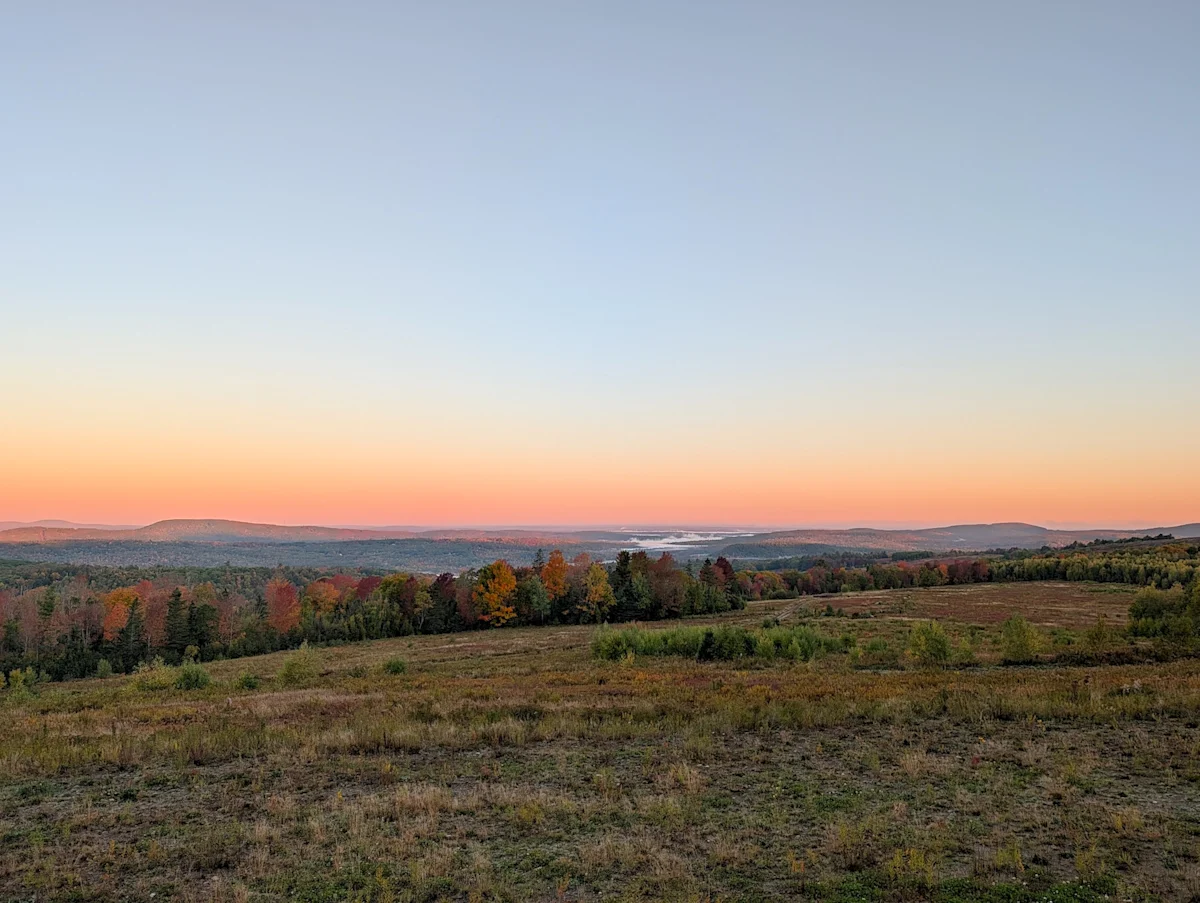
I wake up moments before sunrise on a misty October morning. As daylight rises over the horizon, a veil of gauzy golden light pours over an expansive meadow filled with the last of the season’s wildflowers and clusters of blueberry bushes that are long past fruiting. Fall’s best colors cover the landscape with a dream-like palette of fuchsia, violet, damask, and ochre, which contrast against the white cabins behind me. With a cup of freshly brewed hot coffee in hand, I step out onto the porch of my Field Cabin, then head for the nearby trail for a slow wander, where I hear nothing but the sound of the wind and the chickadees. On this busy peak foliage weekend in Maine’s Down East region, a quiet and empty field is exactly where I want to be.

But this isn’t my own private homestead; I'm at Lantern Camp, a new hospitality project and Maine’s first landscape hotel. Lantern Camp is situated in Orland, a small town in the iconic Down East region. It opened to visitors this past July with 24 Scandinavian-inspired modern cabins built into the forest and at the height of a field overlooking an old blueberry barren.

The term "landscape hotel” has been cropping up more and more to describe Instagram-ready properties set in a beautiful natural environment. But true landscape hotels put the natural setting at the heart of the guest experience—it's not just about the photos. As a longtime writer covering design, I was eager to see how Lantern Camp went about doing that in Maine. And as a Maine resident, I was also curious to check out Orland, a town completely unknown to me or any of my friends who are familiar with the region.

So on a dark and rainy Friday night, my husband and I made the two-and-a-half-hour sojourn north from our home near Portland to see what Lantern Camp was all about.


Lantern Camp: Maine's First Landscape Hotel

This part of Down East flies under the radar for most, overshadowed by Acadia National Park 30 miles east and Blue Hill Peninsula’s charming coastal towns, which draw tons of visitors from June to October. It might seem neither here nor there, but I found Orland provides a notable respite from the tourist congestion while being less than 40 minutes away from both destinations. Don’t feel too bad if you’ve never heard of Orland, Lantern Camp’s co-owner, Addison Godine, hadn't either when he first came across the property.

“I had never heard of Orland, it was sort of geographically unknown to me, and at the end of a long day touring properties there was one more on the list, that I almost skipped, but luckily didn’t,” Godine told me. “After emerging through the trees from the dirt road, it opens up and feels like you’ve arrived in another world. It was big, secluded, and had a real sense of place. I immediately felt a connection to the land.”
lantern-camp-hotel-review-maine-field-sunrise

Courtesy of Katherine Englishman

Godine isn’t just someone with good instincts who got lucky. He was chief architect and designer for the tiny-lodging startup Getaway Cabins (which was rebranded as Postcard Cabins after it was acquired by Marriott Bonvoy), and has experience with outdoor-based hospitality and design. He co-founded Lantern Camp with Anthony Pell, who shared his vision for high-end design in exceptional natural settings with a focus on land preservation and stewardship. Pell’s own family has a long lineage of preserving the historic Fort Ticonderoga in the Adirondacks since the 1820s. Pell has since applied his experience in heritage tourism and land preservation to outdoor hospitality. The two partnered together in 2023 to bring a refined version of Godine’s tiny lodging concept to life here in Maine.

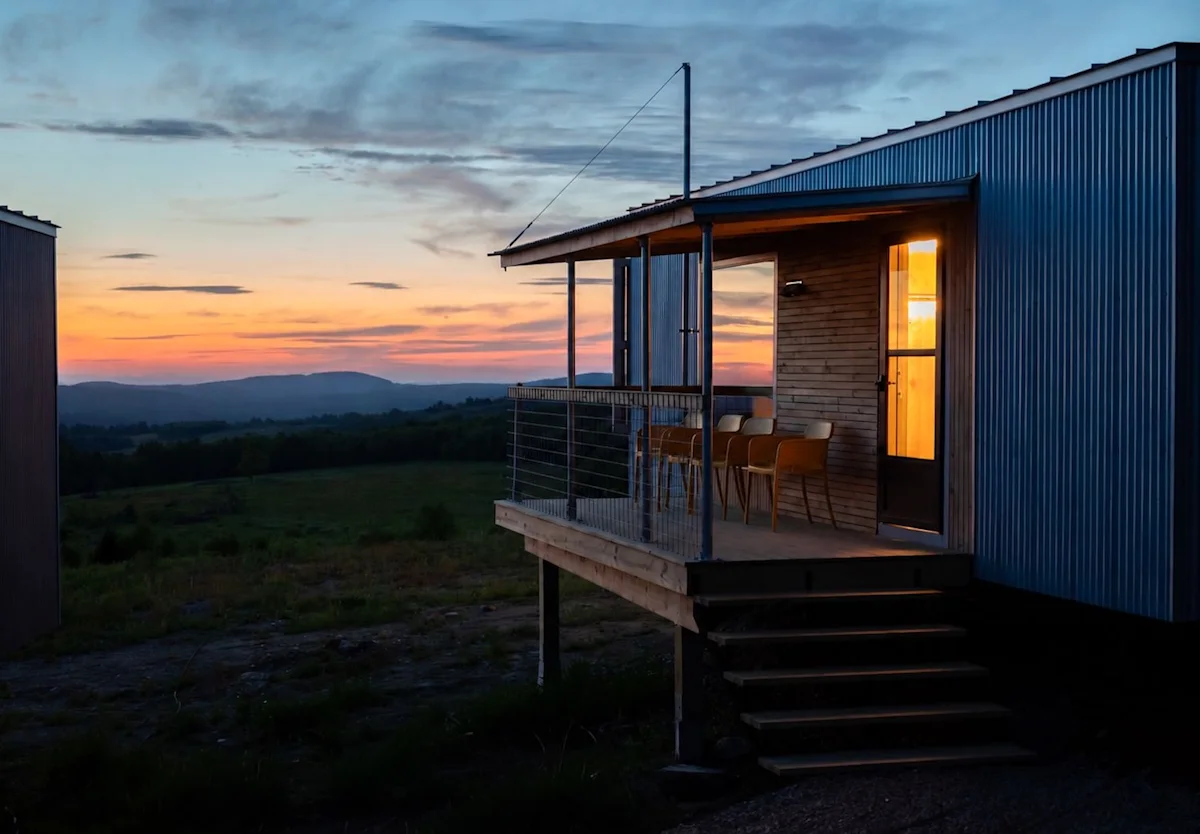
lantern-camp-hotel-review-maine-cabin-sunset

Nature as a Focal Point

From the approach on the same country road Godine took on his first visit, a cluster of 24 design-forward, low-impact cabins perched on a high ridge comes into view. It’s not hard to see why the place immediately captures the attention: from below the cabins’ ridge-top perch, the property descends into a series of soft sloping hills that sprawl out over a stunning 166 acres.

There's a two-mile-long dirt walking path that guides visitors from their private cabins through a wide-open field where lowbush blueberries cover 33 of those acres. They're ripe for the picking from July through August, but during my October visit, the shrubs traded their blue fruit for crimson leaves. Along the fringes, a dense boreal forest hedges in the property, adding privacy and a sense of being hidden away in this tiny bucolic hamlet.

The real scene stealer is the panoramic view of the surrounding lowlands from each cabin. From here you can see the granite spires of the Penobscot Narrows Bridge to the northwest (famously known as the gateway into Down East and Acadia), and to my surprise, Katahdin’s high peaks rising in the distance, over 100 miles away.

lantern-camp-hotel-review-maine-trails

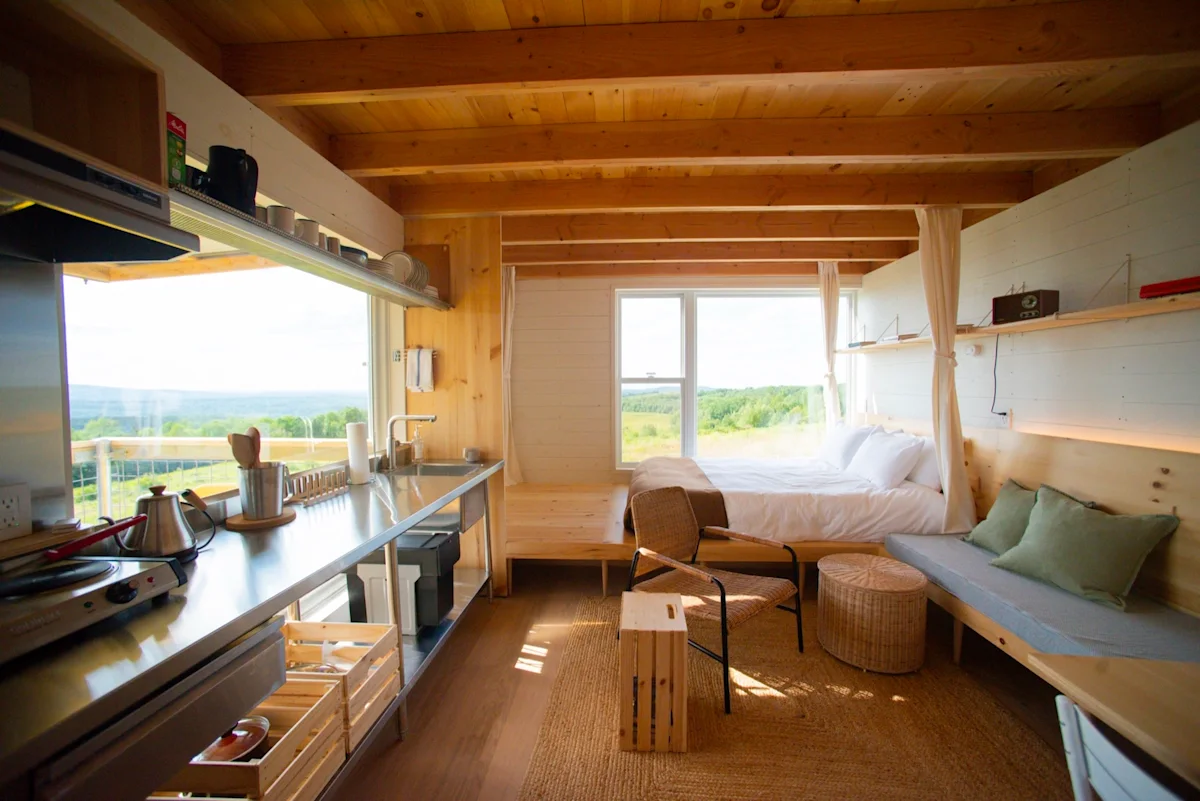
Each cabin at Lantern Camp has large picture windows to frame this 100-mile sunset view, making nature a focal point for guests. To do right by the title of landscape hotel, this is all by design.

“It’s putting the experience of being in nature and the landscape first,” said Godine. He found inspiration in Maine’s Monhegan Island, where a “Village and Wildlands” model of design concentrates building and infrastructure within a centralized area to make it walkable without disturbing the rest of the land. In the age of picture-perfect getaways and glamping sites, I’m always a bit skeptical about how much weight the “landscape hotel” label actually carries on-property, and whether it’s merely a marketing tool or a genuine mission. Bearing that definition in mind, a landscape hotel, ironically, does very little landscaping.

So I asked Godine about Lantern Camp's take on the matter.

“It’s more about the light placement of these structures on an existing landscape versus trying to change the land whether by geographical adjustments like bulldozing a large area, or replacing native plants with other vegetation, but letting it be what it was,” he explained. “The closer together things are, the smaller the footprint, which means impact can be quite minimal. Then the real design challenge becomes privacy.”

lantern-camp-hotel-review-maine-interior

What It's Like to Stay at Lantern Camp

The Accommodations

I stayed in Field Cabin #5, a 400-square-foot tiny cabin, and just one in a row of 12 built into the ridge with that awe-inspiring view. Godine was right; it does seem awfully close to its neighbors. But while the siting may appear to sacrifice privacy, the orientation of the cabins and window placements provides plenty of seclusion—once inside, I felt worlds away from the other guests. (Although the place could use a few more curtains, something Godine says they've had feedback on and are working to install.)

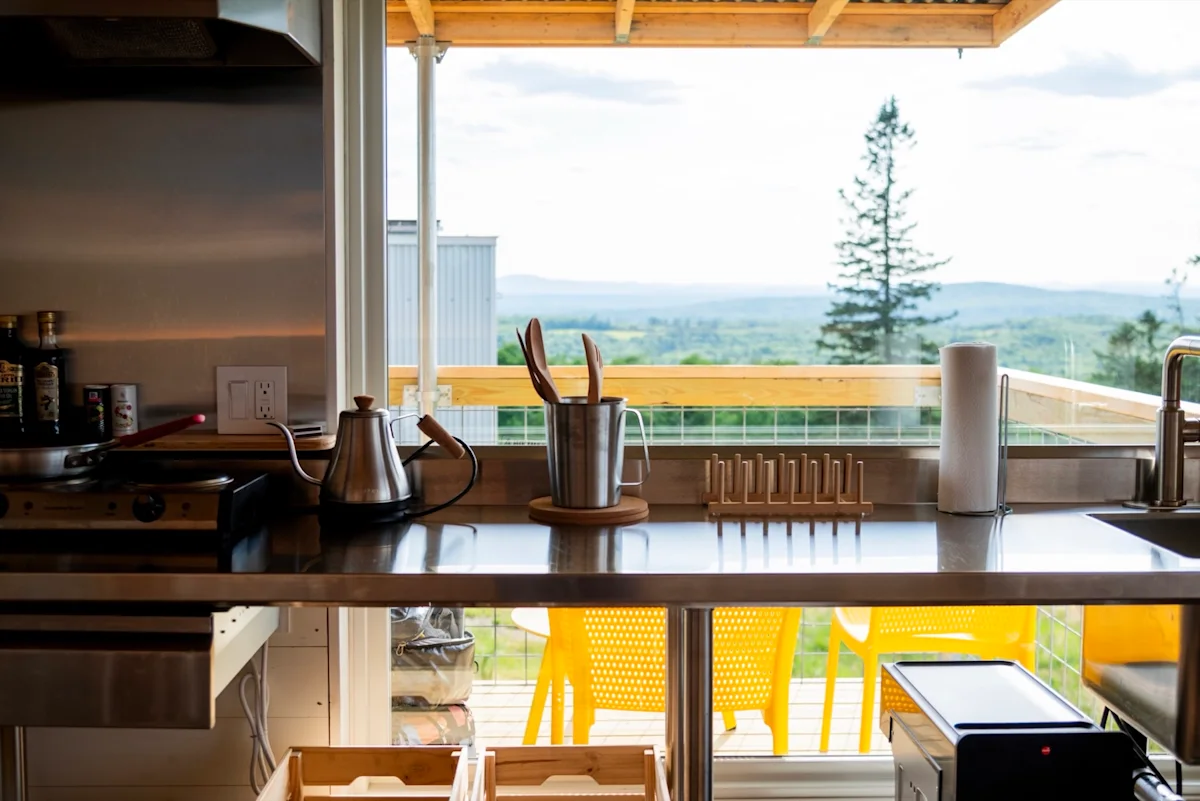
Guests can choose between staying in a Forest or Field Cabin. Both offer the same unobstructed views, premium minimalist design, and sleep up to four, pups and kids included. Field Cabins have a full kitchen, private bathroom, covered porch, and spacious dining area.

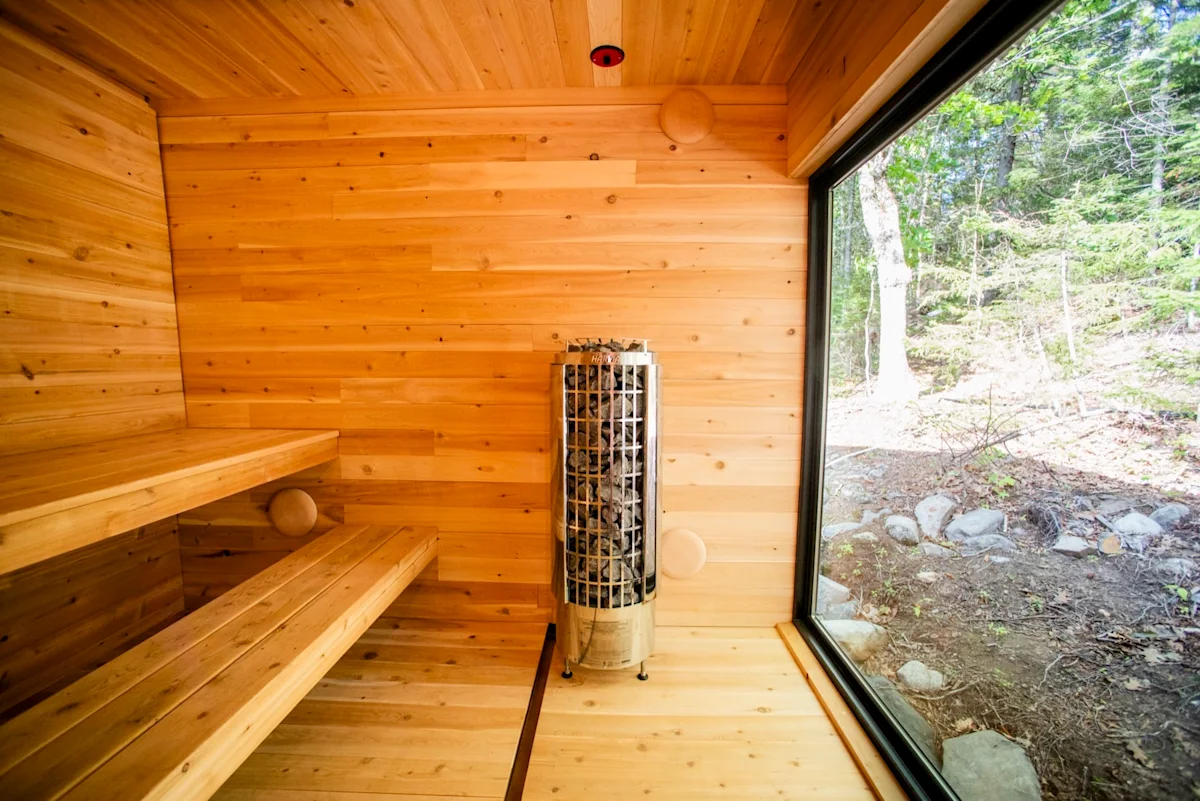
With a tiny footprint of 340 square feet, the Forest Cabins are tucked back into the woods for more privacy, with a compact interior that includes a kitchenette that's well-stocked with cookware, plates, utensils, and a generous supply of coffee and tea. Unlike the Field Cabins, they each have a personal fire pit. They're also within a short walking distance to the shared bathhouse and cedar sauna. All cabins are solar-powered.

lantern-camp-hotel-review-maine-bedroom

Courtesy of Kat Englishman

lantern-camp-hotel-review-maine-dining-area

Courtesy of Kat Englishman

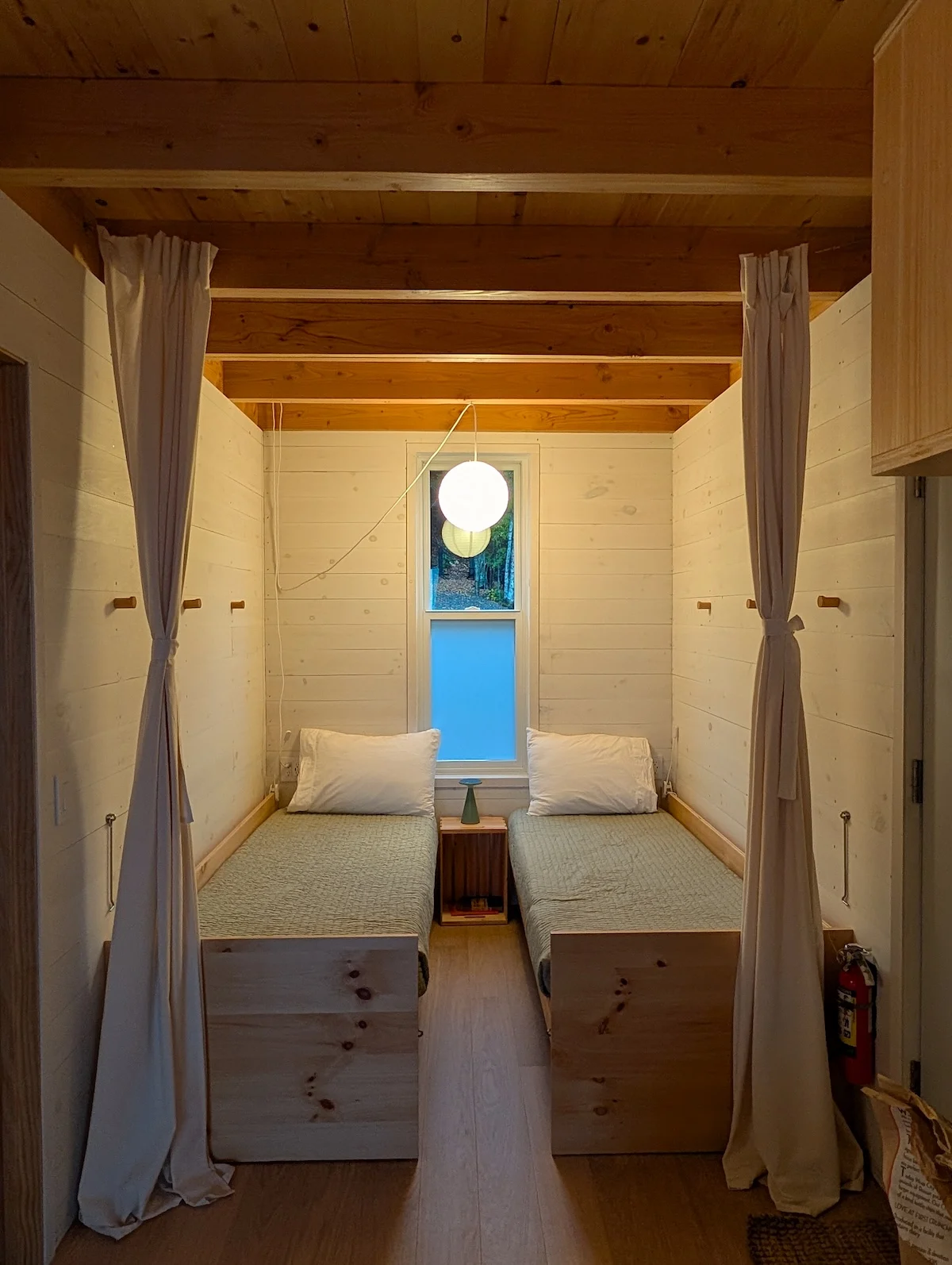
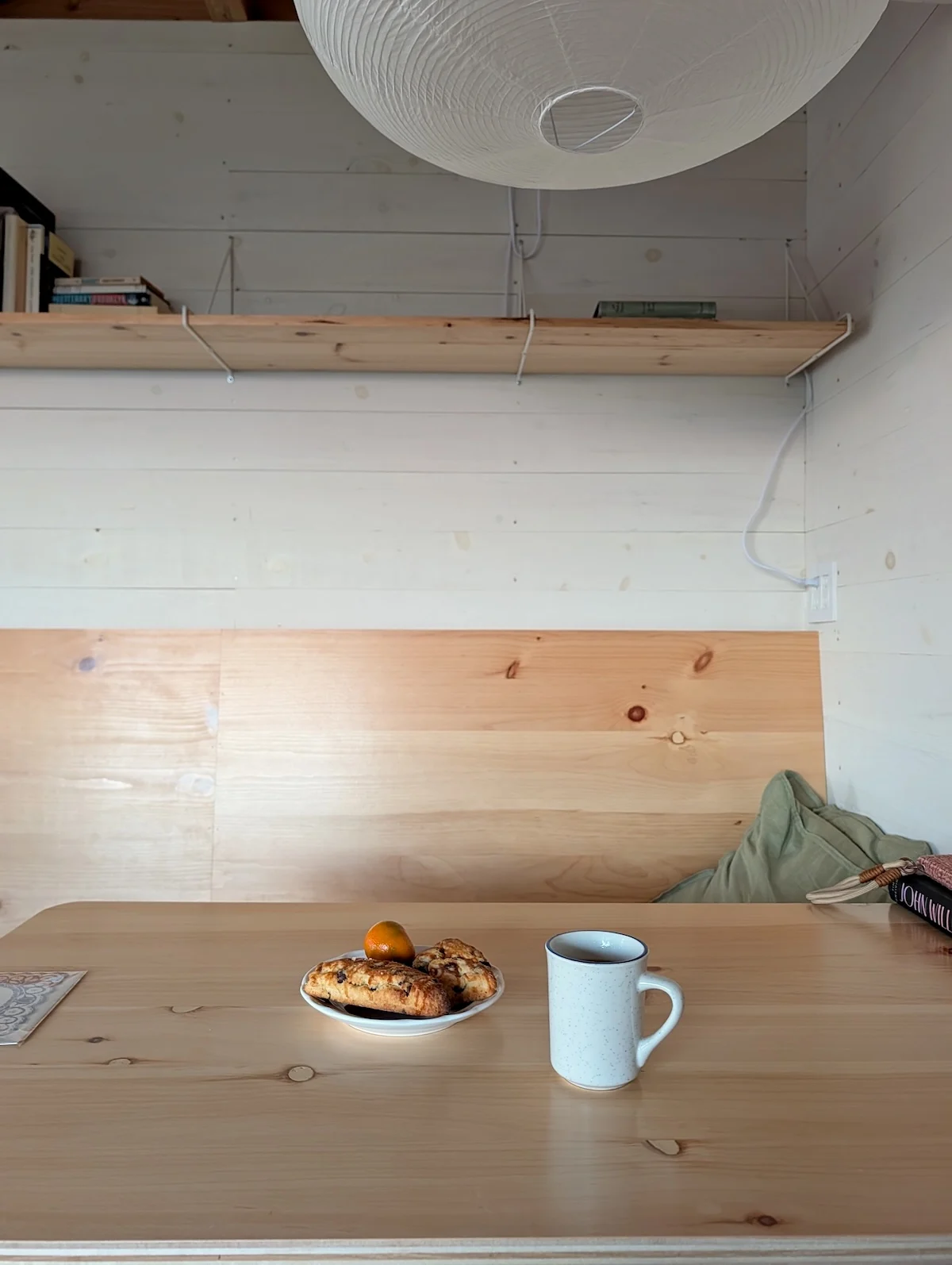
Designed in the architectural Scandinavian-inspired style of “plain modern," the cabins are outfitted with whitewashed wood and stainless steel finishes. Rather than feel cold, the interior was warm and inviting, with small touches that recall old school cottage design, like shelves lined with books, a set of twin beds tucked into an alcove, and draw-back curtains around each bed.

It’s simple without being too bare, which is ideal for those dipping their toes into more laid-back accommodations (it's more like renting a house than staying at a hotel). On the other hand, the cabins are a nice elevated experience for someone like me who would otherwise camp, with nothing too precious or nice that I would be concerned about bringing my small kids.

lantern-camp-hotel-review-maine-kitchen

The Experience

At night, a true darkness settles in and brings with it a peaceful quietude not often found so close to civilization and highly-touristed areas. Thousands of stars emerge in the sky as glittering pinpricks, and it’s easy to understand why guided stargazing on Saturday night is the only programming aside from saunas that Lantern Camp offers. That limited list is another conscious choice that keeps the focus on the landscape and not plug-and-play amenities or experiences.

After an evening sauna and dinner, we put away our phones, listened to music and paged through the books left around the cabin for guests to discover that included everything from classic novels to oversized coffee table books like European Painting Before 1700. During my stay, there was an inherent feeling of being grounded and at ease in this place, but with so much to see and do outside, it’s impossible not to venture out.

Mornings were slow and the afternoons open to long drives through roads that unspool through Blue Hill leading out to lands end. We stocked up on local apples, baked goods, and cheeses at the Blue Hill Farmer’s Market, visited the Naiad Country Brewery just down the road from Lantern Camp (10 out of 10!), paid a visit to the esteemed Aragosta at Goose Cove for an exceptional meal, and picked our way around various coastal trails while dodging the crowds where we could.

lantern-camp-hotel-review-maine-sauna

Final Thoughts

Overall, this is ideal lodging for those who like the ability to make their own plans and return to a tranquil respite that’s far away from crowds. That being said, enjoying Lantern Camp’s peace and quiet does come with some extra travel time to go most places—the nearest gas station is 15 minutes away, for instance—so plan accordingly and arrive with what you need.

Rates start at $229/night and Lantern Camp is open seasonally from May through November.

BOOK NOW

Check out Field Mag's review of a Colorado treehouse for more one-of-kind getaways.