Why Squamish Cycling Brand 7mesh Is Making Alpine Gear

Why Squamish Cycling Brand 7mesh Is Making Alpine Gear

Author Photographer
  • Courtesy 7mesh

Founded by Arc'teryx alums, the bike-focused apparel brand is transitioning into technical apparel for the emerging modern outdoor athlete

Published: 09-15-2026

Field Mag may receive a minor commission from purchases made via affiliate links.

You're probably only familiar with 7mesh if you're into mountain biking. Ten years ago, the Squamish-based company was a fledgling bike brand aimed at improving bike apparel with the product know-how its founders had honed while working at Arc’teryx. 7mesh built its name not by designing for the roadies and everyday MTBers but by engineering the kind of highly technical gear for bikepacking and big, shifting terrain. The kind of terrain that you find all over the West, and especially in Squamish.

But Squamish is a mecca not just for riding but also climbing, hiking, trail running, skiing, and snowboarding, and with a new technical mountain kit called Guardian Terra, released 15 September 2026, 7mesh is redefining itself as a true technical multi-sport outdoor brand making gear for a lot more than riding bikes.

GFATTAL-7mesh-alpine

The 7mesh Guardian Terra line is made for the alpine

Exploring Beyond the Bike

Over the past four years, 7mesh has been making subtle moves into the broader outdoor space with its Guardian and Explore collections. The Guardian line consists of weather-protective shells that are top of their class in weight, packability, waterproofing, and breathability. Explore encompasses Guardian, with products designed to perform on rides, hikes, and trail runs. Both lines maintain a noticeable bike aesthetic—we're using subtle as a key word here. 7mesh is still predominantly known as a cycling brand, and their marketing and overall products reflect that.

With Guardian Terra, 7mesh hopes to shake its cycling image once and for all. The kit includes a shell and pants built for skiing, mountaineering, and general alpine use. These are the first pieces from 7mesh designed never to touch a bike, though they're still heavily influenced by the fast-paced nature of cycling.

Since 2020, more than one brand has introduced (and closed) a cycling collection to catch some of the COVID-era bike frenzy, and while a few bike brands are trying to ride the running wave, it’s rare to see one attempt to get into outdoor. But according to founder Tyler Jordan, the move isn't really a pivot. The new gear is based on the same philosophy, and informed by the demands of cycling and a deeper understanding of the modern athlete.
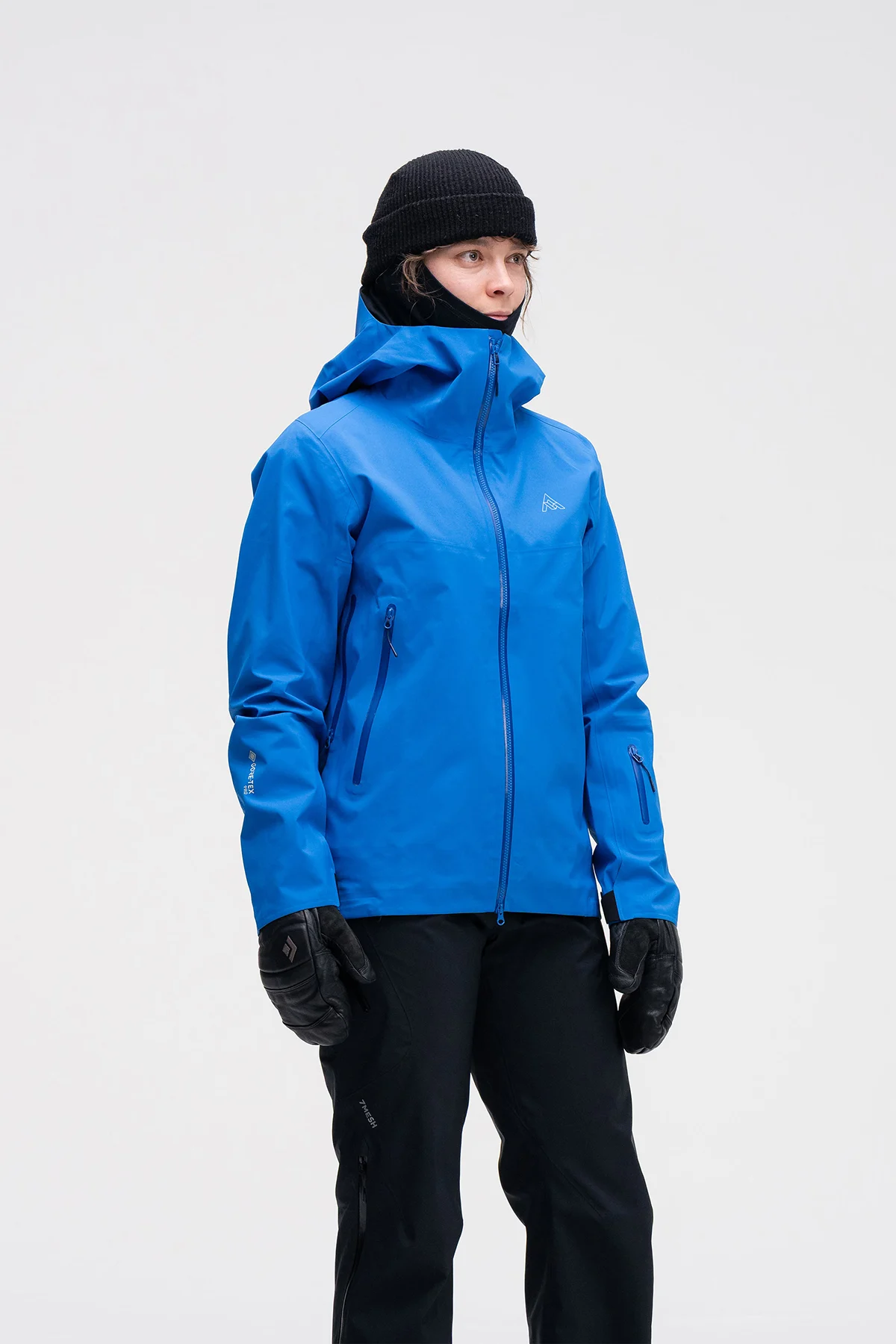
7mesh-cycling-alpine-gear-feature-guardian-terra-jacket

7mesh Guardian Terra Jacket and Pant

A Brand Built to Bridge a Gap

To understand why 7mesh believes it has something to offer skiers and climbers, you have to understand its roots. Jordan spent 19 years helping build Arc'teryx into the name it is today, with his last eight as CEO. In 2013, he and co-founder Ian Martin saw space to improve the gear supporting their primary pursuit—riding bikes—and decided to start 7mesh.

When Jordan put together the first business plan for 7mesh, his target demographic was “people like us.” It's a narrative that plenty of brands are trying to promote these days; “nothing else was good enough so we designed the best damn thing for our own mega adventures.” In a place like Squamish, that thinking carries extra weight.

"We live in a community where you can't throw a rock without hitting a mountain biker or a backcountry skier or a rock climber all at the same time," Jordan tells Field Mag. "It's a fantastic environment to see how athletes are evolving."

7mesh-TylerJordan

7mesh co-founder Tyler Jordan

Over the past 13 years, "people like us" has evolved along with the company, Squamish, and what defines the modern athlete. Surrounded by mountains and set at the tip of the Howe Sound, Squamish is a known destination for world-class, multisport terrain, but 7mesh's transition didn't initially stem from a desire to reach these athletes. It began with PFAS. As the industry braced for a full transition away from PFAS chemicals in waterproof and water-resistant treatments four years ago, 7mesh started digging into what that would mean for its existing products.

"We knew that removing PFAS from a lot of materials was going to change the way they performed and that required a lot of work and a lot of understanding," Jordan says. The deeper the team got into that research, the more they realized how exposed some of their existing technologies were.

"The more we learn, the more we realize that a lot of technologies were really susceptible to going backwards with the lack of PFAS chemical supply to them or inherent in them," he tells me. "We realized that performance was going to change a lot, and it was going to change in ways that we didn't initially understand."

That process of testing new fabrics and chasing dead ends is what eventually led them to Gore-Tex EPE, the material 7mesh settled on for its newer waterproof shells. ePE is thinner and lighter than original GORE-TEX, features that align with 7mesh’s backcountry goals. As the team learned how to optimize this new generation of materials, they started to see how the same fixes they were making for cyclists could apply to a much wider range of users.

7mesh-mtb

Cycling As the Ultimate Testing Ground

Being a cycling-first brand put the company ahead of the rest of the industry in very specific ways. Jordan calls cycling one of the hardest environments in all of apparel to design for, from the patterning to the materials to the pure nature of the sport. Cycling reaches more terrain faster than any other activity, generating enormous amounts of heat and effort that are quickly followed by cold and windy descents. These extreme transitions occur over and over again in a single ride (if you're in good shape). The functional needs of cycling translate well to the way athletes are moving into the backcountry today, pushing faster and farther than ever before.

"If you're running really hard, you can overpower Gore-Tex or just about anything else," Jordan says. "It's more about protecting you from the frigid cold water than it is about keeping you totally dry from your own sweat." A skier or a mountaineer deals with cold and moisture too, but rarely with that same whiplash between full aerobic output and total stillness, over and over, in the same afternoon. Cycling forced 7mesh to solve for both ends of that spectrum a decade before most of the industry had reason to.

"We look at climbers and skiers and other backcountry users, and they're setting their objectives to go faster, to do more activities in a day, to cover more ground."

7mesh-gravel-bike

7mesh is leverage learnings from cycling design to inform its broader outdoor collection

It's fair to question whether an average bike brand can change course. I, for one, struggle to trust any brand that tells me I look good in an 11-inch inseam. But 7mesh isn’t a typical cycling brand—they’re a backcountry cycling brand. A rider heading deep into the mountains on a bike, whether on a multi-day route or to a remote gravel line, can become just as exposed as a mountaineer facing storms. Their gear has to provide the same weatherproofing a climber or skier would trust their life to, and it has to work through hours of hard aerobic output, without turning into a sauna.

"You have to fuse those worlds," Jordan says. "Taking on the challenge of solving for both at the same time is something that is rarely done, but it's where the users are headed."

Navigating the Sea of Sameness

The solution is about fit and construction, not just the fabric alone. "Doing that requires designing a product to fit closer, to be better articulated, because that way you have more driving force to push moisture through the jacket," Jordan explains. "It requires you to maximize the breathable surface area of the product and not use too much gluing or lamination or sewing or patches or reinforcements that can obstruct the passage of moisture out of your garment."

It's a very specific, almost engineering-minded way of thinking about a jacket, a topic where Jordan's true technical gear obsession shines through.

7mesh-IanMartin

7mesh co-founder Ian Martin

“It’s the hidden things like fit, like knowing how to design the garment to minimize, to maximize the breathable surface area, with narrow tape and less patches, less embellishments, and smaller seams in all places,” he says.

Jordan isn't shy about why he thinks this focus matters, or calling out the broader apparel industry. "We call it the Sea of Sameness. When I think about apparel for the last 10 years, I can't name 10 new technologies that have launched in the last 10 years. I can't name any blockbuster products, really, that have come from some of the big brands."

He's just as blunt about where he thinks the interesting work actually happens, which is with small, obsessive brands. And it’s an obsession with design that makes 7mesh's products so uniquely tailored to the backcountry.

"High-speed athletes are now pushing further and further in the backcountry, and it's all about FKTs and new objectives and challenging themselves and going to really interesting places and doing it often in a self-sustained or an exposed way," he explains. "And then we look at climbers and skiers and other backcountry users, and they're setting their objectives to go faster, to do more activities in a day, to cover more ground. So you have the group that's used to the backcountry accelerating, and you have the fast people learning how to go into the backcountry [think thru-hiking FKTS], and combining those needs means that traditional apparel has some gaps."

The ability to design for the speed and variability inherent in cycling positions 7mesh well to address modern trail runners, thru-hikers, skiers, alpinists, and more, but they aren’t content focusing on single pursuits. Plenty of companies can design for fast objectives, and speed isn’t the only defining feature of athletes today. Brands generally focus on designing gear that performs exceptionally well in one activity, but 7mesh wants to address the growing multisport athlete. As someone with a closet full of jackets tailored to numerous niche activities, I can see the appeal.

7mesh-run-ridge

Meeting the Modern Athlete Where They're Already Going

From the outside, it’s a challenging shift for a brand, because they’re not just moving into a new category. 7Mesh is attempting to do two things at once by entering the competitive alpine space while also expanding into the broader outdoors. I've written about other brands designing for faster alpinists, like Samaya, but designing explicitly for those multisport pursuits is new territory.

Taking on two frontiers at once is consistent with how 7mesh talks about itself, though. A casual, internal phrase that Jordan tends to repeat is “no coasting.” He means it as a mindset, the instinct to keep chasing the next objective instead of settling into whatever already works.

"How often have you finished an adventure and you're thinking about the next one?" he said. "That's the spirit of outdoors and the spirit of exploration that drives human progression in the world, and we're trying to build products that complement that."

A company holding that belief will have a hard time staying content as a backcountry bike brand once it has the tools to solve for the alpine and multisport athlete too, even if it means opening two new fronts at the same time.

With this shift in athlete goals, 7mesh’s priorities have changed over the past decade. "Ten years ago, we wouldn't have said packable," Jordan tells me. "And ten years ago, versatile was a dirty word, because for us, we wanted to build something that was really specific to that activity."

7mesh-run-rain

Now, Jordan says, it’s fairly normal to hear someone say, "I'm going to ride my bike for a couple hundred kilometers in the backcountry, get this objective, and I want to climb this mountain while I'm on the way." A person riding through the backcountry with a climb built into their route, or someone mixing biking, climbing, skiing, and/or packrafting into a single objective, needs a product that can move with them across disciplines, rather than a quiver of specialized pieces for each activity.

In essence, the modern athlete is trending more toward the model of Kilian Jornet’s States of Elevation project, where he linked 72 14,000-foot peaks across the western U.S., or Alex Honnold’s human-powered cycling-meets-climbing endeavors, or Steve Fassbinder’s bikerafting expeditions. As technology and tools have gotten better, people have found ways to stay out longer and do more. Versatility itself is nothing new, but a highly technical jacket that performs on the bike and the climb without compromising either is, and there aren't many brands attempting to design so specifically for those individuals.

Before my conversation with Jordan, I wore a Guardian Apex jacket while hiking in the Teton wilderness and packrafting on days where a drysuit wasn’t worth the weight. A Frog Togg would've likely sufficed for these adventures, but I can’t say it would transition as well to bikepacking as the Guardian Apex did.

Cycling was the specific version of that problem 7mesh understood well enough to solve first. Guardian is the same team pointing that obsession at multisport pursuits, and Terra is the same team honing in on the alpine. According to Jordan, the users never really changed—they just started doing more.

Meanwhile, a number of cycling brands are getting into running.