2-Layer vs 3-Layer Waterproof Jackets
When you shop for a waterproof jacket, the specs can feel like a confusing stat dump: 2-layer vs. 3-layer, 10k vs. 20k ratings, and the mysterious 2.5-layer. Like learning the actual meaning of down fill power, waterproof rating are actually more simple than they may seem.
Start with a basic idea: imagine a rubber tarp. It’s fully waterproof, but it doesn’t breathe or stretch—terrible for a jacket. The goal of modern outerwear is balance—keeping water from getting in while allowing sweat to get out. Keeping weight down is crucial too.
Layered manufacturing is how brands achieve this balance. In a 2-layer jacket, the waterproof membrane is bonded to the outer face fabric, while a separate hanging liner on the inside helps protect the membrane and makes the jacket more comfortable to wear (and doesn’t count as one of the two technical layers, thanks to fuzzy industry math). 2-layer jackets are often comfortable and durable, but heavier and more bulky, too.
A 2.5-layer jacket eliminates the separate liner and instead adds a very thin protective print or coating on the inside of the waterproof membrane. This saves weight and improves packability, making 2.5-layer shells popular for hiking, running, and emergency rain protection. Though they can feel less comfortable against bare skin and may be less durable over time.
A 3-layer jacket bonds the face fabric, waterproof membrane, and inner backer fabric into a single laminated package. This creates a lighter, lower-bulk, and often more durable shell than a 2-layer design, while also improving next-to-skin comfort and overall moisture management. Because 3-layer construction is more complex and typically used in more technical jackets, it usually comes at a higher price.
Where Dermizax Fits In
Toray refers to Dermizax as a 2.75-layer fabric. This is because unlike the material used for a 3-layer jacket, there is no integrated liner, and unlike a 2.5-layer jacket, there isn’t a spray-on liner either. Instead, they use a patterned print applied directly to the inside of the membrane that gives the jacket more of a matte feel against the skin, while keeping bulk low.
That print isn’t a fabric layer—it’s a series of raised dots or grids that protect the membrane from abrasion, reduce that sticky on-skin feeling, and create a bit of airflow without adding weight.
There might be a little marketing speak to the 2.75-layer designation, but the point is it allows for Dermizax jackets to be lighter than a true 3-layer jacket while also feeling more premium and less clammy than a 2.5 layer jacket.
“We care a lot about not feeling like you’re wearing a stiff, crinkly plastic bag,” explained John Crawford-Currie, the founder of Stellar Equipment, a Scandinavian outerwear brand that specializes in modular layering systems for alpine adventures, in a recent email exchange. “Quietness and a nice feel to it matters a lot. You notice the hand feel the first time you touch it, and it affects how much you end up using it.”
Crawford-Currie is right; I did notice this the first time I wore the Stratus. There is less of the slick sheen we associate with classic rain jackets and more of a smooth, subtly textured liner. That feeling is part of the appeal, but it wouldn’t matter if the jacket wasn’t also protective.
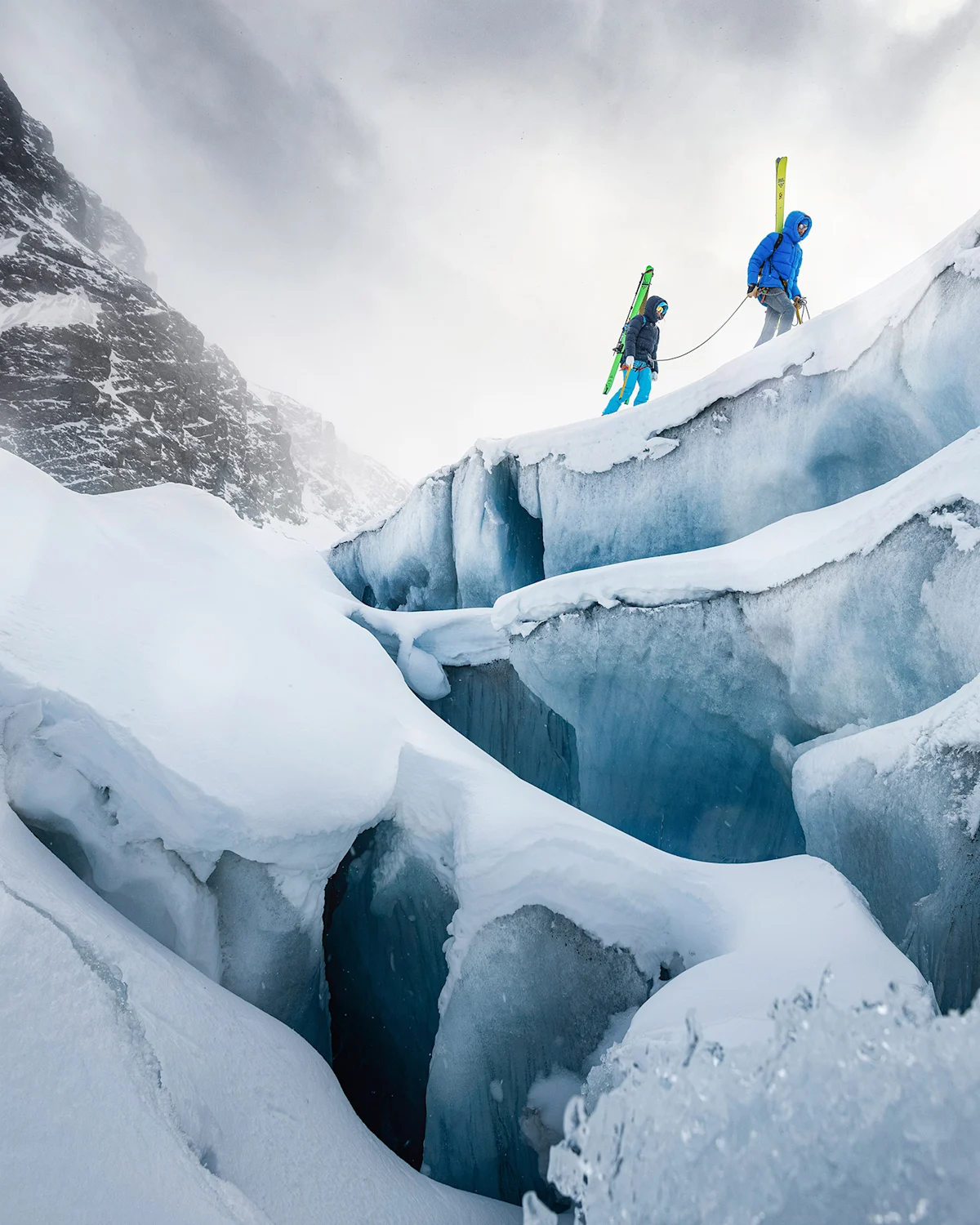
Courtesy Stellar Equipment
Lab vs. Field Tested Waterproof Ratings
Waterproof ratings come from the Hydrostatic Head Test, in which a piece of fabric is clamped down over a column of water and subjected to increasing pressure until water permeates the fabric. A fabric rated 10,000mm can withstand a 10-meter column of water before leaking. Fabrics typically rate from 1,000k (light protection) to 20,000k+ (serious protection).
Breathability, on the other hand, is measured via Moisture Vapor Transmission Rate (MVTR), or how many grams of water pass through a square meter of fabric in 24 hours. It just so happens that the numbers are roughly symmetrical to the waterproofing numbers, with 5,000k offering moderate breathability and 20,000k+ providing serious breathability. When you see a jacket with a 20k/20k rating on the tag, you're looking at a peak performer.
Toray makes three different types of Dermizax fabrics (just as there are many variations of Gore-Tex fabrics). The eponymous main fabric has a 20k/20k rating. Dermizax EV has a 20k waterproof rating and 20-30k breathability rating, and Dermizax NX has a 20k waterproof rating and 30-50k breathability rating. The variance in the breathability ranges reflects differences in the polyurethane formulation of each fabric, as well as the different lab conditions in which they are tested.
Of course, there is a difference between the lab and the landscape, and outdoor gear brands don't select a technical fabric based on the specs alone.
“Outside of lab numbers, what ultimately matters is real-world athlete feedback,” said Brian Rather, a co-founder of the running apparel brand Path Projects. “Our athletes consistently raved about the Dermizax NX membrane’s ability to move moisture vapor from inside the jacket to outside during testing.”
The jacket is able to do this because the membrane is hydrophilic, meaning that it can absorb moisture on the inside of the jacket and transport it to the outside. It's also nonporous, as opposed to a microporous fabric like Gore-Tex, so sweat and oils can’t clog the pores and create clammier conditions. Instead, they get wicked towards the fabric's exterior.
Dermizax also has mechanical stretch. Meaning, the fabric doesn’t require being interwoven with elastane or spandex to create a stretchy feel. Instead, the yarns of the fabric itself are twisted, providing natural give. This is important because elastane and spandex tend to hold water, so a jacket woven with those fibers in order to provide stretch will become saturated and “wet out” faster.
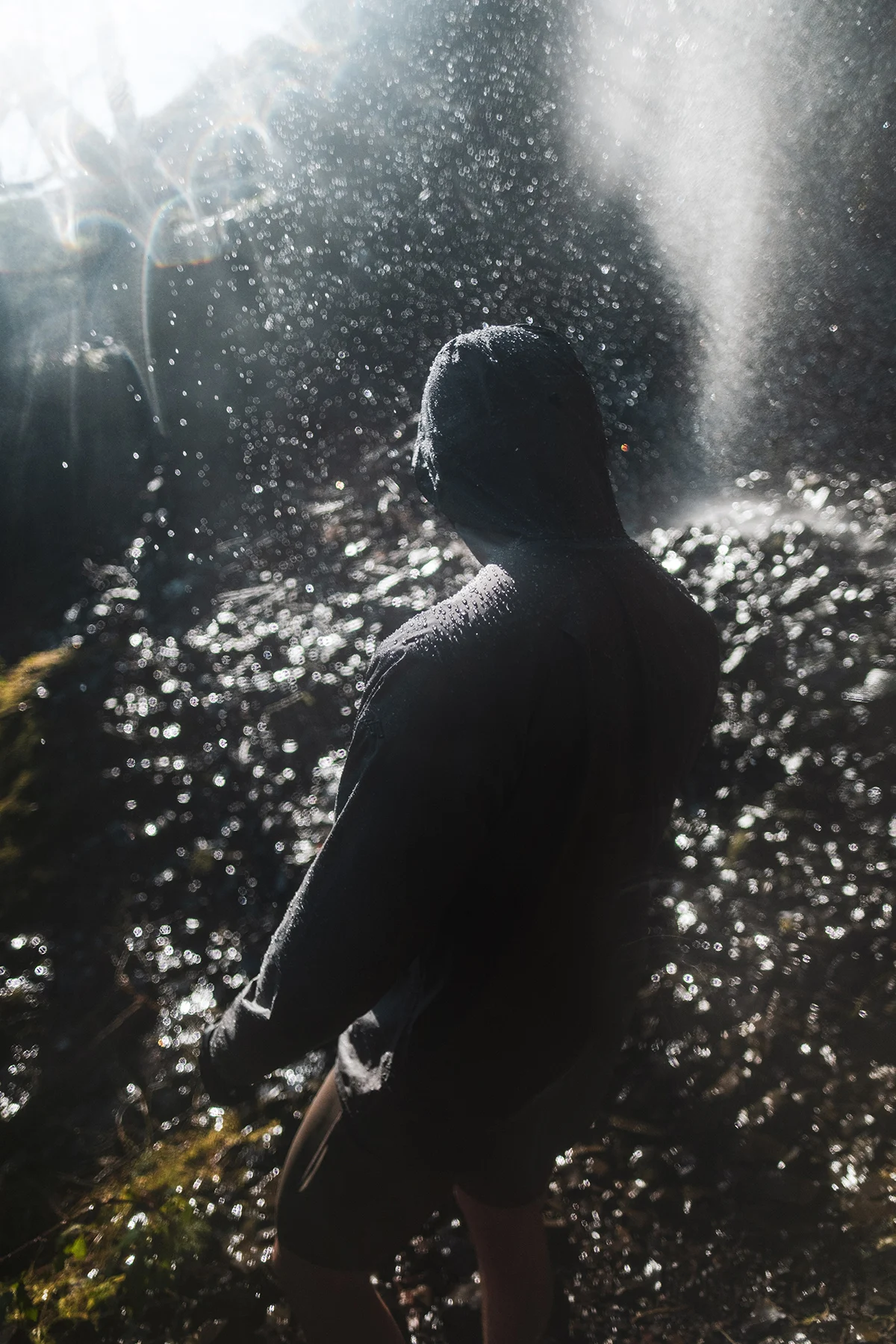
Courtesy Path Projects
Finding the Dry Middle Ground
In order to provide consumers with the optimal level of waterproofing, breathability, weight, and mobility at a competitive price point, companies often have to make a sacrifice somewhere.
“Having waterproofing and breathability is always a compromise,” explained Crawford-Currie. “If you use a hardshell for high output, eventually you’ll start feeling wet on the inside.”
For this reason the use cases for technical fabrics are strongly considered when making fabric choices. Someone needing a rain jacket for daily wear might not mind a weightier shell with limited stretch and loads of features, like pockets and a cinchable hood. A hiker might be willing to sacrifice some features for some stretch. Meanwhile a trail runner might sacrifice protection or comfort for something lightweight and packable.
When Outdoor Research was looking to revamp the Helium UL line of lightweight rain apparel, they put a bunch of fabrics through the wringer, which is common practice for brands when selecting which mills they’ll be working with. Charlie Berg, a senior product manager at Outdoor Research, told me they went so far as to take their top two choices and sew them together in a Frankenjacket that was half Dermizax and half a competing fabric before making their selection.
“It had the blend of attributes we were hoping for,” said Berg. “It was about 10 percent lighter than the fabric we used previously and it has a very premium look and feel to it. It wouldn’t make you look out of place if you were wearing it in a non-technical or non-active setting.”
Berg also noted that cost is one of the balancing factors. “Gore-Tex has some fabrics that are lightweight and breathable, but they’re pretty expensive," he said. "To use the Gore-Tex fabrics that would put us in the weight range that we wanted to stay within, the garment would cost at least 50 percent more.”
Rather also noted that there are jackets on the market that may be more breathable or waterproof than Path Projects' Dermizax-made Stratus, but are also double the cost.
“Our goal was to build a waterproof jacket that met the mandatory gear requirements for UTMB races, packed as small as possible, and used a highly breathable membrane,” said Rather. “From all of our field testing, the Stratus performed exceptionally. We believe we landed on the optimal price-to-performance balance.”
Wearing the Stratus on a recent rainy day bike ride to work from Cambridge to Belmont, I felt like the jacket was both protective and barely there. There were no hand pockets for my keys or sunglasses, but that's because those would add unnecessary complexity to a jacket designed to be deployed in an instant—maybe during a 30-mile run in the mountains—and packed away just as easily.
Crawford-Currie noted that this level of subtlety should be the goal of a jacket, and not the other way around. “For me it’s not about ‘feeling the stretch.’ The goal is actually the opposite: not noticing the fabric at all. When the cut and the material are non-restrictive, you stop thinking about the jacket—and that’s the whole point.”
Maybe he wasn’t alluding to the “almost forgot this is the whole point” meme, but it bears repeating that the right rain jacket for any outdoor excursion is the one that allows you to focus on the excursion itself, and not the jacket. When I asked Crawford-Currie what the optimal use case was for Dermizax, he said, “Active movement in shifting weather, no question.” If that sounds like your next outing, you may have found your fabric.


