New Film "Energia Vitale" Artfully Explores Milan's Deep Alpine History

New Film "Energia Vitale" Artfully Explores Milan's Deep Alpine History

Author
  • Tanner Bowden
Photographer
  • Courtesy Vibram

With archival footage, New Age tracks, and modern climbing the striking film by Vibram explores the relationship between urban and mountain landscapes

Published: 02-24-2026

Presented by


In 1935, a group of 19 Italian mountain climbers set out to summit Punta Rasica, a narrow, 10,843-foot granite spur on the Italy-Switzerland border. On their feet, heavy boots with flat leather outsoles, studded with hobnails for grip, or thin, felt-bottomed footwear for steeper pitches. When a severe storm rolled in, six experienced members of the Società Escursionistica Milanese group tragically lost their lives, unable to descend in the icy conditions. While weather was ultimately to blame, in the mind of the team's surviving leader, Vitale Bramani, so was the footwear.

Immediately thereafter he went to work on a solution, and in 1937 patented the first rubber mountaineering outsole and founded Vibram (a mash-up of his first and last name), now known as the world’s leader in high-performance rubber soles for outdoor footwear.

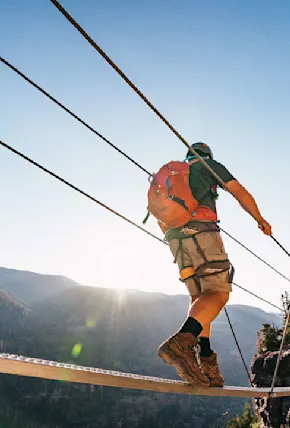
In Energia Vitale, a new art film produced by Vibram, this story is retold amid a larger, visually beautiful exploration of the deep and unique connection between the city of Milan and the Alps nearby. This link, which shaped Bramani and countless others before and since, is thoughtfully and gorgeously portrayed through archival footage, drawings, and textural vignettes set in the city and in the mountains, all of it underscored by poetry, a soundtrack that spans from choral harmonies to ambient New Age, and raw recordings from the high peaks. The equipment and the methods may be different today, but Energia Vitale makes it clear that the link between city and mountains has been and remains resolute.

[Editor’s Note: Energia Vitale will premiere Stateside in Boston Monday 2 March with additional screenings in Boulder, Los Angeles, and Portland, OR. Details here.]

"I grew up with mountain stories that were overly heroic, where man was always at the center and terrible things constantly happened," Achille Mauri, the film's director shares with us. "I wanted to do the opposite: to give space to landscapes, poetry, the passive presence of the frenetic urban world, and to the architecture of Milano as it turns toward the mountains in its organic relationship, along with many other details you will discover."

In one of the film's five chapters, it's made clear that the strongest link between Milan and the Alps is human movement. Through a frenetic montage of clips portraying climbers, runners, hikers, and cyclists traveling through and recreating in both environments, it's not a huge leap to see how footwear, and the rubber on its bottom, is crucial in facilitating it. At the chapter's end, a shot of a cross-shaped detail in the marble floor of Milan's iconic Galleria Vittorio Emanuele II quickly cuts to a lug on a Vibram outsole, and it's easy to imagine how the city was as inspiring to Bramani as the mountains were (the octagonal shape of Vibram's iconic yellow logo also draws inspiration from the building).

Vibram-energia-vitale-mosaic

"In this way, the sole became a synthesis of two worlds—born from an alpine necessity, yet shaped by the cultural and aesthetic identity of the city," says Carlo Zumerle, Vibram Global Brand Manager.

Landmarks of human history are an unavoidable feature in any European city as old as Milan, where the famous Duomo di Milano dates back to 1386. They're less visible in the mountains, where an old piton might be the only hint of a climber's previous presence there. But if you know where to look (and have access to a decent library), the notes and drawings found in old guidebooks construct the mountains' historical record in climbing feats and firsts. In Energia Vitale's longest chapter, professional climbers Barbara Zangerl, Matteo Della Bordella, and Pietro Vidi use these guidebooks to retrace historic climbing routes first opened by Bramani nearly a century ago.

Vibram-energia-vitale-still-climber-mist

Pietro Vidi climbing the Pioda di Sciora

Of the some 100 climbing routes that Bramani established across the Alps during his lifetime, the three selected for the film were spread out from west to east, to illustrate Milan's central access to the mountains. They were the Spigolo Castiglioni–Bramani in Veneto's Pale di San Martino, first climbed in 1934; the Via Bramani–Bozzoli–Parasecchi on Lombardy's Pioda di Sciora, 1935; and the Spigolo Castiglioni–Bramani, set in 1936, which ascends Torre Castello in Piedmont.

"Routes like these are extremely demanding and require significant experience and technical mastery," said Zumerle. "Filming these athletes as they repeat routes first opened nearly ninety years ago creates a powerful bridge between past and present. It makes the story resonate with contemporary climbers and demonstrates that meaningful challenges are not found only in the most famous destinations, but also on mountains that may no longer be in the spotlight—yet still hold immense historical and sporting value."

Vibram-energia-vitale-book

While two of the featured climbs are well known, finding reliable intel to use in following Bramani's route up Pale di San Martino proved challenging. Eventually the team behind the film found original guidebooks inside the library of Bramani's own Società Escursionistica Milanese, complete with hand-drawn sketches made by the original climbers.

"This discovery revealed yet another profound connection between Milano and the mountains: the city does not only provide physical access to the Alps, but also preserves some of the essential keys to understanding and experiencing them," said Zumerle.

In one scene, Della Bordella pauses during his descent of Torre Castello to reflect on how hardy mountain climbers had to have been back in the day. "I wonder what was going through the minds of people like Bramani and Castiglioni when they opened such a vertical route with materials that, in the event of a fall, would never have held," he says.

Transposing time might be Energia Vitale's primary concern. Mauri shot one chapter, which follows Bramani's great grandson from the Duomo to a classic Milanese climb on Grignetta by bike, train, hand, and foot, on 16mm film "to reinforce this feeling of pioneering spirit of a simple adventure and to give it an aged quality, as if it belonged to another time." Later, the choral soundtrack hearkens to traditional Alpine choirs. And then there's those 100-year-old guidebooks.

"The film is a continuous dialogue between tradition and urban contemporaneity," said Mauri. Just like the relationship between Milan and the Alps.


Join Field Mag’s founders in Boston on Monday March 2nd for the North American premiere of Energia Vitale. Additional screenings include Boulder on March 4th, Los Angeles on March 6th, and Portland, OR on March 10th. Tickets are available with a $5 donation to the American Alpine Club.

Check out Sole Searching, our ongoing series of deep dives into past, present, and future footwear icons, made in partnership with Vibram. Entries include the story behind The North Face's expedition-grade hiking boot, how Saucony updated its most rugged trail running shoe, and how Arc'teryx is creating a new category with the Vertex Alpine.