How long have you lived in the Catskills, and how has it impacted your practice as an artist?
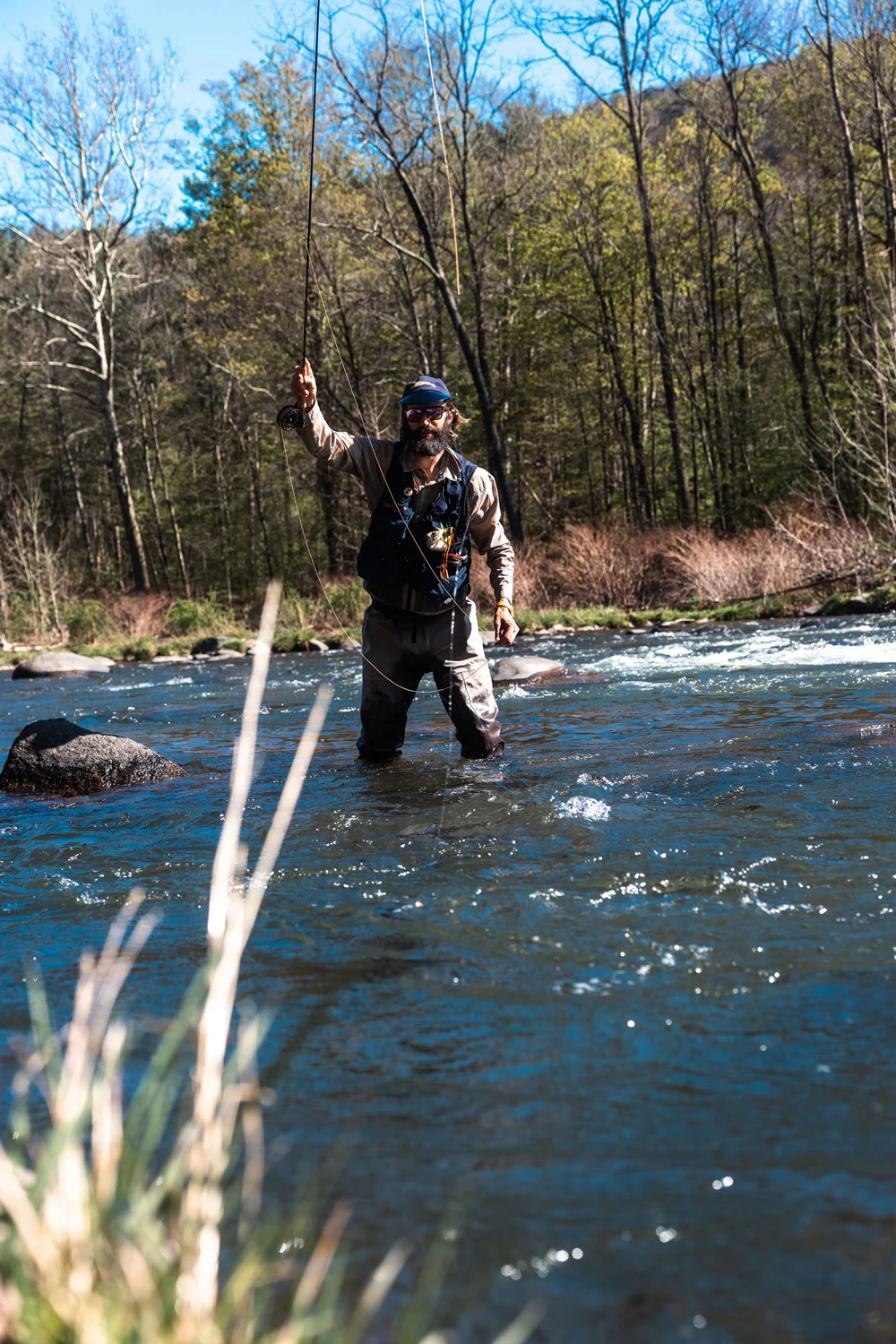
Almost 14 years! My wife Casey Scieszka and I moved Upstate from Brooklyn to open the Spruceton Inn: A Catskills Bed & Bar. Beyond the inn, the goal of moving Upstate was always art—which I admit is a pretty malleable and potentially overwhelming goal! Still, I knew I missed the outdoors and I had that blind faith it’d all work out.
Flash forward to basically the first time I stepped out my front door up here. It wasn’t the first time I took in Rusk Mountain, but it was probably the first moment I realized: This is something I’m going to paint A LOT. I’ve since painted it countless times and it’s more or less the star of my next kids’ book I Am The Mountain. And whenever I’d needed a break from painting mountains, I’d go fishing. It feels very fitting that fish became my other subject of choice and I also now have an illustrated guide to fly fishing.
I feel very strongly about the idea of art as a goal even if the exact parts are a bit vague. It winds up encompassing many things, like the artist residency we started at the inn our first year. We’ve hosted over 130 artists and counting since then! And Casey’s debut novel The Fountain, which takes place in the Catskills, just came out in March.
Courtesy Steven Weinberg
Are there any fly fishing books that have made an impact on you and even helped inspire you to write and illustrate your own book?
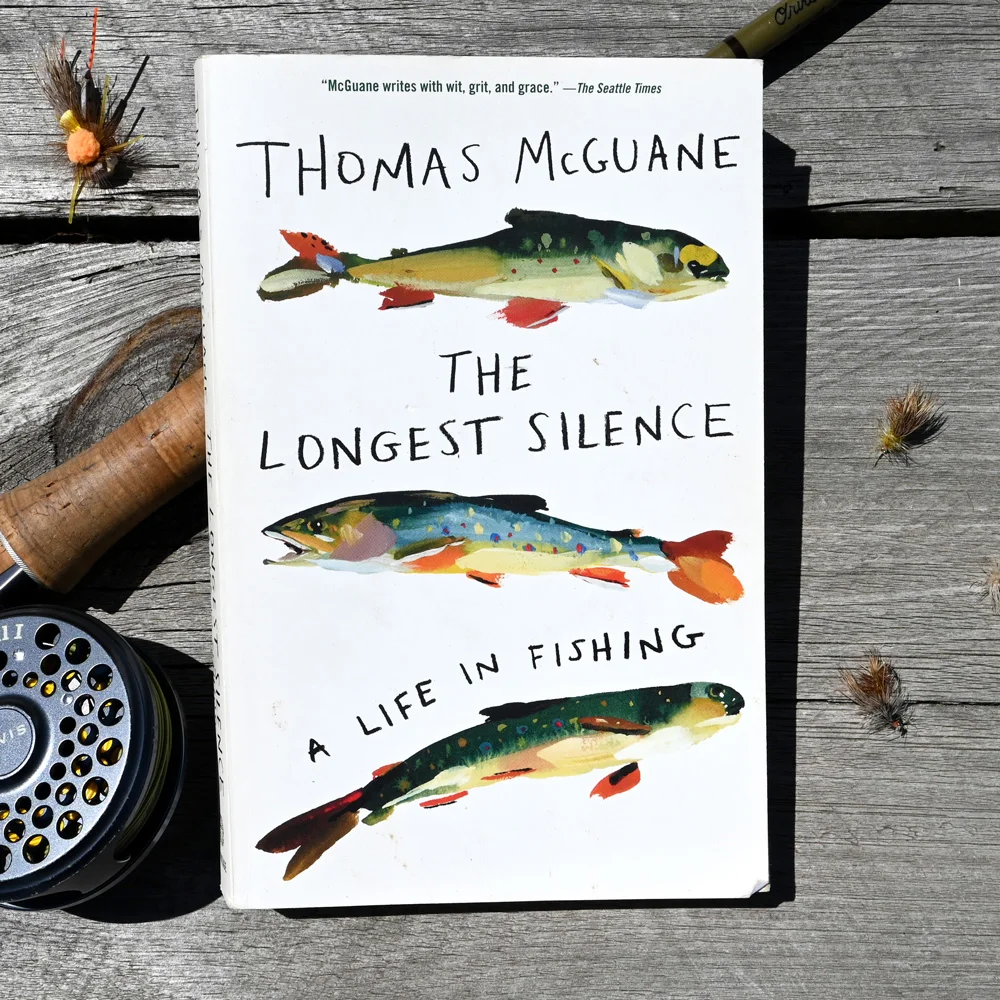
So many! Quite a few are lovingly strewn across my studio as I type this, many of which are written by people I got to feature in The Fly Fishing Book, like Thomas McGuane, Joan Wulff, David Coggins, and Monte Burke. But of all those, I will always be partial to McGuane’s The Longest Silence. He can create whole worlds in paragraphs and pretty much perfected the form of essays on fishing. I was asked to do the cover art for the rerelease of that book a few years back, and it was such an honor.
The other one I always point to is the Curtis Creek Manifesto. Imagine if R. Crumb made an illustrated guide to fly fishing! It has all of the technical advice you’ll see in a Tom Rosenbauer Orvis textbook, and the humor of a John Geirach piece—but in a raw underground '70s comic style. It’s a classic for a reason.
Courtesy Steven Weinberg
What types of readers do you hope pick up your book? Art lovers? Trout purists?
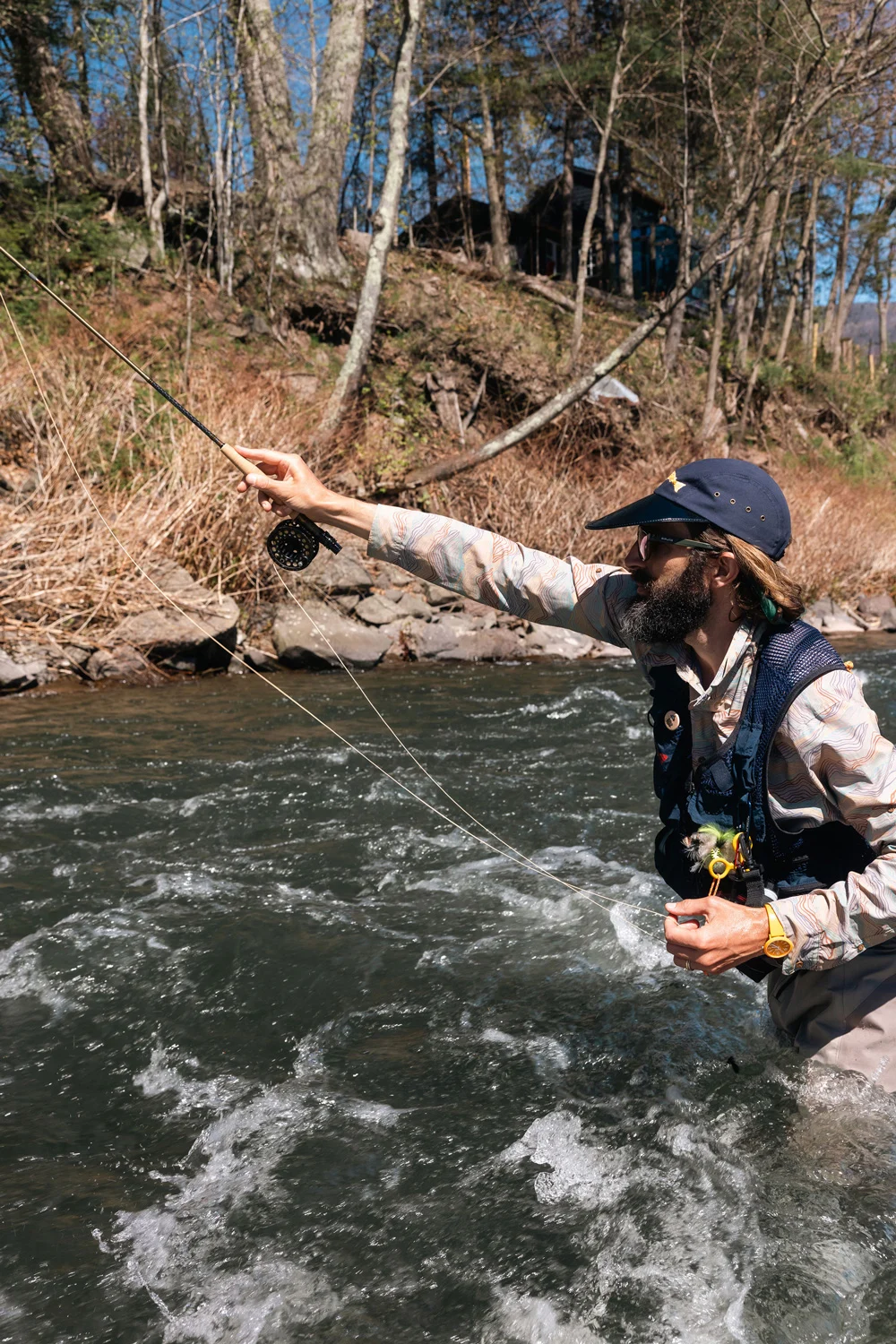
Can I say everyone? A bunch of the how-to parts of the book were born out of my time at the Spruceton Inn. We have lots of guests who come and are fly fishing curious. They’ve always wanted to try, but are too intimidated to even hire a guide—which I get, but I have so many guide friends up here, and they love first-time clients! So I’ve developed an onboarding spiel of the basics: here’s a rod, a line, this is a fly, here’s where fish live, you can practice casting in my meadow… I show that visually in the book and hope it will help get someone into the sport.
For my long-time anglers, I made sure to include tips from the smartest, most talented people in fly fishing. And I paint all the fish that we fell in love with. I hopefully even show you spots and species you haven’t thought of targeting with a fly rod yet.
Courtesy Steven Weinberg
What are some of the best pieces of advice you’d want to give a new fly fisher?
Just give it a go. Borrow a rod, bug a friend, hire a guide, whatever it takes. Get on the water and make mistakes. (Which we’re all doing no matter how long someone has been fishing!) Fly fishing really is like learning a new language. Intimidating at first, and then once it clicks, a universe reveals itself. You’ll never see water the same way again. You’ll never look at a weather report the same way again. And you’ll always want to pop into a fly shop to… you know… just look around and maybe pickup some fresh gossip.
Have you caught one of every fish you’ve painted for the book? Do you have a favorite to paint?
I wish! Brook trout are far and away my favorites as they’re the fish in the creek behind my inn, and hey, they might not always be massive lunkers (see below), but they are absurdly colorful—the colors seem more at home in a coral reef than a northeast forest. It was a very fun recent challenge to adapt the way I’ve painted those for years into a three-color embroidery for a limited edition Quaker Marine long bill hat.
One of the best parts of making this book was getting to explore new species by way of a brush. Because, sadly, I haven’t yet gotten to take a few weeks to fish for taimen in Mongolia, or dorado in Bolivia, or yellowfish in South Africa. But if someone’s going on a trip and wants to bring along a painter…
I did get to do that last year in Iceland. The fine folks at Heidarvatn invited me there, along with writers David Coggins and Darrel Hartman, to together basically be the bards of the place in pictures and words before they opened to the public. So I got to paint giant sea-run trout and arctic char right out of their lake. I like that kinda gig.


