New Adidas Freehiker 3 Brings Cutting Edge Sneaker Tech to Hiking Footwear

New Adidas Freehiker 3 Brings Cutting Edge Sneaker Tech to Hiking Footwear

Author Photographer
  • Tanner Bowden

Drawing on ingredients from the brand's proven running shoes, new mid and low models dial on-trail comfort and cushioning up to 11

Published: 06-15-2026

Presented by


I remember my first encounter with the original Free Hiker, adidas' first sneaker-hiking boot hybrid, at the Outdoor Retailer tradeshow in 2018. An easy answer for the ever-present question: "What's the coolest thing you’ve seen today?" Word of the Free Hiker spread among journalists, marketers, and designers like a good rumor. And in the years since, even as the gap between hiking boots and running shoes all but disappeared, the Free Hiker remains among the best examples of footwear planted firmly across the outdoor-urban boundary. So when adidas announced an overhauled Freehiker 3 (officially released today, 15 June 2026), I raised my hand to check out the changes on some local trails for myself.

The first Freehiker entered a world of clunky hiking boots. Beyond being sleek, its unique Primeknit upper and Boost foam midsole introduced technology beloved by runners and casual wearers alike. For years, you could hardly walk a few city blocks without seeing some Boost go by.

These days, fast-and-light isn't some niche hiking trend; it's mainstream. Low-profile trail runners dominate, from the PCT and AT to local trails worldwide. And the Freehiker (now one word) has evolved, too.
tanner-bowden-freehiker3-group

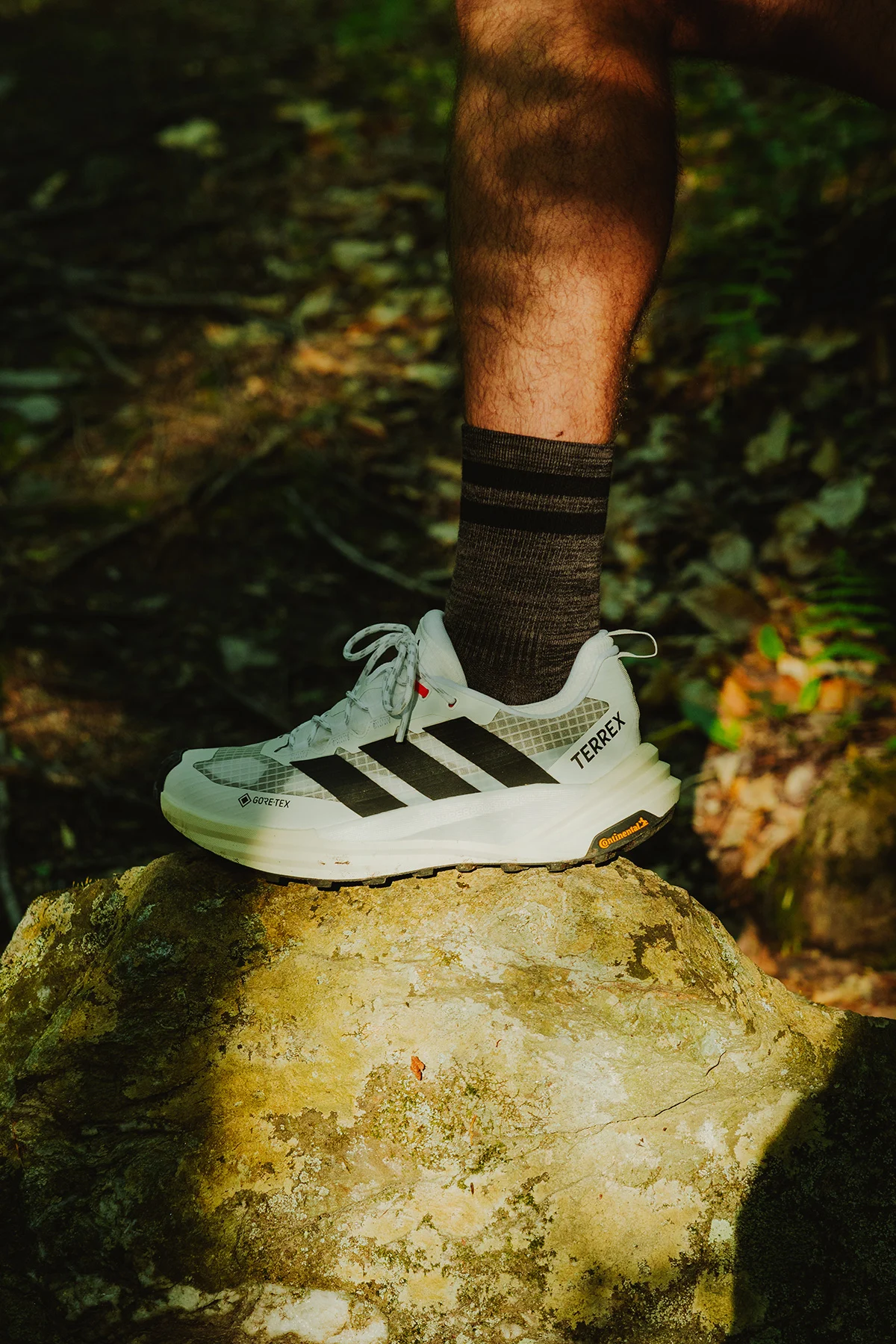
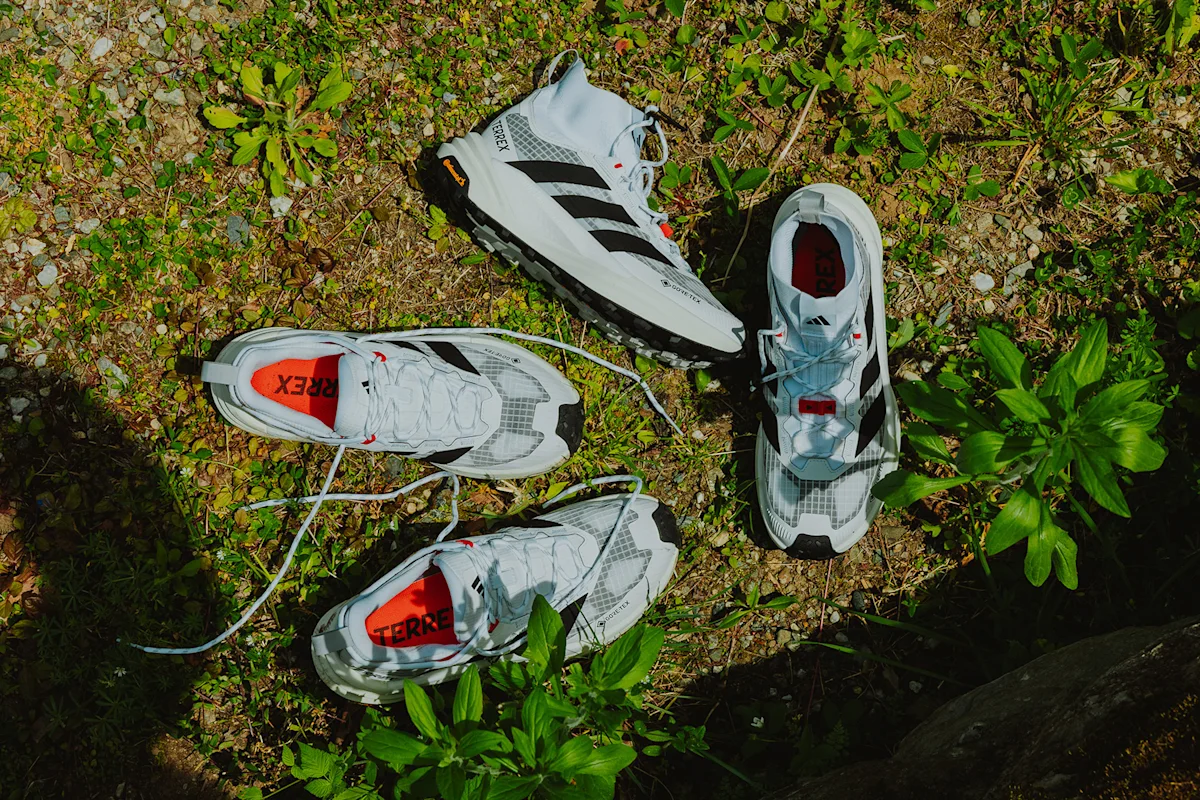
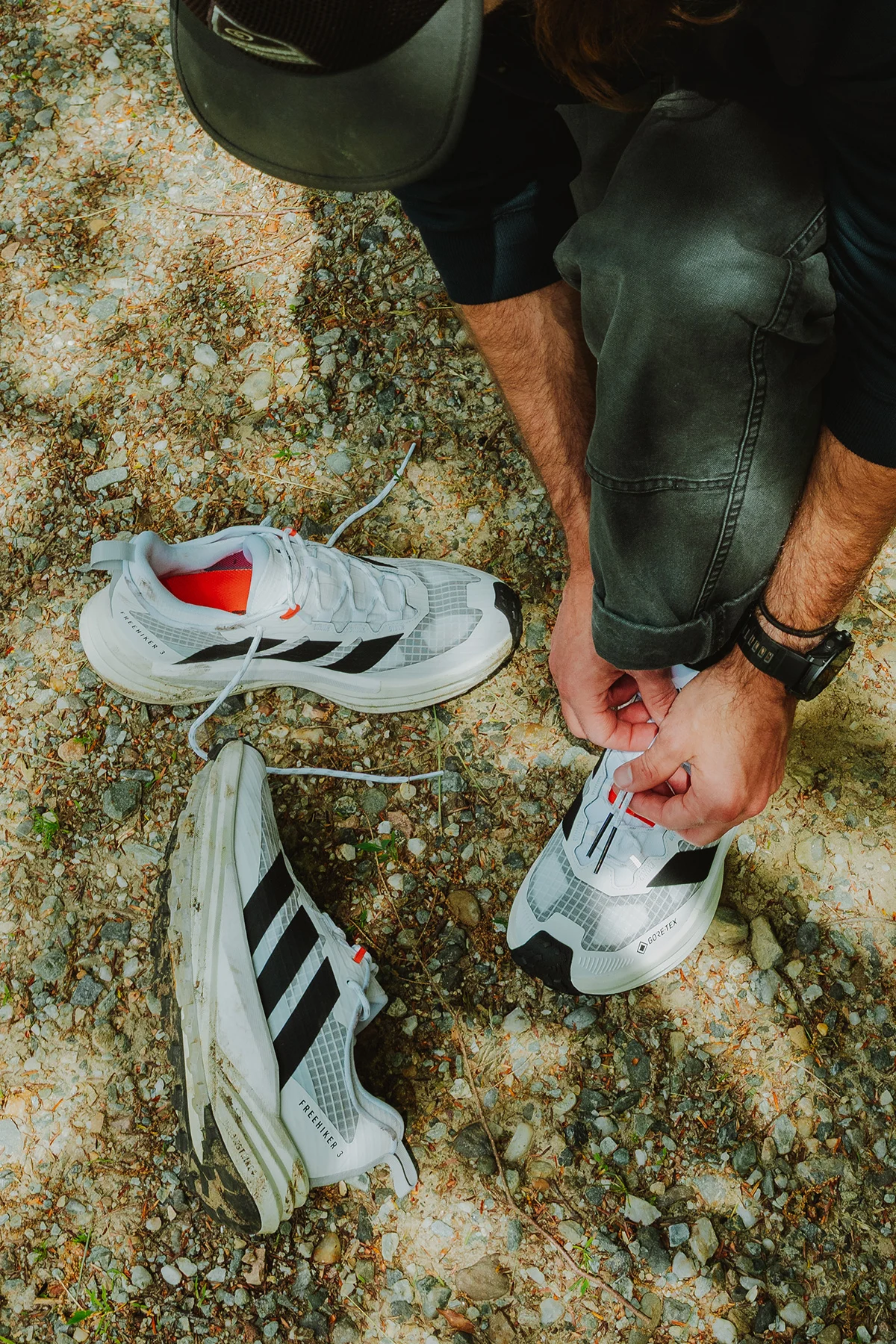
Available in a mid-height, low, and ultra models, the Freehiker 3 features a Hyperboost midsole and Dreamstrike+ foam for more comfort and response, alongside Gore-Tex water protection and Continental grip. To enhance durability, the textile upper takes on a gridstop look similar to what’s common on ultralight backpacks we like. While the mid version offers more ankle support, the Ultra introduces a speedlace system and woven knit collar, which works as a built-in gaiter to block gravel from getting in your shoe while hoofing up a disused logging road (speaking from experience). All models include loads of plush cushion around the collar. Remember when hiking boots used to chew up your feet the first few times you wore them? Not these.

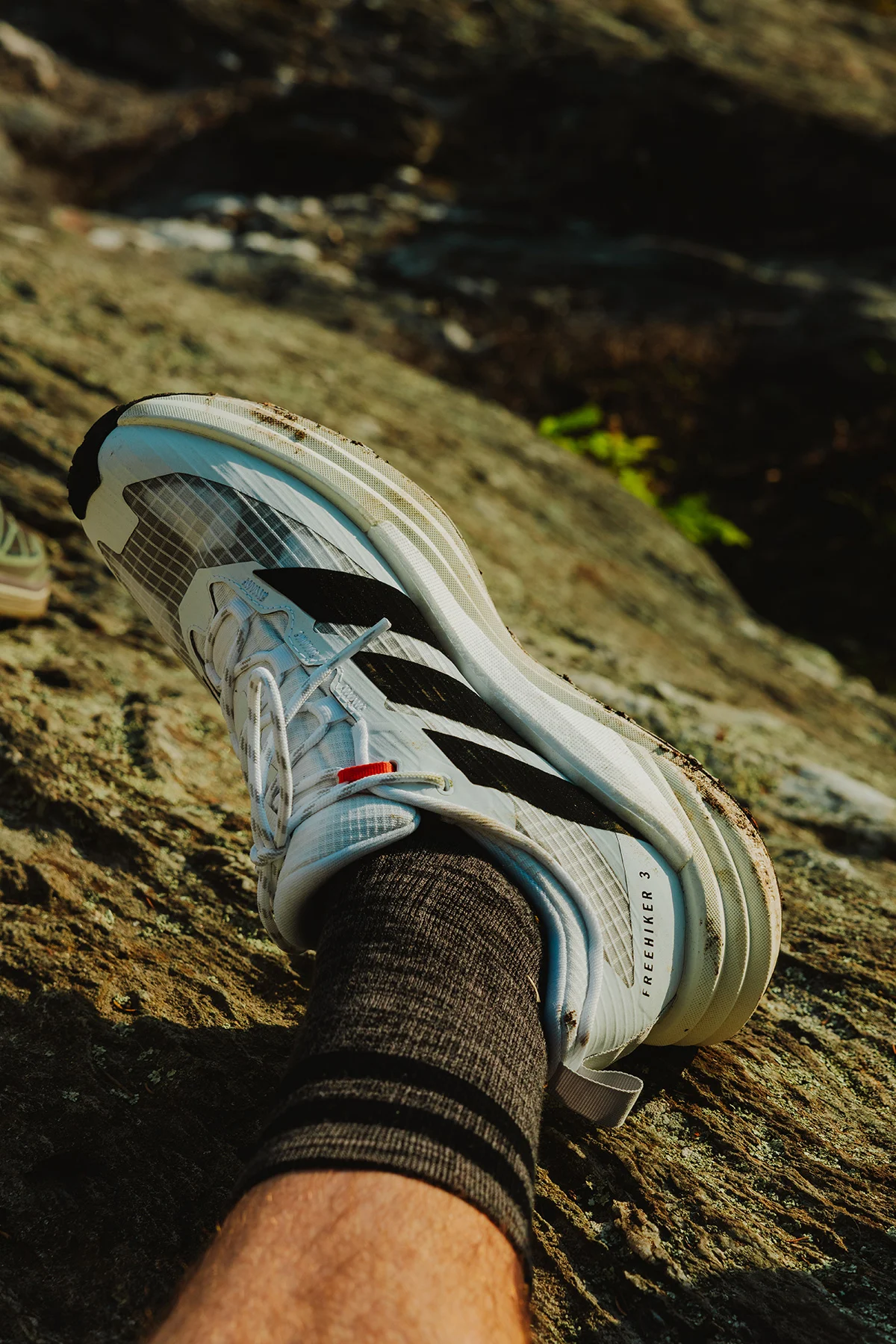
Though lightweight, the look of the Freehiker 3 isn’t exactly minimalist. The reason? Foam. And a larger outsole that the new-tech foam allows, delivering more stability and traction for the wearer.

The Freehiker 3 has two kinds: Dreamstrike+ and Hyperboost Pro. Tech-obsessed runners might be familiar: the first is a PEBA-based formulation that debuted as a derivative of Lightstrike Pro, the stuff adidas uses to power its top-tier running shoes like the crazy-popular Adizero Evo SL. Hyperboost Pro also has Lightstrike DNA; to make it, adidas reengineered that foam and pelletized it. The new Boost foam debuted recently, in the Hyperboost Edge, a running shoe so lively it has bounced new life back into the Hyperboost franchise.

tanner-bowden-freehiker3-laceup

tanner-bowden-freehiker3-side-vert

Cut spec jargon, and it's not hard to understand what the Freehiker 3 is going for; just look at the heel on this thing. As with running shoes, maximalism sometimes works in hiking footwear, sometimes doesn't. I wondered whether all that foam would be unstable rock hopping up notoriously technical New England trails; soft and springy might work on pavement, but not always in the woods.

On a post-work jaunt up to a nearby lookout for sunset, that speculation dispersed into the forest-filtered light. The Freehiker 3 has some discernible give to it, but it isn't squishy. It might not be the right choice for highly technical routes where precision is paramount—and we don't really have any of those in Vermont—but it handles low-consequence trails with ease. (And plenty of style.) The lugged Continental rubber outsole helps here, too, clutching exposed slabs of granite with ease on our final high point approach.

tanner-bowden-freehiker3-on-foot-rock

tanner-bowden-freehiker3-view

Even into summer, some soggy spots remain on the trails up here, with rain always a risk. Though I didn’t encounter any precip on my test hikes, the Freehiker 3’s ePE Gore-Tex membrane would have had me covered. At this point, Gore doesn't really require testing, anyway.

Though this latest iteration has the same aim as the original Free Hiker, the wealth of updated features means its approach takes a slightly different route. The first was streamlined, v3 is chunkier. Pops of bright color are still available, though now the hero models come in a sleek all-black option and one using adidas' classic three stripes on white. A signal of return to form from a brand fully regaining relevance by simply making good product.

The new Freehiker 3 is emerging into a different landscape than its predecessor. It's not as surprising as it once was that a traditional sports company—the world's second largest—would enter the outdoors. (Adidas hiking shoes have always been good, by the way.) Trail running shoes and approach shoes are an equally common choice from Bellingham to Brooklyn. And you'll see this new one on trails and in cities, guaranteed. So even though the Freehiker 3 isn't as much of a shake-up as the first was, first impressions confirm that it still hits the narrow, shifting midpoint between hiking shoe and sneaker dead center.

And looks damn good doing it.

SHOP NOW AT ADIDAS

Now that you've got the boots, how about some inspo from one of the most iconic routes in the Alps?