A Cyclist's Guide to New Zealand's Remote & Spectacular Timber Trail

A Cyclist's Guide to New Zealand's Remote & Spectacular Timber Trail

Author Photographer
  • Daniel Varghese, Studio Zag

Everything you need to know about the rural forest mountain bike and hiking trail, from what to pack to where to sleep along the way

Published: 12-17-2025

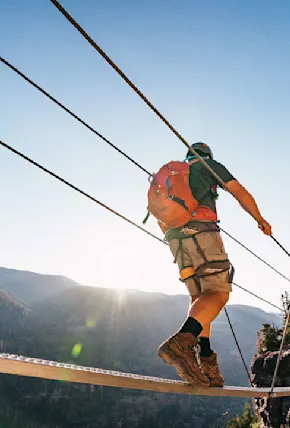
There’s really nothing quite like the Timber Trail. Situated in the middle of one of the most rural parts of New Zealand’s North Island, the unpaved path provides cyclists and hikers access to a staggeringly wide range of scenery. Over 52 miles, a visitor will carve their way through the heart of a lush rainforest, up a dormant volcano, over several impressive suspension bridges, through slabs of schist cut for logging trams, and along the side of ridges grooved by rivers.

This October, I got to ride it myself. I spent two weeks in New Zealand courtesy of the Ngā Haerenga New Zealand Cycle Trails organization riding a bunch of the country’s 23 Great Rides, a network of long, mostly unpaved trails spread across the country. One of these is an elegant loop built around a previously existing mountain bike park. Another is designed as a connector to a few major hubs for tourism in the South Island. Still another is a classic rail trail, built by removing a historic railway line that had been used to transport mining equipment.

But none of the eight official rides I did during my time in the country have stuck with me as much as the Timber Trail. There’s simply something about the unique blend of dense forest, historic logging infrastructure, and abundant wildlife that has stuck with me since I’ve returned home to New York. Here, I share what I learned about the trail, including a history of how it came into existence, where you should stay along the way, and the things I’ll definitely bring to enjoy it more when I go back to tackle it again.

timber-trail-new-zealand-studio-zag-suspension-bridge

Photo by Studio Zag

The Timber Trail: An Overview

Total Distance: 52 miles (84 kilometers)
Suggested direction: Pureora to Pirorpiro to Ongarue (north to south)
Total Ascent: 4,632 feet (1,412 meters)
Total Descent: 5,790 feet (1,765 meters)

Difficulty

Situated near the center of New Zealand’s North Island, the Timber Trail is a remote gem. Usually ridden over the course of two days or hiked over the course of three days, the 52-mile route offers gobsmacking scenery in abundance. This is a blessing for cyclists of all skill levels, but this is a solidly intermediate trail. There are plenty of sustained climbs, including one that lasts nearly the entire first half of the first day, and a few descents that will have beginners gripping their brakes with all the force they can muster. The use of an e-bike, quite common and actively encouraged by many trail operators, will certainly help beginners get up the hills, but you’ll still want to make sure you have some experience getting down them.

Trail History

The trail is housed within the Pureora Forest Park, a massive reserve that was once entirely a dense virgin forest. The area owes much of its physical geology to a series of volcanic eruptions in nearby Taupo over the last 30,000 years. These eruptions left porous pumice stone all over the area, which in part explains why large sections of the trail can remain dry even through the rainier seasons. The first human inhabitants of the area were Maori, who lived around, traveled through, and hunted within the forest. But by the 20th century, there were several massive milling operations within the forest that consumed many of its native trees. Logging stopped in 1982, after years of organized activism from Kiwi environmentalists, who were able to get the first pause to logging in place after gaining media attention for climbing into and hiding around trees marked for destruction. Once the preserve was established and placed under the management of New Zealand’s Department of Conservation (DOC), it became a haven for backcountry hunters and trampers.

The idea to host a recreational trail had been discussed over the years, but became a true possibility in 2009. In the wake of the 2008 global financial crisis, New Zealand’s Prime Minister John Key had started the Ngā Haerenga Great Rides of New Zealand initiative to create a network of cycling trails to bring tourism and its associated economic benefits to the less urbanized parts of the country. Given that the area was managed by the DOC and that sections of it had already been cleared for logging trams, the Pureora Forest seemed a natural home for one of these new recreational paths. By February 2013, after the construction and restoration of more than 50 bridges, the Timber Trail was fully open. Guy Whitaker, founder and board member of the Timber Trail Lodge, says it is now used by about 20,000 cyclists and hikers each year.

daniel-varghese-timber-trail-day-two-cycling-vertical

Photo by Daniel Varghese

Conditions & Features

The infrastructure of the trail is top-notch. There is a handsome marker at each kilometer, plenty of notices that alert you to upcoming hazards, and plenty of other wayfinding cues. The surface is a sturdy mix of dirt, gravel and pumice—I was surprised at how little of it was washed out despite the persistent rain the area had experienced in the days before my visit. The first time I reached one of its many suspension bridges, delirious from the screaming descent that had followed an hour and a half of climbing, I felt more than a little concerned by the motion of it swinging underneath me. But by the time I had made it to my third, I felt comfortable speeding across.

Route

Though the entire trail is technically two-way, everyone seems to ride it from Pureora in the north to Ongarue in the South, with a break in the middle at Piropiro. I think this direction makes sense for a number of reasons. Practically speaking, you get the climb up to Mt. Pureora, the hardest part of the route, out of the way at the very beginning. In this direction, you also do less overall climbing. But the main reason to do the trail north to south is more aesthetic. The entrance in Pureora is a dense forest, where you’ll hear nothing but squawking birds, rustling leaves, and rolling tires. The start in Ongarue is a paved road, followed by a long stretch where you ride along the fence of several active animal farms. I’m not one to pass on the opportunity to coo at sheep, but it feels a bit wrong to start such a remote ride at its most industrial section.

timber-trail-studio-zag-forest-statue

Photo by Studio Zag

How to Get to the Timber Trail

I was surprised at how car dependent New Zealand, with its progressive international reputation, actually is. Public transit exists in large cities like Auckland, but your options to get around the country without a car are limited. Indeed, the main way people access the Timber Trail is by parking their cars in Ongarue, then boarding a shuttle either provided by their accommodations or contracted separately to take them to the start of the trail. When they arrive at the end of the trail the next day, their car is waiting where they left it.

If you’re visiting New Zealand from another country, this is definitely doable. But you will end up paying for a rental car during at least 24 hours where you aren’t using it. Thankfully, there are a couple of other options.

Fly to Taupō

Though not a particularly large city, Taupō is a hub for tourism in the center of New Zealand. Located a few hours on the northeast edge of its namesake caldera lake, the city is home to a ton of tourism operators who will guide you as you sky dive, parasail, ride jetboats, or bungee jump. It also happens to be a big cycling town, home to a few major events like the Lake Taupo Cycling Challenge as well as a bunch of mountain bike trails. While I was there last month, I rode the Otaketake Trail with Jonny of FourB bike tours. He regularly puts packages together for people that involve a few days of riding around Taupō, plus a couple days on the Timber Trail. If you don’t want to deal with the rental car hassle yourself, I recommend both his company and his company (he’s a hoot.)

Take the train from Auckland or Wellington to Taumarunui

There’s very little passenger rail in New Zealand, especially on the North Island, but there is one relevant route for folks trying to get to Ongarue without a car. The Northern Explorer train takes ticket holders from Auckland to Wellington on Monday, Thursday, and Saturday, then back in the other direction on Friday, Sunday, and Wednesday. The train traverses through ten stops, including Taumarunui, which is about a 20 minute drive (or 90 minute bike ride) from Ongarue. If you want to do this option, you’ll have to book pretty far out in advance, as the trains sell out. Some shuttle operators, including the Timber Trail Lodge, will happily pick you up at the train station before your reservation and take you back there once you’ve ridden the trail. Round-trip tickets start from NZ$249.

daniel-varghese-timber-trail-lodge-deck

Timber Trail Lodge | Photo by Daniel Varghese

Where to Stay Near the Timber Trail

Wild camping, known in New Zealand as “freedom camping,” is not technically permitted in Pureora Forest Park. (It is a wildlife reserve, after all.) Fortunately, there are still plenty of sanctioned ways to stay along the Timber Trail, including a few that are basically free.

Camping on the Timber Trail: Ngaherenga Campsite & Piropiro Campsite

There are three campsites within the Pureora Forest Park and one hut intended for hikers hoping to break the trek into three days, but only two of the sites make sense for cyclists doing the ride in two parts.

Start at the Ngaherenga Campsite, which is only 500 meters away from the Pureora entrance to the Timber Trail. Bookings are required to stay at this site—which has a drop toilet, running (untreated) tap water, grills, and firepits. If you don’t pay the NZ$10 fee online in advance of your arrival, you might have to pay an additional NZ$10 service fee for them to process your in-person booking.

The Piropiro Campsite is located at about the halfway point of the ride, making it the perfect stopping point after your first day of riding. (It’s almost like they planned it like this.) This site is first come, first served, no booking or fee required. The site still has a drop toilet and fire pits, but you’ll have to refill water from the nearby stream.

Glamping and Shuttle Service: Camp Epic

Those who want to experience the thrills of bikepacking without the fuss of actually having to carry your sleeping equipment up long, rough hills, might prefer to stay at Camp Epic. Located right next to the Piropiro Campsite halfway through the route, Camp Epic offers just over a dozen two person “Twin Room” tents and a couple “Family Tents” that can sleep four, as well as an area where you can set up your own tent. There are flushing toilets and hot showers on-site, as well as a covered air open camp kitchen and dining area where you can get clean drinking water. The staff provides basic breakfast supplies, but you’ll have to bring your own food to eat for dinner and lunch. Maybe more importantly, at Camp Epic, you have access to power that you can use to charge your phone or e-bike, as well as Wi-Fi in the kitchen and dining areas.

Anyone can book a tent or site at Camp Epic, but I imagine most people will want to take advantage of its shuttle packages. You meet at the Bennett Rd Carpark in Ongarue by 8:30 AM on the first day you plan to ride the trail, where you are picked up by a Camp Epic shuttle that takes you to the start of the trail in Pureora, about an hour away. While you’re riding the first half of the trail, the Camp Epic team will bring your gear to your tent so you only have to carry what you need during the ride. After you’ve left camp to finish the ride, the Camp Epic staff will bring your stuff back to Ongarue, so that you can load it into your car and be on your way as soon as you’re ready. The cost for this service is NZ$130 per person if you’re bringing your own tent or NZ$220 per person if you want one of its glamping tents.

For a cozy, high-value lodge experience: Timber Trail Lodge

As much as I love to camp, I’m such a novice mountain biker that I figured a day in a tent between two difficult days of riding might break me. I was pleased to learn that there is a homey lodge smack dab in the center of the trail. The Timber Trail Lodge, which opened in 2017, is a simply designed, but well-appointed hotel. The rooms, whether you choose to book a standard room and share a bathroom with other guests or one of the more private ensuite options, have comfortable beds, radiator heating, and plenty of windows. Mine opened out to a massive shared deck that looked out onto the trail in the valley below.

As good as the view and access is, the best thing about the Timber Trail Lodge might be the food. Each night, the kitchen staff prepares and serves dinner family style to all its guests during a single-seating in the large central dining room. I took the opportunity on my first night at the lodge to press the folks who had already done the first day of the trail for tips on how to survive what looked like a grueling starting climb, while absolutely demolishing a plate of pulled pork bao, Hasselback potatoes, and salad. There was a buffet breakfast and plunger coffee available in the morning, after which they handed me a wrap and some snacks to eat while I was on trail and shuttled me to the start. But best of all, when you arrive back to the lodge following your first day of riding, the staff will make you a pizza. It was probably the best Hawaiian pizza I have ever eaten. You’ll of course pay a premium for the luxury. Standard rooms start at NZ$451.50 a night, and shuttle service starts at NZ$84 per person.

daniel-varghese-timber-trail-cycling-around-pasture-vertical

Photo by Daniel Varghese

daniel-varghese-timber-trail-suspension-bridge-crossing-vertical

Photo by Daniel Varghese

Timber Trail Riding & Gear Guide

Timber Trail Day 1: Pureora to Piropiro

Distance: 23 to 24 miles (37 to 39 km)
Elevation gain: 2,215 ft of climbing, 2,182 ft of descending
Notable features: Virgin rainforest, constant bird calls, 14 km of climbing to the Mt. Pureora summit, 8 km of uninterrupted descending
Estimated time to complete: Between three to six hours, depending on your level of fitness and comfort on descents. (I finished in 4 hours, 11 minutes, and 21 seconds.)


I was more than a bit nervous as I set off into the dense forest at the start of the Timber Trail. I was riding by myself, and would only end up encountering about four other riders the entire day I was on trail. As a city dweller, I initially found the solitude eerie and disconcerting. But I let myself be calmed by the distant calls of birds, the gentle patter of rain against the tree canopy, and the sound of my tires on the path.

When the forest opened up, I could see Mt. Pureora ahead of me, and I steeled myself for what was to come. The first seven miles of the trail is a consistent uphill grind. It’s not particularly steep, though there are a couple short sections where the gradient slopes above double digits, and I was a bit tired by the time I made it to the summit. Or at least, what I believed to be the summit. After a short downhill section, you have to climb just a bit more to reach what is actually the highest part of the trail, which lands about 8.5 miles into the ride.

I paused here to eat something, let my heart rate drift back to a more comfortable rate, and get my bearings. I started to allow myself to feel proud of the effort I had undergone. I had paced the long uphill stretch perfectly, keeping my legs spinning even when it got hard, and felt confident I had enough energy to finish the ride. Now that the climb, which I had been so stressed about, was over, I could just turn my brain off and let myself enjoy the long descent to the lodge.

If you’re an experienced mountain biker, you probably immediately spotted the fallacy in this logic. On roads, descents are basically candy. They are the treat for the hard work of getting yourself up a hill. On trail, descents are the meal. They are the substantive part of your ride, where you are challenged to quickly identify and react to a constantly changing surface, sharp turns, and obstacles like branches, roots, boulders, rushing water, and animals. The challenge is supremely stimulating. I was thoroughly underprepared for the effort.

In the end, I fell multiple times as I made my way down the second half of the trail, mostly due to hubris that encouraged me to hit features at speeds I wasn’t quite skilled enough to handle. I slid out on turns, I accidentally navigated myself into ruts on the sides of the road, and at one point went over my handlebars thanks to a root I didn’t notice.

Honestly, this was thrilling. I loved the feeling of being so far out of my comfort zone and testing my mettle. It didn’t hurt that each time I was forced to stop, I could just soak in the forest around me. I had a wide grin on my face when I arrived back at the lodge for my post-ride pizza. Someone had to point out that my legs were covered in blood. I had been too locked-in to notice.

daniel-varghese-timber-trail-bike-with-bridge

Photo by Daniel Varghese

Timber Trail Day 2: Piropiro to Ongarue

Distance: 26 to 27 miles (42 to 45 kilometers)
Elevation gain: 1,808 ft of climbing, 2,628 ft of descending
Notable features: Maramataha Bridge, Ongarue Spiral, sweeping views of the forest, sheep, deer and horse farms
Estimated time: Between four to seven hours, depending on your level of fitness and comfort on descents. (I finished in 4 hours, 39 minutes, and 8 seconds.)


I spent my second day on the Timber Trail in the company of Russell Malone, the operations manager of the Timber Trail Lodge. Russell made it exceedingly clear he was not leading me as an official tour guide, but he certainly did a good impression of one. As we rode from the lodge to the end of the route in Ongarue, we made a bunch of stops where Russell gamely answered my questions about local birds, quirks in the trail design, the history of the area, as well as about his life, his best experiences on the bike, and his relationship to nature.

The profile of this half of the trail is a bit more forgiving and scenic than that of the previous section. There are three significant climbs spread throughout the ride, which even taken together wouldn’t match the difficulty of the one from the previous day. I can see that objectively now, with time to really study the elevation profiles, but it also felt that way while I was riding. Perhaps because I spent the entire day with another person to chat with and follow, the second day felt quite light and fun in comparison to its grueling predecessor.

The second half of the trail also offers a bit more visual range. Soon after you set off from Piropiro, you reach the Maramataha Bridge, a suspension bridge that spans a chasm longer than an Olympic sized swimming pool. We lunched at a picnic table about halfway through that looked out onto the valley around Mt. Pureora. And we made our way into the Ongarue Spiral, a feat of engineering in the early 20th century that made it possible for timber trams to climb up a large amount of elevation in a short amount of space.

My absolute favorite section came immediately after this: a relatively smooth descent along the ridge of the valley we had previously gawked at. After a day spent behind Russell, where I could learn from his experience how to choose lines and make my way safely through tricky technical terrain, I felt confident enough to take this descent at my own pace and smoothly make my way down the mountain towards the final finish. The time on the Timber Trail hadn’t just been an enjoyable romp through a gorgeous forest, it had also made me a better cyclist.

daniel-varghese-timber-trail-bike

Photo by Daniel Varghese

What kind of bike should you use to tackle the Timber Trail?

My first day on the Timber Trail was only my fourth bonafide mountain bike ride. (The third had been one day earlier, when I tackled the Whakarewarewa Forest Loop in Rotorua.) I rode it on a Trek Roscoe 7, which is one of the brand’s entry level aluminum hardtail mountain bikes that offers springy front suspension, a dropper seatpost, and massively wide tires. Because of my inexperience descending on trail, I certainly appreciated both of these elements, as well as the slack, relaxed geometry. But since there are very few parts of the ride with super steep technical descents or extremely chunky terrain, I have a feeling more experienced mountain and gravel riders would have enjoyed riding the trail on a gravel bike with a conventional fork, drop handlebars, and slightly narrower (but still knobby!) tires. That kinda bike certainly would have been faster on the many climbs.

I got the bike I rode through the Timber Trail Lodge, who also rent out e-bikes. In fact, most of the riders I encountered while riding trails in New Zealand last month were on battery-powered mountain bikes. These bikes are extremely fun to ride—everyone should have the chance to put one in turbo mode and just rip it up a climb that would otherwise take them the better part of an hour—especially on routes with a lot of steady ascents and singletrack. With their extra bulk, descending on them can feel a bit sketchy. Make sure to opt for one with great brakes and suspension.

daniel-varghese-timber-trail-day-two-selfie

The author cruising through the forest.

Timber Trail Packing List

I tackled the Timber Trail in October during New Zealand’s spring, when it was relatively temperate. I wore the same kind of cycling clothes to ride the trail as I would have for one of my regular long rides in New York. This worked totally fine, though I wish I hadn’t worn my white socks on the day when it rained. Here’s what else I brought, as well as some supplies I wish I had.

Handlebar bag

I bought myself the 3.3 liter Roadrunner California Burrito handlebar bag only because my local bike shop didn’t have anything smaller in stock. It has ended up being supremely useful as I’ve been traveling around the world to bike for my newsletter—the design allows it to attach securely to every bike I’ve encountered. (A frame bag might be bigger and more aerodynamic, but given that they usually have to be fit to a bike, they’re way less flexible for my current needs.) On the Timber Trail, I stuffed the bag full with my repair kit, an extra innertube, my sack lunch, a few snacks, and batteries for my GoPro, and still had plenty of room for my film camera.

Water

I have endless plastic sport water bottles at home, but completely forgot to bring one on my trip to New Zealand. I ended up buying a small one from the store at the Timber Trail Lodge. I wish I had also brought some form of water filtration system, whether that was a water treatment tablet or a bottle like the Hyrdapack Breakaway+. I had sort of assumed there would be treated water spouts along the trail—New York City brain!—and quickly ran out of water during my first day of riding. I ended up just drinking from one of the many streams that crossed under the trail, which was extremely satisfying, but technically not advised. Don’t be like me and go on your trip prepared for this reality!

Food & Fuel

If you stay at the Timber Trail lodge, they send you out on both days of the trail with a sack lunch that includes a sandwich, apple, granola bar, and brownie. This rules, but I always also rode with a few packets of Tailwind Endurance Fuel (I honestly like every flavor except for the salted watermelon, sorry Courtney Dauwalter!) and a couple of Clif Bars. As a general rule of thumb, even casual cyclists should make sure to eat something at least once every hour you’re riding to make sure you don’t bonk.

Rain Jacket

Even if there’s no rain in the forecast, I usually keep my Arc’teryx Beta SL raincoat in my handlebar bag. The jacket is light and short enough to bike in comfortably, and has armpit vents if the weather is particularly warm.

Cargo Bib Shorts

Most cycling bibs are designed to be worn with a cycling jersey, with pockets in the back, but I’ve always found these pockets hard to reach while you’re riding. Cargo bib shorts have mesh pockets on the exterior sides, which are perfectly sized for carrying a phone, camera, or snacks. As I’ve gotten more pairs, I’ve relegated all of my other bibs to be used on the indoor trainer only. My current favorite pairs are the Attaquer All-Day Cargo Bib and the Velocio Adventure Cargo Bib Short.

Cycling Computer

Though the Timber Trail is relatively well-marked, I still wanted to have access to a map of it at all times. To do this, I loaded each day’s route to my Garmin Edge 840 (which has since been replaced by the Edge 850). The device provided real-time directions, but also kept track of my speed, heart rate (paired a Garmin heart-rate monitor), and power output (paired to the Rally XC200 pedals). You don’t need to worry about these latter metrics to enjoy the trail, but I 've found that being able to see objectively how hard my heart is pumping and how much effort I’m pushing through my pedals helps me pace my effort.

Emergency SOS Device

Cell signal is extremely limited along the Timber Trail, even when you’re close to the accommodations in its center. And once you’re on the trail, there are very few ways off of it. There are a few marked points along the trail where its managers say it is more available, but if you happen to be outside of them when you have an emergency, you should probably have access to a device that can get in touch with emergency services. The Timber Trail Lodge loans out Personal Locator Beacons to its guests, but I will probably invest in something like the ACR Electronics rescueME PLB1 for future adventures. (Unlike the also excellent Garmin InReach Mini 3, the former PLB will work even if you don’t pay a monthly subscription fee.)

For more bike trip inspo, check out our account of a gravel biking trip through Morocco.